







Economics
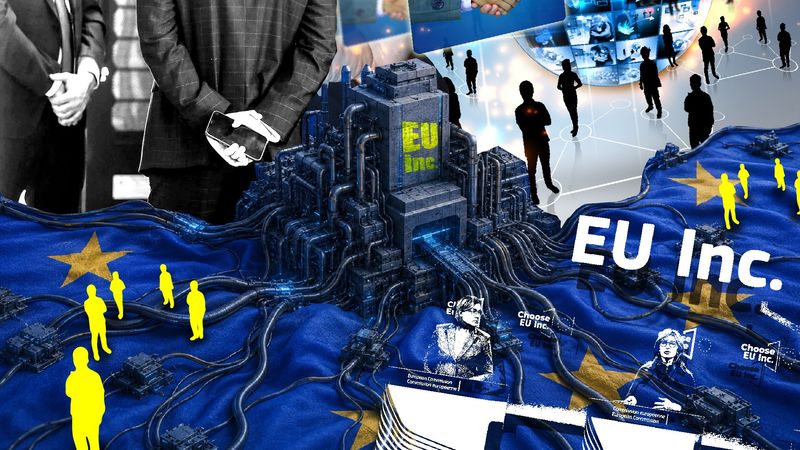
How To Secure The Benefits Of an EU-wide Incorporation Regime
 In a May 2026 policy brief for the European Council on Foreign Relations (ECFR) entitled Electric Collective: Europe’s Clean Energy Future Without Russia, senior policy fellow Szymon Kardaś tries to portray the situation as a success for European energy diplomacy
Europe Has Paid a Huge Price for Rupture with Russia – In Fact Only To Swap One Master for Another
 Fabian Zuleeg, Chief Executive and Chief Economist at the European Policy Centre, reflects in his essay on what mistakes can be made in analyzing economic security issues.
A New EU Paradigm: Prioritizing Economic Security?
 In his interview to the Institut Montaigne, Geoffroy Roux de Bézieux, honorary president of the Movement of the Enterprises of France (MEDEF) and of the Alliance of Francophone Employers (APF), argues that the European Union’s economic security issue can only be addressed by big nations relying on national sovereignty. Here are the main messages from that interview.
EU Economic Problems Not to Be Addressed Among All 27 Member States
 In his article entitled To Weather Energy Instability, the EU Must Strengthen its Carbon Market, Matthew McLaughlan Merelo from the Barcelona CIDOB think tank formulates, rather straightforwardly, a message uncomfortable for many European politicians: that, amid a new energy shock caused by the Iran war and the closure of the Strait of Hormuz, the European Union again tends to weaken, rather than strengthen, its long-term resilience tools.
Europe Ready to Sacrifice Long-term Resilience to Short-term ‘Competitiveness’ Once Again
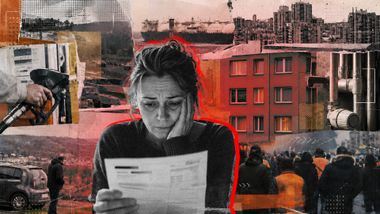 In a special poll by the Institut Montaigne, done in partnership with Verian in March 2026, Joseph Dellatte, research fellow and resident expert on climate and energy, and Hugo Jennepin Reyero, project officer for energy and decarbonization, find an important and alarming trend: a significant part of French society no longer perceives energy crises as exceptional developments
The French Accept Energy Instability as a New Norm
 For what purpose does Switzerland need overpriced fighter jets with obscure capabilities?
A Swiss F-35 Dilemma
 The USA no longer wants to play the role of a hegemon in supporting the trade system. China is unable to play a leading role in the WTO. The EU is interested in preserving the rule-based trade order
A Plan to Revitalise the World Trade Organization
 That is the conclusion that analyst Daniel Gros, member of the board of the Centre for European Policy Studies, comes to in his report Mind The Gap: The Economics Of More Europe In Defence.
Europe Has to Choose Between Depending on American Technologies or Using Second-Rate European Solutions
 Patricia Urban and Deniz Tekin from the CEPS, Brussels, in their memo From Green to Clean to Eco-Social: How to Put Wellbeing Back onto the EU’s Sustainability Agenda carefully but clearly recognize an important and alarming evolution of the European sustainable development policy.
From “Green” Well-Being to “Pure” Competitiveness: How the EU Gradually Abandons the Social Component of Transition
 In an article entitled Can the Climate Crisis Unite Europe? and published by Project Syndicate, Giulio Boccaletti, Scientific Director of the Euro-Mediterranean Center on Climate Change, advances an idea that is more and more often heard in the recent years: that the escalating climate crisis could provide divided Europe with a common cause that would finally unite it and impart new meaning and renewed legitimacy to the European project
Europe Again Seeking Escape in an Illusion of a Common Cause
 Arthur Daemers from the French Institute of International Relations (IFRI) in his memo A Make-or-Break for Accelerating Electrification, in a restrained but clear manner, describes the size of the problem that the European Union is going to face if it tries to dramatically speed up the electrification of its economy.
Europe Keeps Making the Same Mistake, This Time with the Power Grids
 Reducing dependence on foreign suppliers raises costs, while a least cost decarbonization policy deepens dependence. The Industrial Accelerator Act (IAA), proposed by the European Commission in March 2026, leads to this dilemma
The Flaws in the European Union’s Proposed Industrial Accelerator Act and How to Fix Them
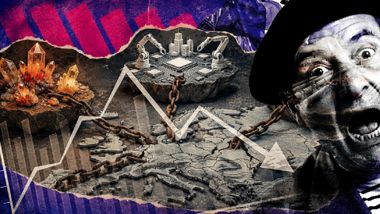 In his analytical paper entitled Not All Dependencies Are Equal: Europe’s Energy Transition in the Wake of Geopolitical Crisis Camillo Stubenberg, a Cornell University PhD and an affiliated researcher at the Austrian Institute for International Affairs, is trying to convince the reader that Europe’s energy transition is not just a climate policy but a complicated transformation of dependencies. But in practice the text only confirms what critics say: while rejecting one dependency, Europe quite plausibly falls into another, no less dangerous and far longer-lasting one.
Not All Dependencies Are Equal, but This Is Not Easier for Europe
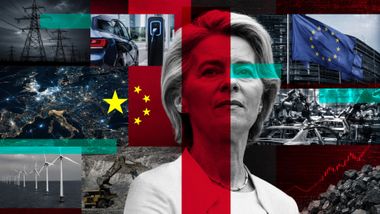 In an article entitled Europe Is Losing the Energy-Security Battle to China Emmanuel Guérin, a fellow and special adviser to the CEO at the European Climate Foundation, spells out a reality most uncomfortable to Brussels: while Europe still sees illusions of a ‘green transition’ and ‘energy autonomy’, China is steadily winning the strategic battle for control over future energy systems.
Europe Losing Energy Security Battle to China