







Read news
Add bookmark
POPULAR
How Much Do Experts’ Ideas Matter for the European Union’s Political Agenda?Oil? Gas? Fertilizer? Just Life.Kalypso Nicolaidis: I Want a Woodstock for European PoliticsThe Gulf War and Europe’s Helpless Energy PolicyHow the “virtues” of neoliberal globalization paved the way to its demiseEurope Still Needs China: Washington is the Main ThreatEurope Losing Energy Security Battle to ChinaA Controlled Compression ManifestoA Ruthless Diagnosis. Europe More Paralyzed than DividedEurope Has Paid a Huge Price for Rupture with Russia – In Fact Only To Swap One Master for Another
In a May 2026 policy brief for the European Council on Foreign Relations (ECFR) entitled Electric Collective: Europe’s Clean Energy Future Without Russia, senior policy fellow Szymon Kardaś tries to portray the situation as a success for European energy diplomacy. But, in fact, the text rather shows how costly and politically motivated Europe’s attempted rupture with Russian energy has been and how little it has yielded.
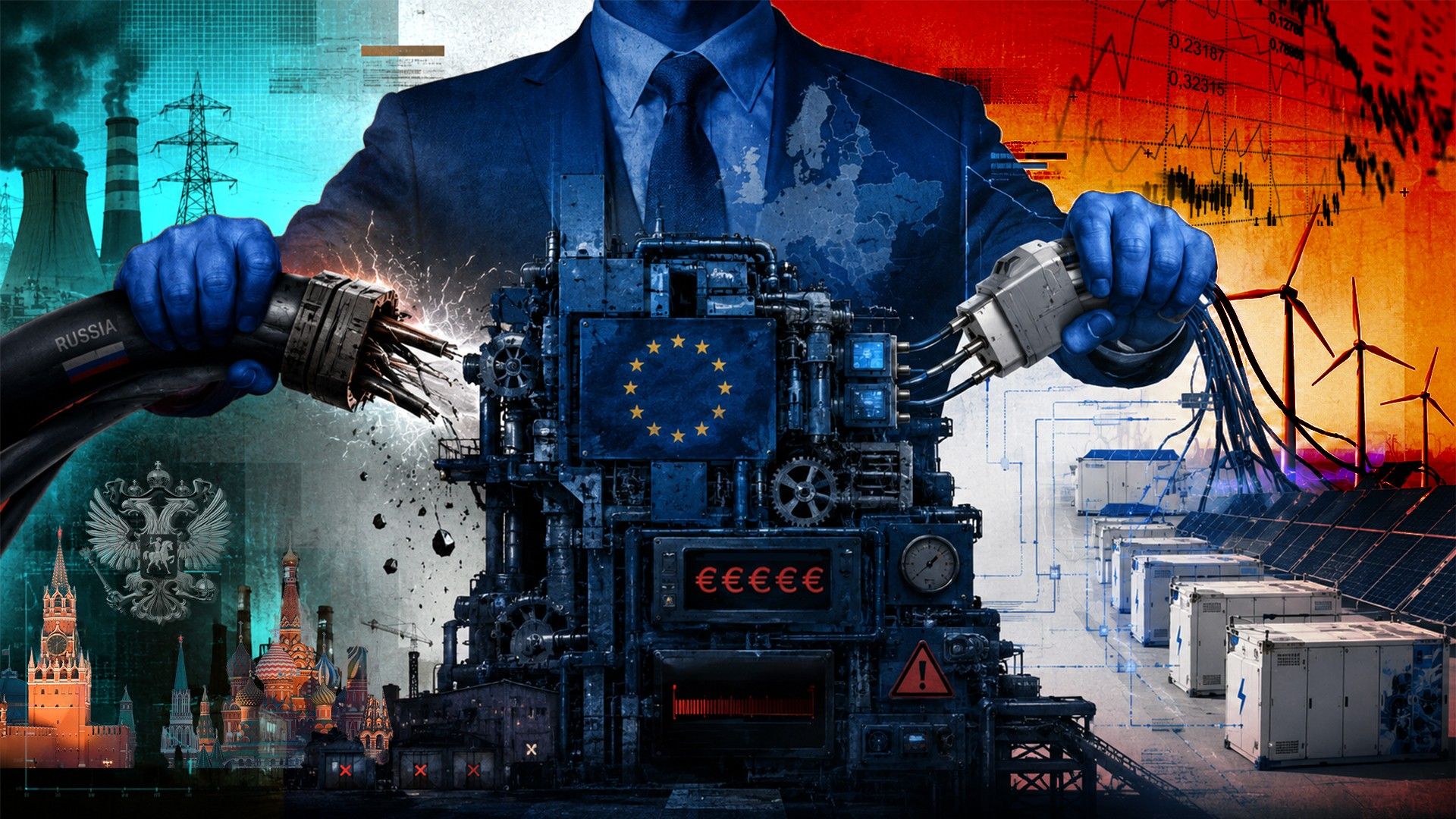
Mr. Kardaś admits that over four years the EU has drastically cut its direct purchases of Russian oil and gas. Yet he himself records that almost 60 percent of Europe’s energy demand is still being met by fossil fuel, and its dependence on imported oil and gas stands at 90 and 85 percent, respectively. Europe has really reduced purchases from Russia – but sharply increased imports of U.S. LNG and gas from other countries. It has essentially swapped one major supplier for a number of others but retained the very pattern of depending on external sources of hydrocarbons.
Most revealingly, the author relates energy security directly to Europe’s political objectives and pursuit of strategic autonomy. This is not just about economics and reliable supplies any longer, but about an ostentatious refusal to cooperate with Russia, whatever the cost. And the cost has been quite high. Europe has spent huge amounts to build LNG terminals, new pipelines and infrastructure but remained highly exposed to global gas prices. The most recent developments around Iran showed, once again, how precarious such ‘independence’ is.
In another typical manifestation of the political nature of Europe’s energy choice, instead of honestly admitting that complete renunciation of fossil fuels is impossible in the coming years, the EU continues entering into long-term gas contracts that entrench its dependence for decades to come. And the real transition to renewables and ‘clean’ energy imports from Africa or the Caspian region is still at the stage of plans and individual pilot projects. Gas volumes that could visibly alter Europe’s energy mix in a matter of years are nowhere to find.
In practice, things look far more prosaic. Europe has really reduced direct purchases from Russia – to become much more dependent on U.S. LNG. It has replaced Russian piped gas with American liquefied one and with supplies from other regions but failed to overcome the pattern of external dependence. Moreover, most energy deals were concluded by individual member States rather than at EU-wide level. No collective strategy has been developed so far. This is particularly evident as regards gas: while some countries actively built terminals and looked for new suppliers, others continued receiving Russian gas along old routes or via intermediaries.
As a result, Europe found itself having paid a huge economic and political price for its demonstrative rupture with Russia but received neither genuine energy independence nor cheap and dependable energy. Instead, it has simply swapped one big supplier for another and entrenched a new dependence, no less dangerous: that on decisions taken in Washington and on fluctuations of world gas prices. The large-scale restructuring of the energy system, now the talk of European politicians, remains a political slogan rather than a finalized project. And the price of the transformation continues growing – with a modest actual return.
Source: https://ecfr.eu/publication/electric-collective-europes-clean-energy-future-without-russia/