







Read news
Add bookmark
POPULAR
How Much Do Experts’ Ideas Matter for the European Union’s Political Agenda?Kalypso Nicolaidis: I Want a Woodstock for European PoliticsOil? Gas? Fertilizer? Just Life.Better Regulation in the European Union Needs a Fresh StartRegular Ones Made IrregularHow the “virtues” of neoliberal globalization paved the way to its demiseInnovation in Migration Management. The EU searches for a new paradigm. Will it Succeed?Europe Keeps Making the Same Mistake, This Time with the Power GridsThe Case for a European Union Digital Enforcement AuthorityHow To Secure The Benefits Of an EU-wide Incorporation Regime
The EU Inc. all-European incorporation regime will offer no advantages to innovative businesses. Experts from the Bruegel think tank (Brussels European and Global Economic Laboratory) make this conclusion in their report entitled How to secure the benefits of an EU-wide incorporation regime.
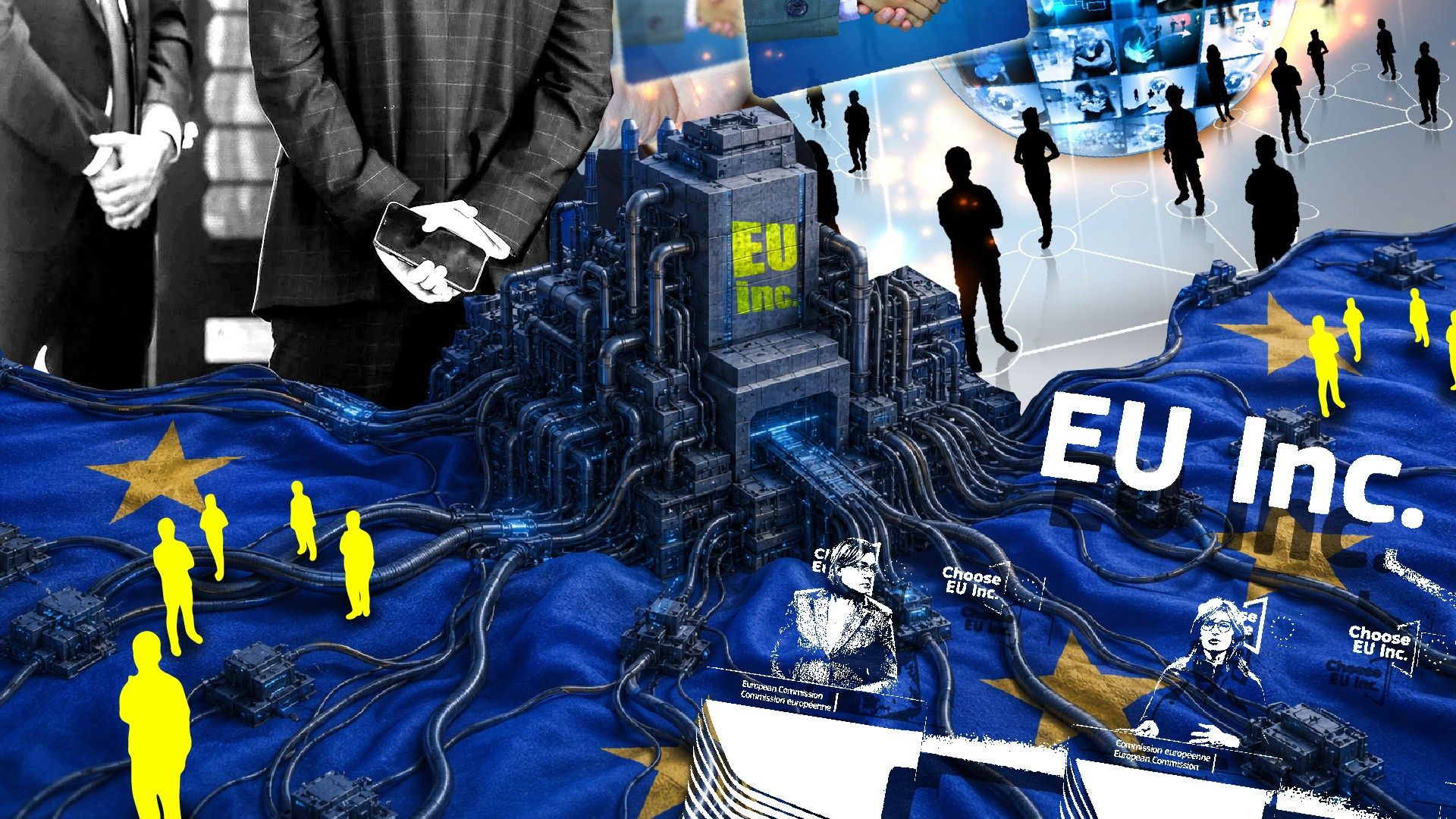
On 18 March, the European Commission proposed a European Union-wide incorporation regime, dubbed ‘EU Inc.’ (European Commission, 2026). The regime is intended to close the EU’s innovation gap with the United States and China by simplifying the rules on how companies are founded and scaled up within the bloc.
EU Inc. is a regulation, or law with uniform effect across the EU, rather than a directive to be implemented in conformity with minimum standards in each EU country. Companies incorporating under EU Inc. are to be recognized in same way across EU countries. The proposal explicitly prohibits EU governments from imposing additional legal barriers.
The regime’s main procedural and administrative architecture would involve fully digital incorporation via a central EU interface, the application of a ‘once-only’ principle to digital submissions of company information, a ‘fast-track’ 48-hour company formation procedure, and reduced application costs of EUR 100. This will make incorporation easier and faster and will have broad appeal, especially to startups and companies in scale-up that lack the time, resources or experience to deal with burdensome bureaucracy .
This is the attractive wording in which the proposed regime is presented to businesses. Yet the practice of its implementation will bump into the EU’s standard problems as usual.
The main problem is coordination with all EU member States. Negotiations on the finalization of the legislation will be extremely complicated. If there is disagreement, as has been the case with past efforts on incorporation regimes, the EU will get a regulation that will be a compromise to suit different stakeholders. The provisions that matter most for innovative fast-growing companies will be watered down.
The draft of EU Inc. contains a contradiction between the goal of fostering rapid growth of innovative companies – and the regime’s general purpose of allowing all companies to register. EU Inc. is primarily intended to promote the creation and expansion of innovative startups by removing bureaucratic and administrative barriers, and an open-to-all regime would lower administrative burdens for any business operating across Europe. That was not the original purpose of the regime’s concept.
What is wrong with this? A focus on innovative startups with the potential for fast growth would address a critical growth constraint for the EU, while sidestepping what would otherwise be unsurmountable opposition to harmonization of corporate rules for all. And such expansion of the regime’s scope could result in too much potential disagreement. Instead of addressing a topical issue, EU Inc. creates many new ones.
EU Inc. as proposed risks generating compromises that will not address the specific barriers faced by innovative companies when they incorporate, scale up and exit. For instance, the template for incorporation may neglect typical issues of importance to innovative companies and their financers, such as multiple share classes, preferred equity, vesting or anti-dilution clauses.
In addition, allowing all companies to register means the EU Inc. administration will need to have sufficient capacity to avoid being overburdened by off-target applications. Besides, the target audience of innovative startups and companies in scale-up remains be defined – so that a sufficiently flexible screening mechanism can be introduced to identify them.
These contradictions in the draft indicate, once again, that the Brussels bureaucrats’ primary interest is to meddle as much as possible with member States’ governance rather than develop the EU.
Source: https://www.bruegel.org/analysis/how-secure-benefits-eu-wide-incorporation-regime