







Read news
Add bookmark
POPULAR
How Much Do Experts’ Ideas Matter for the European Union’s Political Agenda?Oil? Gas? Fertilizer? Just Life.Kalypso Nicolaidis: I Want a Woodstock for European PoliticsThe Vile BanknoteHow the “virtues” of neoliberal globalization paved the way to its demiseEurope Still Needs China: Washington is the Main ThreatEuropean Unity in the Interests of Security. Split along the North-South LineWhen Loneliness Pays Off: The Economics of Loneliness in the Digital AgeEurope Heading for a Strange DefeatAnnual Address by EC President Ursula von der Leyen to European Parliament: Expectations and Reality
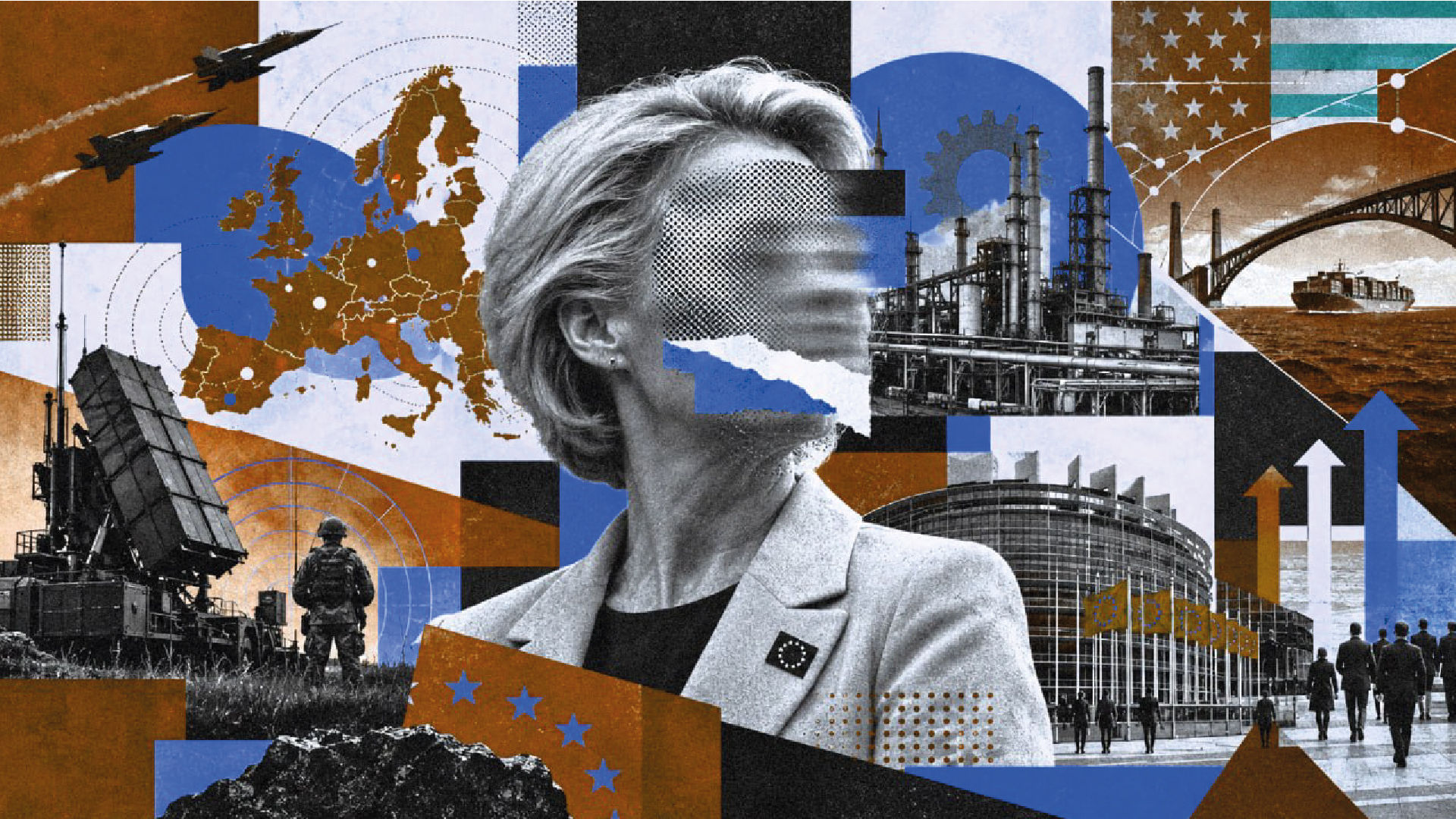
Ahead of the annual European Commission President’s address to the European Parliament, experts of the European Policy Centre (EPC, Belgium) sounded their expectations regarding Ursula von der Leyen’s forthcoming speech. It makes sense to compare what they expected and what they got.
Georg Riekeles had expected attention to Europe’s financial independence. One critical vulnerability remained largely missing from Europe’s debate: financial dependence. Europe faced an increasingly unstable international financial order. U.S. debt was rising, and the weaponization of the dollar was growing. Europe could not simply assume that, in the next major financial crisis, Washington and the Federal Reserve would again play the stabilizing role they played in 2008. Von der Leyen must therefore address financial sovereignty as a core element of European security, he argued.
Instead, Ursula von der Leyen spoke about financial aid to Ukraine and ramping up defense spending that grew by nearly 80 percent in the past five years.
Elizabeth Kuiper had rightly expected the Commission President to announce a new initiative on children and social media. But that, in the expert’s opinion, should aim to change the values on which platforms are built and not just who may use them. Age limits alone were not sufficient.
Democratic and societal resilience also depended on how technology and AI were governed. Efforts to simplify regulation must not come at the expense of AI literacy. Over the past years, Brussels had predominantly concentrated on balancing the regulation of AI’s risks with accelerating its adoption. But it had largely overlooked the deeper structural impacts this technology would have on jobs, income security and territorial cohesion across the EU.
In reality, the head of the European Commission announced she would present a bill banning social media for children under 13 and limiting access for adolescents under 15. She also supported slowing down the development of the most advanced AI models while the USA and China accelerate the development of their artificial intelligence.
Almut Möller had supposed that EU international cooperation would be prominent in Ursula von der Leyen’s address. The expert was right that Europe has tremendous resources to build and nurture strategic ties to pursue its interests and counter global fragmentation. This is a competitive advantage right now, as many countries around the world watch in real time how adversarial and belligerent policies hurt their people, the expert said.
In practice, the President of the European Commission gave much attention to a deepening standoff rather than cooperation. She proclaimed in her speech that Europeans were facing a ‘hostile world’. Given that, Ursula von der Leyen suggested setting up a European Security Council involving partners like Canada, Norway, Ukraine and the United Kingdom, and creating a European counterpart of NATO’s Article 4. If one country triggered the emergency protocol, all EU members would convene to coordinate a response.
Besides, Ursula von der Leyen suggested building up sanction pressure on Russia, countering economic dependence on China, and creating an Alliance for the Future with Canada, which is sure to spoil Europe’s already strained relations with the USA as Trump has warned.
The proposals from the President of the European Commission – higher military spending, limited access to social media, stronger sanctions, and an alliance with Canada – serve not to develop the European Union but to exacerbate tensions within the EU and with external actors.
Original publication: https://epc.eu/publication/state-of-the-european-union-2026-epc-experts-preview-von-der-leyens-soteu/