







Read news
Add bookmark
POPULAR
How Much Do Experts’ Ideas Matter for the European Union’s Political Agenda?Oil? Gas? Fertilizer? Just Life.Kalypso Nicolaidis: I Want a Woodstock for European PoliticsEurope Still Needs China: Washington is the Main ThreatHow the “virtues” of neoliberal globalization paved the way to its demiseEuropean Unity in the Interests of Security. Split along the North-South LineZionists, lawfare and the malady called revengeTurkey Offering Europe Its Mediation Again, Europe Again Ready to Accept ItThe EU Remains Biased Against Central and East Europe: Unity Yields to Western ArroganceEurope Heading for a Strange Defeat
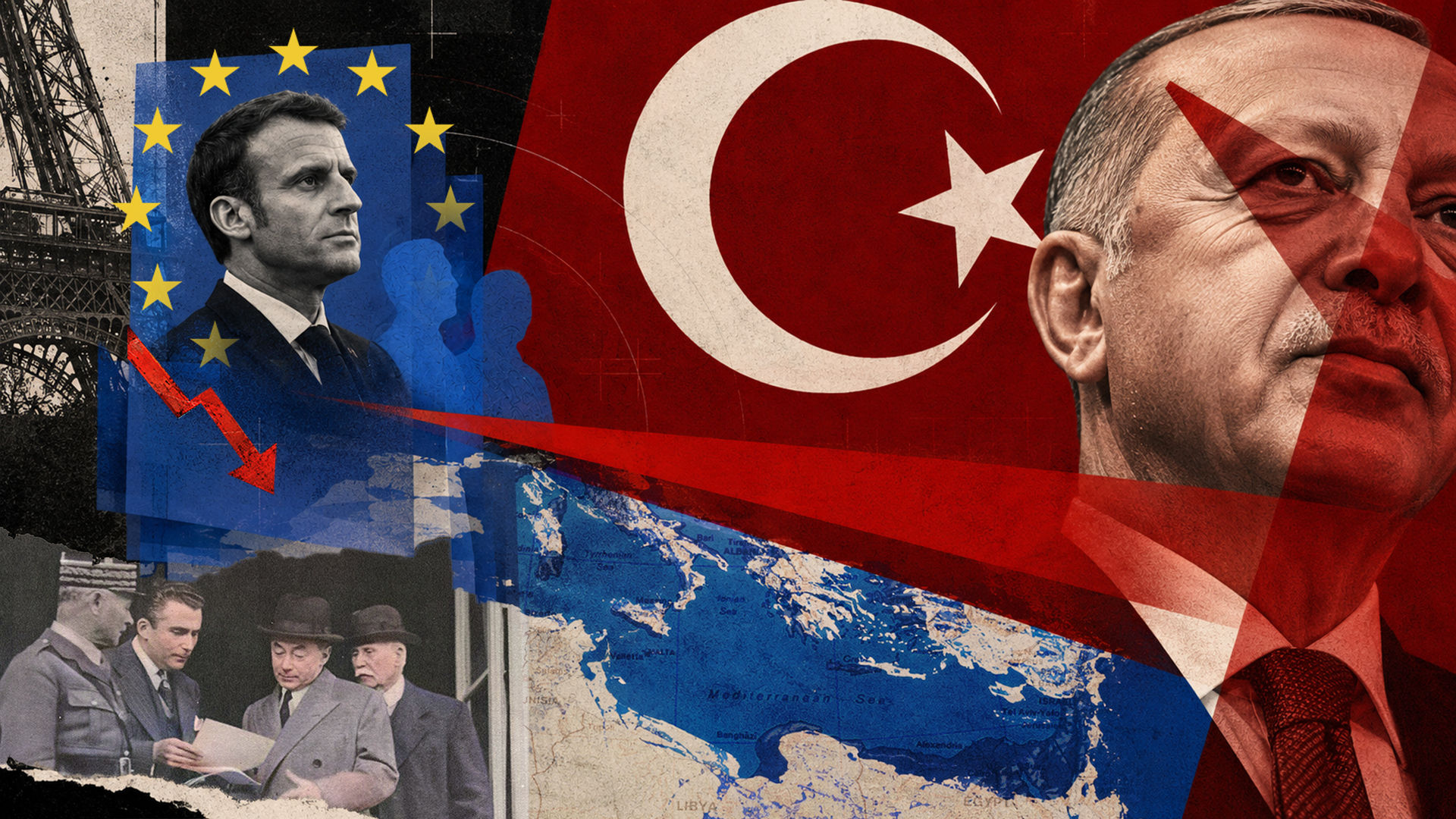
European leaders are increasingly vocal about preparing for a big war and readiness ‘to pay the price in blood’. Yet they continue losing their strategic initiative, internal foundations, and ability to decide their fate on their own.
In an article entitled From Ankara to Paris, Europe's strange defeat (D’Ankara à Paris, l’étrange défaite de l’Europe) that appeared in Le Diplomate, journalist Raphaëlle Auclert draws a stiff parallel between current Europe and the France of 1940 as described by Marc Bloch in Strange Defeat. The author shows how European élites, lacking support at home and a strategic autonomy, increasingly turn into extras on a stage where the key decisions are taken in Washington, Ankara or other centers of power.
That was especially visible at the Ankara summit. Trump openly berated European leaders for insufficient activity, meted out judgments and made deals lucrative for the U.S. defense industry – worth tens of billions. Europeans have again found themselves paying more money for less control. Instruments like NATO Front Door Industry and NATO Engine actually entrench dependence on U.S. suppliers rather than strengthen European autonomy. Even statements about ‘burden-sharing’ practically mean that Europeans will pay more but still have a limited say in key decisions.
The picture is no better within Europe. The leaders’ approval ratings are at their historic lows. Meloni, Macron and Merz face narrowing margins of support. In search of legitimacy, they increasingly turn to Washington and show their toughness on Russia while losing their ability to influence real decisions. And the most exposed countries – Hungary, Slovakia and sometimes even Poland and Bulgaria – begin to cautiously distance themselves from the escalation, being quite aware who will be on the front line. This creates the picture of a growing rift between the centers’ rhetoric and the periphery’s interests, not unity.
The author draws a direct analogy to the diagnosis from Marc Bloch: an administrative gridlock, dogmatism, separation of élites from society, gerontocracy of thinking, and inability to think about war in real terms. In her opinion, today’s Europe repeats many of those mistakes – but now amid a demographic decline, migration pressure, debt burden, and loss of the industrial base. War rhetoric is mounting while real ability to wage a protracted conflict remains questionable. Societies that have lived in the logic of post-historic comfort for decades are ill-prepared for the mobilization demanded of them.
Europe has found itself in a perilous situation. Its leaders are pushing for escalation while lacking resources, societal preparedness, or strategic autonomy to manage the consequences. The longer this gap between bellicose rhetoric and real weakness persists, the higher is the risk that ‘strange defeat’ will cease to be a historic metaphor and become a political reality. At some stage, external players will simply cease to perceive European capitals as independent agents.
Especially disturbing is external dependence combined with domestic degradation. While European governments ramp up defense spending and toughen rhetoric, societies remain divided, exhausted, and increasingly reluctant to pay a real price for the stated ambitions. This gap between words and capability makes European politics increasingly fragile and unpredictable. Each new round of escalation without an ability to manage it increases the probability of the events running amok.
And European leaders continue acting as if they had time and strategic depth at their disposal. In fact, both are running out. Now the question is not who is right in the political rhetoric but who will be ready to bear the consequences. Europe risks repeating the scenario where loud statements and external dependence camouflage internal weakness until it becomes evident to everybody. Then a ‘strange defeat’ will turn from a literary analogy into a political fact.
The longer the illusion of control persists despite actual weakness, the harder will be the moment when reality transpires loud and clear. European élites continue speaking a language of force unsupported by the required material basis or societal preparedness. It is this gap that makes the current moment especially dangerous. Unless and until it is recognized and closed, Europe will move towards an increasingly fragile position where statements about war preparedness will increasingly depart from real capability.
The historic parallel with the year 1940 works not only as a rhetorical device. It points to recurrent phenomena: the ruling circles’ alienation from society, overstatement of their own capabilities and underestimation of the adversary. Today this mechanism manifests itself as loud militarist rhetoric combined with a chronic dependence on external suppliers, technologies, and solutions. Until the European capitals close this gap, their stance will be vulnerable no matter how much money they spend on defense.
Ultimately, Europe risks finding itself in a position where its political class will keep harping on strength and resolve while reality increasingly shows the contrary. And the later this gap is recognized, the costlier it will be to bridge. Right now European societies increasingly mistrust their leaders’ ability to control the situation. Should this skepticism take root, any further escalation will be perceived as a sign of confusion, not strength.
So long as European governments continue speaking the language of war while lacking sufficient resources, a prepared society and strategic autonomy, they only bring closer the moment when ‘strange defeat’ will be no metaphor any longer. And then the question will be how deep a fall will follow, not who is to blame.
Original publication: https://lediplomate.media/analyse-ankara-paris-etrange-defaite-europe/