







Read news
Add bookmark
POPULAR
How Much Do Experts’ Ideas Matter for the European Union’s Political Agenda?Oil? Gas? Fertilizer? Just Life.Kalypso Nicolaidis: I Want a Woodstock for European PoliticsThe Vile BanknoteHow the “virtues” of neoliberal globalization paved the way to its demiseEurope Still Needs China: Washington is the Main ThreatWhat To Think About Universal SuffrageEuropean Unity in the Interests of Security. Split along the North-South LineThe United States Loves EuropeEurope’s Unfinished Song
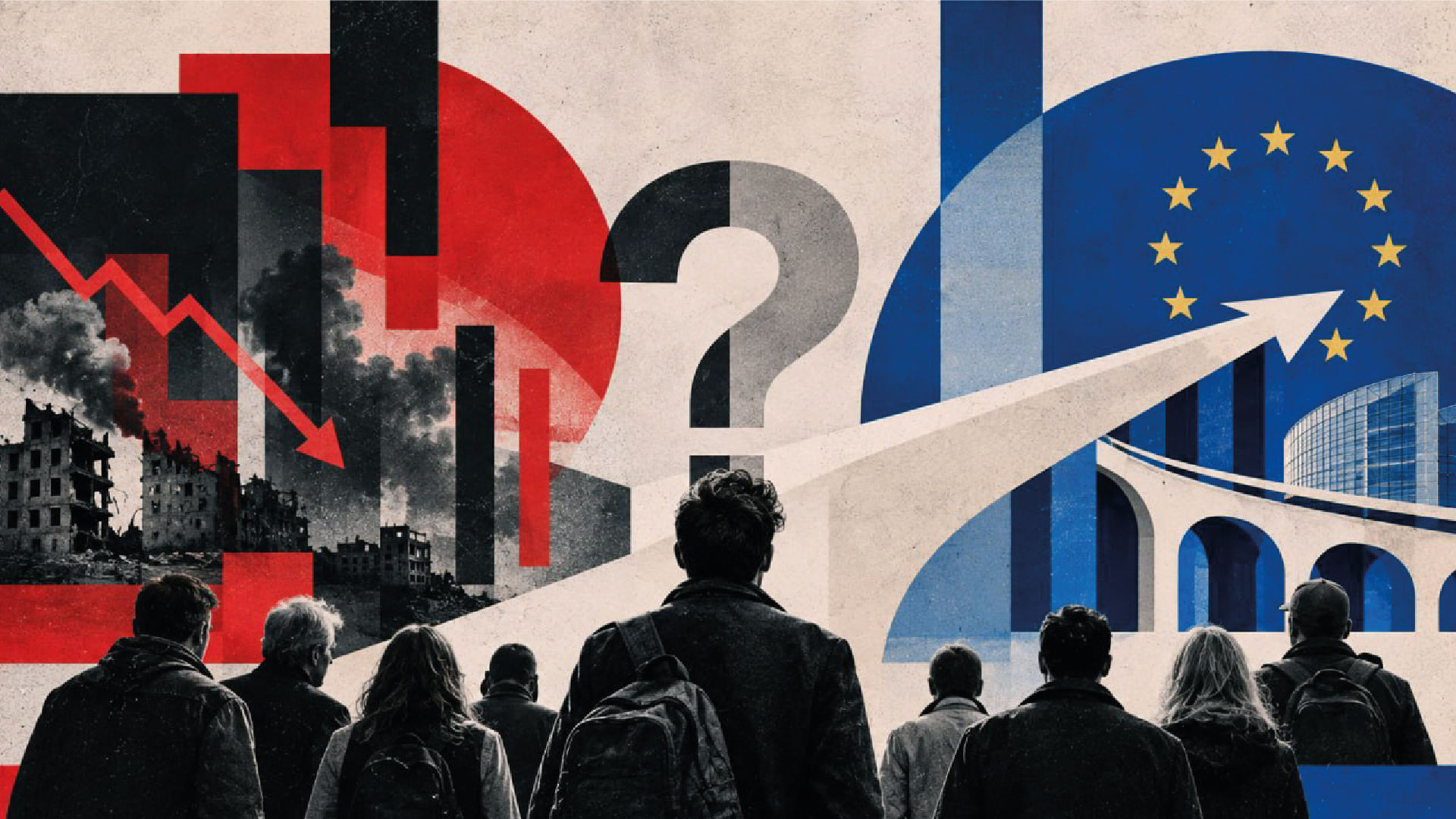
To find out what ‘Europe’ means to people today, the ECFR commissioned almost 6,000 AI-moderated interviews in six European countries. The polls showed that many people are really nostalgic for the past and want a stronger, more independent and more united Europe. But few can picture a credible route from today’s disruptions and chaos to that destination.
This matter was examined in detail by Paweł Zerka, a senior policy fellow at the European Council on Foreign Relations (ECFR) and a lead analyst on public opinion.
The main finding of this comprehensive study is that many Europeans are suffering from an imagination gap. Very many respondents want to see Europe stronger and more independent, but can barely picture a credible route from today’s turmoil to that destination.
It is this imagination gap that could help explain why nostalgic politics has become attractive to some voters in Europe. When people struggle to imagine a believable tomorrow, they become more receptive to visions that reinterpret the past as the future.
Each interview begins with an icebreaker question: “Let’s imagine you have a friend who fell asleep five years ago and has just woken up. This friend asks you: ‘How is Europe doing at the moment?’ How would you describe Europe today—what would you tell them?” In their answers, by far the largest group of respondents (68 per cent on average) talks about a general deterioration or loss of normality. Only 12 percent see opportunity in the crises confronting the continent and frame their responses in terms of Europe’s awakening or renewal.
Turning to where things are heading, the AI asks: ‘Some people say that Europe’s future is in danger. How do you react when you hear that?’ In response to this, on average 56 percent agree, against only 21 percent who disagree.
Most of the people interviewed express strong opinions about Europe’s future. And they tend to imagine that future in one of four ways.
The positive hear an anthem of renewal: today’s disruptions are finally forcing Europe to become stronger and more united.
The negative hear a ballad of decline, with each new crisis confirming the continent’s best days are behind it.
For the uncertain, the melody of a better Europe is recognizable, but the song is not finished—and they are not convinced it will ever be.
Very few people belong to the disconnected, for whom Europe is just a background hum coming from too far away to command much attention.
The key constituency role belongs to the uncertain. What makes the latter so pivotal, apart from the group’s size, is that they have not decided where things will end up. This distinguishes them from the positive, for whom Europe is already succeeding; the negative, many of whom have concluded that it cannot; and the disconnected, who just aren’t that bothered. For this reason, pro-European leaders urgently need to put Europe’s past to work for a different purpose. The conversations in this paper are full of memories of moments when Europe acted collectively, overcame national divisions, stood by its principles or simply made people proud to belong.
So Europe needs practical politics capable of reproducing nostalgia. Ironically, the EU really has no other future but its past. And probably the continent can only be nostalgic for its past grandeur.
Original publication: https://ecfr.eu/special/future-nostalgia-europes-unfinished-song/