





Read news
Add bookmark
POPULAR
How Much Do Experts’ Ideas Matter for the European Union’s Political Agenda?Oil? Gas? Fertilizer? Just Life.Kalypso Nicolaidis: I Want a Woodstock for European PoliticsHow the “virtues” of neoliberal globalization paved the way to its demiseLet Them Hate Me, As Long As They Fear Me / Oderint Dum MetuantThe InvalidsWhy capitalism is fundamentally undemocraticTocquevilleEuropean Unity in the Interests of Security. Split along the North-South LineWhat To Think About Universal Suffrage
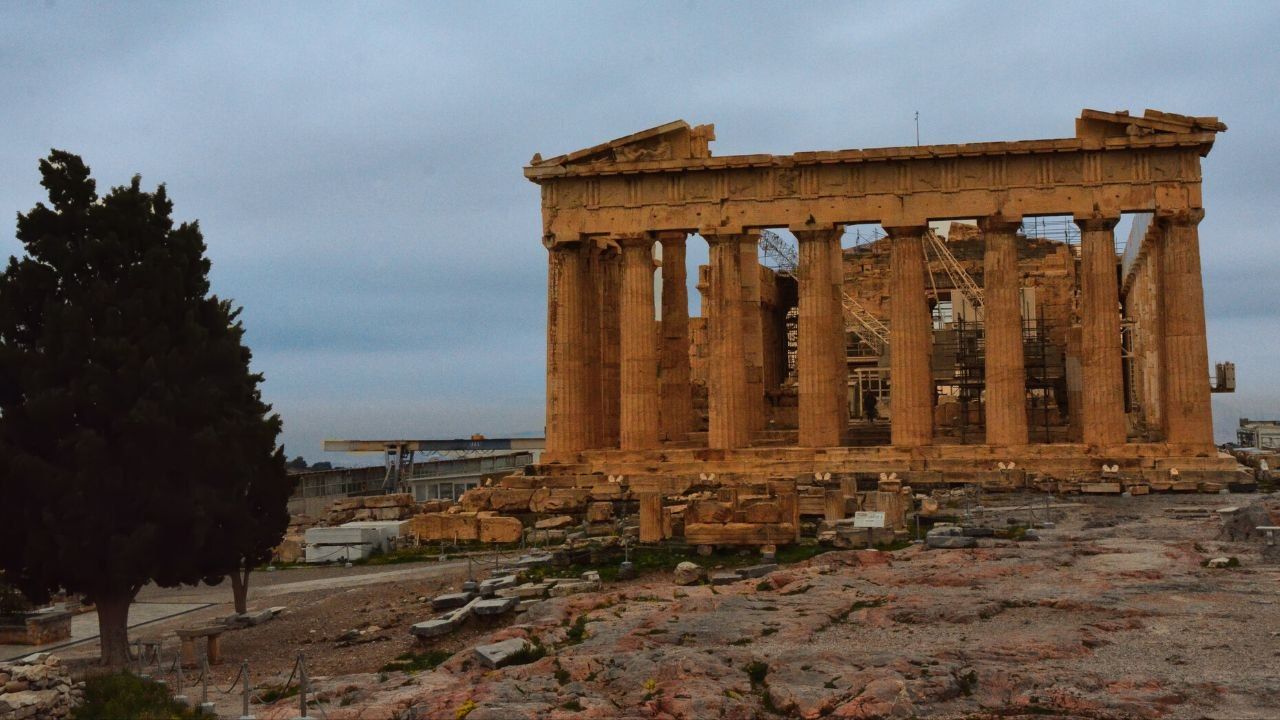
The Parthenon is considered an enduring symbol of ancient Greece, Athenian democracy, and Western civilization, and one of the most important cultural monuments...
Historians are well aware of the long and rocky road that had to be traveled to reach our unparalleled contemporary modernity, in which universal suffrage appears as the nec plus ultra of the democratic organization of society.
In short, that’s the line they’re selling us. Historical reality shows that those who ventured down such a perilous path did so convinced of the need to limit and nip in the bud the possibilities that each concession opened up for the working classes and the slaves—in other words, the underclass.
In the ancient Athens of Solon—the birthplace of democracy—citizenship was the result of an economic privilege: only citizens owned land. This privilege is explained by the history of Athenian democracy: as the heir to an aristocratic past, the regime considered agriculture the only work worthy of a citizen and valued the life of a rentier (6th century B.C.).
The very democratic Solon, drawing from this class of free men, defined four property-based classes. Depending on the amount of wheat, wine, and olive oil each citizen possessed, he belonged to one of the following four classes:
• the pentakosiomedimnoi, who owned more than 500 medimna of grain;
• the hippeis, gentlemen, more than 300 medimna;
• the zeugites, farmers, more than 200 medimna;
• the tethas, who possessed less than 200 medimnas.
(One medimna = 52 litri).
Would you be surprised to learn that the highest offices were open only to the upper classes? Solon’s constitutional reforms—which earned him the reputation as the father of democracy—established a system that was just a tad different from a plutocracy, with four socioeconomic groups:
• the aristocrats, or Eupatrids, that is, the wealthiest landowners;
• the gémoroi, farmers and landowners;
• the common people, who lived off their wages or trade; and
• slaves, considered property rather than free men.
Incidentally, women were also considered property and eternally subordinate, as were the metics (equivalent to our immigrants), who were excluded from the political community.
Put another way, democracy was born oozing exclusion from every pore, a practice that continues to this day despite what the experts, the converts, and the usual plutocrats may say.
The rule was almost always not to hide discrimination, which was always legal—that is, enshrined in the Constitution and the laws.
Back in August 1881, our much-admired Émile Zola—the same man who later dared to write the famous “J’accuse,” addressed to President Félix Faure in defense of Dreyfus (1898)—published a controversial piece in the Parisian newspaper *Le Figaro*; take a look:
Equal suffrage, which they call universal, is the application to the legislative branch of the communist principle: the absolute law of numbers. It therefore seems impossible for a man of order to find this organization of suffrage to be good and equitable.
(...)
We therefore believe we can assert that we will not subdue universal suffrage by compromising with it. In our view, we must reject it and expose it in all its wickedness; we must abandon it and make it abhorrent to everything that is honest.
(…)
For more information on this plan of action, please contact Count Yvert, secretary of the Society of Christian Landowners, under the patronage of St. Michael and St. Remigius, at 37 Rue de l’Université in Paris.
(Émile Zola. Note on Universal Suffrage. *Le Figaro*, August 1881. National Library of France. Gallica, Paris)
That fertile and distinguished province decided to grant women the right to vote in the year of our Lord 1934… but only for municipal elections. Women had to wait until 1952 to participate in the presidential elections in which a (former) dictator was elected: Carlos Ibáñez del Campo.
Allow me to take this opportunity to point out that—as we see and/or have seen—sound political judgment is not encoded in one’s chromosomes, nor does it depend on the depth or size of one’s wallet.
This is an occasion on which it is worth emphasizing that attachment, loyalty, affection, and a predisposition toward certain points of view are no different. As a matter of political orientation and direction, flip-flopping constitutes an important part of the behavioral heritage of a wide variety of magistrates. Just like whims, bulimia, greed, and rapacity. The second conviction of a certain Nicolas Sarkozy is proof of what I’m saying.
The truth is that while Émile Zola expressed his radical disapproval of universal suffrage, his reasons had mostly to do with plutocratic and/or aristocratic inertia—with the danger looming over the power of the elites, threatened by the common people, the plebeians, the children of nothing and no one, the producers, the lowlifes—if you know what I mean—who dare to aspire to carry candles at this funeral.
This overlooks the fact that modern political power arose as an outgrowth of the accumulation of wealth and the invention of currency: what I told you about ancient Greece is contemporary with the emergence of money in Lydia in the 6th century B.C.
Zola, however, for reasons unknown, took a path opposite to that of the venal progressives who one day discovered, with admiration, the glitter of gold. Hence, a few years later—more precisely, on the occasion of the 1893 legislative elections—he spoke out in another essay titled “What to Think of Universal Suffrage,” which gained and still enjoys a certain notoriety.
In it, good old Émile—who loved to stroll with Cézanne through the countryside of southern France as well as the forests of the Paris region—wrote about the elections:
Zola, who died in an accident… never lived to see the 20th century, much less the 21st century in which we are painfully floundering—which is why we can forgive his speculation about how arrogant politics would become in what were, for him, centuries yet to come. What is surprising, however, are his predictions:
Even in his day, Émile Zola mocked the system...
Here is what must be clearly established: universal suffrage is still by no means scientific; it is entirely empirical. Given the considerable number of our illiterate voters, and the shameful exploitation of obscenity and stupidity, it is impossible to know what the outcome of the vote will be...
Candidates who deserve to be elected are reduced to resorting to the same dishonest maneuvers as candidates who have no good reason to be elected. In a word, the majestic principle of popular sovereignty vanishes; all that remains is the filthy backroom dealings of a group of characters who use universal suffrage to carve up the country, as if they were using a knife to butcher a chicken...
132 years later, Zola continues to work as a journalist, without mincing words...
Who would have thought that Émile Zola wasn’t describing today’s Chile?
Who would have thought that the distinguished writer wasn’t offering us a very realistic—not even impressionistic…—picture of the next parliament, not to mention the next führer?
Ah! I hate this politics! I hate it for the empty clamor with which it deafens us, and for the dwarfs it imposes on us! You’ll see, no matter what happens, what a pitiful parliament we’ll end up with… one-day wonders, illustrious unknowns who fade into oblivion, ambitious idiots who come to play the tough guy and are content with a bone to gnaw on, sick minds dreaming of avenging their constant failures, every appetite unleashed and every form of stupidity running wild!
When a simply reasonable man passes by and looks at that fermenting turmoil, he stops, stunned and saddened…
Hollywood would have given it another title:
Back to the Future!