







Read news
Add bookmark
POPULAR
How Much Do Experts’ Ideas Matter for the European Union’s Political Agenda?Oil? Gas? Fertilizer? Just Life.The Vile BanknoteKalypso Nicolaidis: I Want a Woodstock for European PoliticsWhat To Think About Universal SuffrageHow the “virtues” of neoliberal globalization paved the way to its demiseLet Them Hate Me, As Long As They Fear Me / Oderint Dum MetuantLost CausesThe Housing Crisis In EuropeEconomics And Finance
The price of every commodity breaks down into the three factors of production: wages, profit and rent.
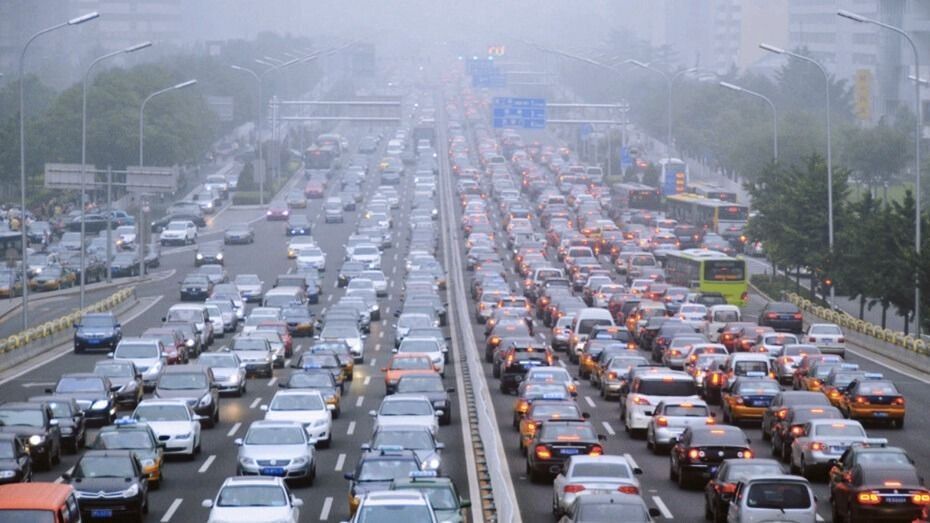
Whenever I bring up Economics, my mates are quick to warn me: “I don’t understand any of that stuff.” As if we were talking about the theory of “General Relativity” or, worse still, “Quantum Entanglement,” the “Higgs boson,” or the dark matter and dark energy that make up 95% of the Universe and that nobody has ever seen.
And yet it’s very simple, clear as day. Economics, I mean: two and two make four, four and two make six, six and two make eight… and eight, sixteen! Primary school level.
To get a degree in economics you don’t need much more than that: percentages, the statistical mean and median, a couple of measly first-degree equations and—above all—nerve. Lots of nerve. François Mitterrand—who was not short of it—once said:
Adam Smith (1723–1790), the bloke who stood at the origin of economic theory, touched on the distribution of wealth at a time when the misery of the many and the opulence of the few were plain for all to see. Not like now, when we’re all middle class.
Smith argued that the unequal distribution of wealth results from the concentration of the ownership of land and capital in the few hands that “accumulate in the hands of a handful of private individuals.”
For Smith, society is divided into three classes, each of which owns a means of production: workers provide labor, capitalists provide capital, and landowners provide land.
How? Why? Since when? Smith didn’t go there. The world is the way it is, and “that’s that.” Where does private ownership of land and capital, and its subsequent accumulation, come from? Who knows: maybe it came with Creation. Don’t ask awkward questions…
What is certain is that the price of every commodity breaks down into the remuneration of the three factors of production: wages for the workers, profit for the capitalist and rent for the landowner. As simple as the back of your hand…
It won’t escape your sharp mind that, given a price for a given commodity, the underlying question boils down to working out what each one gets: worker, capitalist and landowner. Everyone wants the best share. The more one grabs, the smaller the share left for the others. The struggle that arises from this confrontation is what they call the class struggle.
Contrary to what the gossips say, the class struggle was not invented by Karl Marx.
Adam Smith, David Ricardo and later Marx, Keynes and others saw it in the reality around them: all they did was observe it.
David Ricardo, another founder of so-called economic science, considered the distribution of the product to be the main question of political economy. Ricardo observed that there is an inverse linear relationship between wages and profit. Which, says Ricardo, will have considerable implications. You know the story by now: the tug-of-war between the classes to get a bigger share when the product obtained through the factors of production is divided up. The class struggle.
The capitalist argues that if wages are too high, he, the poor entrepreneur, will see his profit shrink and will therefore have less capital to invest in order to make even more profit. He doesn’t put it that way, of course: the capitalist only wants to invest more in order to create more jobs and thus bring happiness to the working stiff.
A happiness always conjugated in the future tense. A normally constituted economist, debating on TV and faced with demands for a fairer distribution of the product, hastens to point out that distribution does not happen ex ante: the sharing out must take place once the product has been produced. First you have to produce, declares the economist who discovered America.
For these damn “experts,” humanity has produced nothing in its entire history, and the capital piled up in a handful of grubby little hands fell from the sky. Hands off. Not now, not ever.
The accumulation goes on. Over the last seven years in France, the 500 richest people have doubled their wealth. They now own a little more than 45% of French wealth, in a country of 68 million inhabitants. So 0.000001% of the population concentrates 45% of the wealth and, funnily enough, pays in taxes (of every kind) less than half of what some poor sod on the minimum wage pays.
This is the result of the class struggle. Which they won.
With all this in mind, Mme Julie Van Ongeval, head of Opella, a subsidiary of Sanofi (pharmaceutical laboratories), is in favor of selling the company she runs (she doesn’t own it) to a Yankee investor, for which she will receive a commission of 200 million euros (source: Arnaud Montebourg, former Minister of the Economy).
To throw us off the scent, economists and their puppet masters publish thousands of pages on weighty economic topics, their favorites being growth, price stability, full employment, the balance of foreign trade (exports versus imports), not forgetting balanced public finances.
Growth
In the theory of the founders of economic theory, raw materials are infinite and free. That is what they still teach in Schools of Economics today. Who is growing, or what is growing? In the chacarera “La Colorada,” Atahualpa Yupanqui already said it:
For the fundamentalists of neoliberalism there is only one concern: growth. In seven years the fortune of the 500 richest citizens of France grew by more than 100%… The rest of us are gasping for breath with our tongues hanging out. Greed makes them see the world in a different color.
Example: The Times of Israel runs the headline:
Meanwhile the genocide of the Palestinian population goes on, and IDF soldiers take selfies in front of their handiwork:
Of course, the “democratic” press has its say: the latest editorial in Le Figaro Magazine states:
Those enemies are the owners of the oil that the West steals to secure its “growth.” Infinite growth. Seriously?
Price stability
The US, with its exclusive privilege of issuing the world’s currency, exports inflation to the whole world. Economists have known it since Weimar Germany: inflation is the only resource of States that cannot pay their debts. That is how they wipe the slate clean, practicing the euthanasia of the rentier, as Keynes put it. US public debt exceeds 122% of its GDP. Nothing to see here. Meanwhile the two-bit countries chase a fiscal surplus…
Full employment
Good joke. In the January–March 2024 quarter, the informal employment rate in Chile reached 28.1%, up 0.7 percentage points in twelve months.
More than 2.6 million people work outside any legal framework. And there is still unemployment… The same thing happens in the European Union, where “Uber” jobs are all the rage, throwing the financing of Social Security and the pension system off balance.
Balance of foreign trade
Another joke. The US, like the European Union, is stepping up its protectionist policies to impose its own terms of trade, while shabby little countries like Chile swear only by the free market.
Balanced public finances
If the statement weren’t so tragic, it would be laughable. The US runs an abysmal deficit, while countries like France can’t even control their own sphincters anymore. Balanced public finances are for the colonies, for those cardboard-cutout countries, for the naive who live in fear of the scores handed out by the credit rating agencies, those modern-day privateers.
What more can I say? What David Ricardo was already saying at the dawn of this whole economic racket: