







Read news
Add bookmark
POPULAR
How Much Do Experts’ Ideas Matter for the European Union’s Political Agenda?Kalypso Nicolaidis: I Want a Woodstock for European PoliticsOil? Gas? Fertilizer? Just Life.The Vile BanknoteHow the “virtues” of neoliberal globalization paved the way to its demiseThe Changing Patterns Of Migration In EuropeThe Pact Enters into Force: Uncertainties and Risks of New European Migration GovernanceLet Them Hate Me, As Long As They Fear Me / Oderint Dum MetuantOn Externalization of Asylum, with Responsibility Offloaded to Third CountriesEurope in a Global Crisis of Forced Displacement
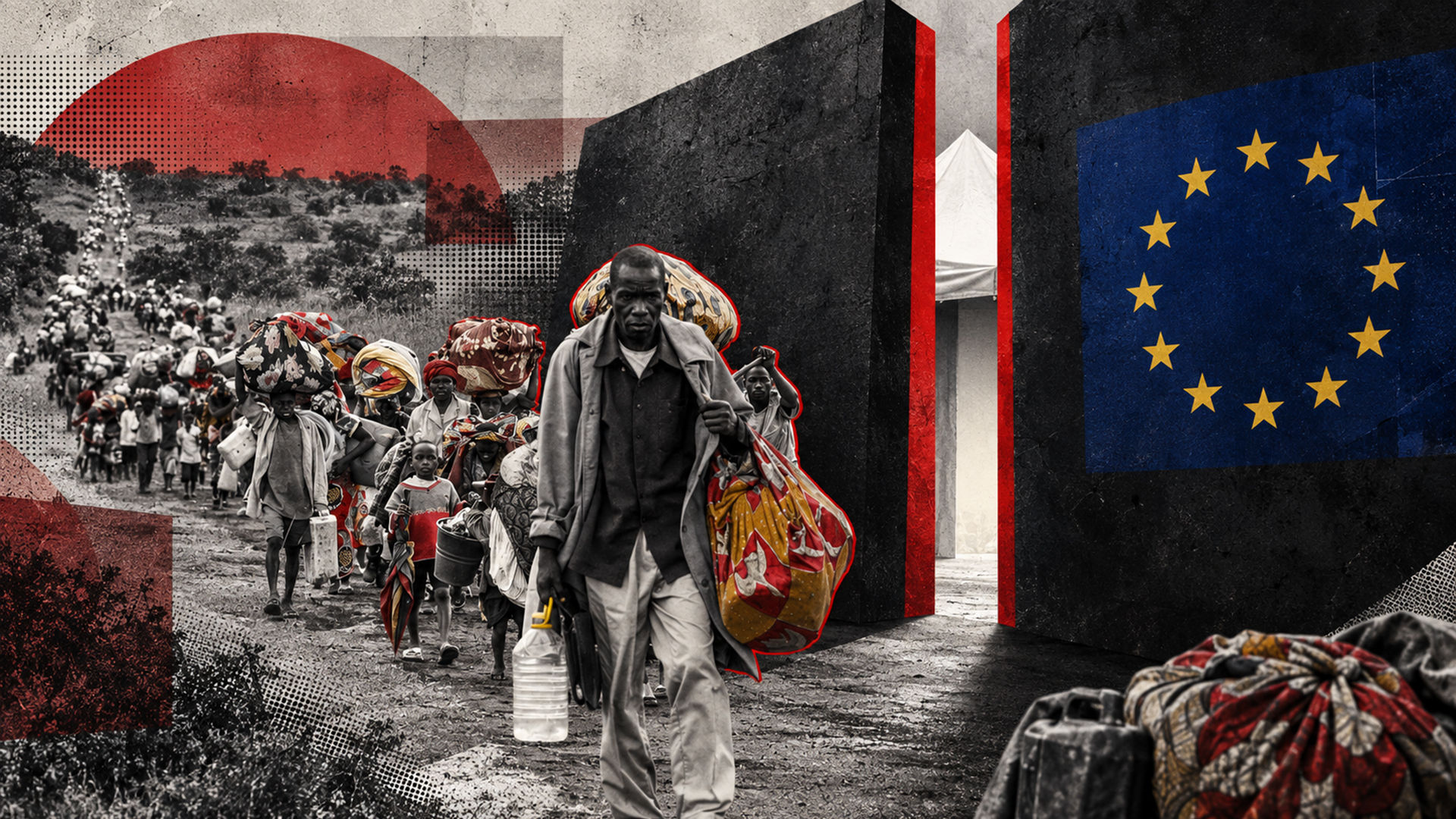
A New Pact on Migration and Asylum has come into force across the European Union. The Pact’s language is based on principles such as solidarity, human dignity, and a fair sharing of responsibility. At the same time, it introduces rules meant to make it easier for member States to control their own territory and borders.
The Pact is also meant to solve a most difficult practical problem: how to actually carry out the return of asylum seekers who were denied protection after their applications were examined.
The Pact’s critics believe the new rules on so-called ‘safe third countries’ undermine the very foundations of refugee protection.
Is this the case? The matter was examined by Dorota Heidrich, associate professor of international relations in the Department of Diplomacy and International Institutions at the University of Warsaw, and Justyna Nakonieczna-Bartosiewicz, assistant professor of international relations at the Faculty of Political Science and International Studies, University of Warsaw.
They point out that forced displacement has gradually evolved from a legitimate instrument of statecraft into a violation of international law. They also argue that today’s crisis is not primarily one of numbers but of political will. The very States that built the post-war protection regime are systematically retreating from it.
According to statistics, the numbers of forced migrants will continue rising. And the international protection system is most likely to move towards normalizing forced displacement as an ad hoc managed condition – an approach in which treatment depends less on need than on where people come from and how much they are worth politically.
If the legal instruments and institutions do exist, then why is the number of forcibly displaced persons still growing, and why do we speak of a crisis right now?
One answer lies in the sheer scale of human suffering. But there is a second concern: although the numbers of forcibly displaced people are the highest today since the Second World War, some western States are systematically withdrawing from the very instruments of protection they themselves helped create.
The international protection system is quite obviously losing coherence
at the very moment when it is needed most.
Where changes to the current norms of international protection will go, at the global and regional levels, is not clear today.
The most likely scenario is gradual normalization of forced migration as a situation that States will manage on an ad hoc basis, without comprehensive protective frameworks.
Millions of people will find themselves in a legal gray zone. The decision about who receives protection will increasingly depend on where they come from and how much they are worth politically today.
What emerges is a systemic crisis of political will – required to democratize and streamline the forced displacement system. And this happens precisely at a time when a record high number of people have no home to return to.
Original publication: https://www.isdp.eu/publication/the-global-crisis-of-forced-displacement-where-are-we-and-where-are-we-heading/