






Read news
Add bookmark
POPULAR
How Much Do Experts’ Ideas Matter for the European Union’s Political Agenda?Oil? Gas? Fertilizer? Just Life.Kalypso Nicolaidis: I Want a Woodstock for European PoliticsThe Vile BanknoteHow the “virtues” of neoliberal globalization paved the way to its demiseLost CausesWhat To Think About Universal SuffrageThe InvalidsLet Them Hate Me, As Long As They Fear Me / Oderint Dum MetuantWith The Arrival Of Fall, The Winds Of Change Are Blowing
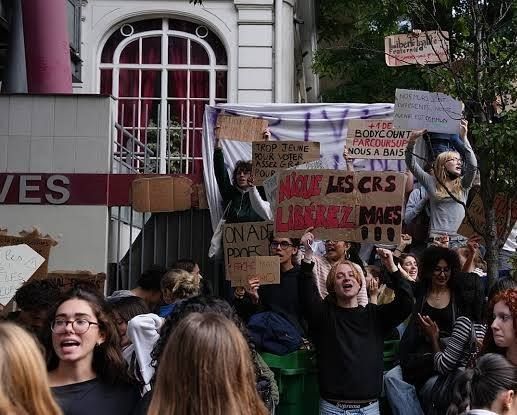
In France, the problems in schools, and many others besides, are coming to the surface as protest. If these young people cannot count on a secure future, what future awaits Europe?
The truth is that many people in Europe today are living through real hardship, and having a qualified job could become a privilege. In France, education no longer seems to be enough: there are not enough teachers, classes are overcrowded, and those who have no one to help them are left to study almost on their own. This is one of the many causes now reflected in a strike that seems to draw more and more angry people, ready to stay in the streets.
What is happening on the other side of the Alps deserves attention, because for once the ones raising their voice are not tired adults: they are teenagers, and they are doing it loudly.
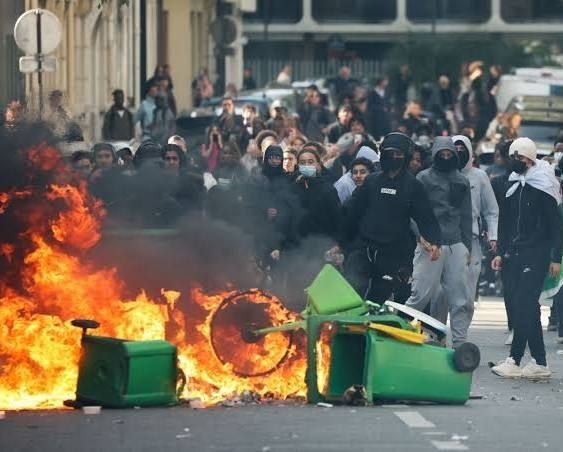
It all started on September 21 in a high school in Créteil, just outside Paris, and in a few days it spread everywhere. By October 1, according to the Interior Ministry itself, more than a thousand of the roughly 3,700 high schools in the country had been touched by the movement, and over two hundred were blocked with bins, barriers and anything else at hand.
Then on Tuesday, October 6, came what the students called “Act III,” with marches in some thirty cities: 450,000 people according to the organizers, 256,000 according to the ministry.
I see this as really just the tip of the iceberg. We are talking about policies that, over time, have caused a great deal of hardship for students and their families. Unfortunately, there is a shortage of teaching staff: since the start of the school year, according to the teachers’ union Snes-FSU, at least one teacher has been missing in 53% of public middle and high schools. The buildings, too, are in very poor condition and badly need renovation: a girl from Gonesse told of broken chairs and water dripping from the ceiling of the toilets.
On top of that, many schools have too many students per class, nurses are there for only a few hours at most, and many schools do not even have a psychologist on staff—something truly necessary, given the serious problems high school students face every day. One teacher says he has to split his teaching time to listen to the students’ problems, or ends up handling anxiety attacks, which he says are very frequent because of the heavy pressure young people are under as they prepare for their final years of high school and for university. The protest signs are clear: “Our classes are overflowing, and so is our patience,” reads one in Brest.
Then there’s the money. On October 1 the government presented its budget for 2027, with 43 billion euros of measures to bring down the deficit, and inside there was a small gift for young people: 178 euros a year to enroll in a BTS (a two-year technical course) and 270 for the preparatory classes for the grandes écoles, for students without a scholarship. It didn’t survive the day—that same evening the Education Minister announced on television that it had been withdrawn. To be fair, the government insists that the education budget is actually growing, by 1.2 billion euros.
One of the things that makes the whole process more complicated is Parcoursup, a platform that determines where a student can study after finishing high school. In theory, it’s a good, modern, and impartial system: it reviews your academic record, and you receive a response.
In reality, for many students it is a black box—criteria nobody really understands, answers that come late, doors that close without explanation. And who pays the price? Those whose parents don’t know how the system works, or can’t afford private counselors to “build” the perfect application. A kid from the suburbs who went a whole year without a math teacher and a kid from a central Paris lycée with private tutoring do not start from the same line, and an algorithm doesn’t fix that—if anything, it makes the inequality look fair. Prime Minister Sébastien Lecornu has promised to correct whatever can be corrected, adding that those who want to abolish it never say what they would replace it with.
Then there is the way the police are reacting. We hear of a 14-year-old in the Val-d’Oise hit in the face by a grenade, and of hundreds of young people taken into custody. The minister speaks of “ultra-violent groups” taking the movement hostage; the students speak of repression. Meanwhile, the government has suspended classes for half a day this week so that schools can hold a moment of “internal democracy.”
I believe someone is finally starting to wake up. We are seven months away from a presidential election, and it seems to me that the only ones truly awake are those who cannot even vote yet. Not long ago I wrote about a sleeping and drowsy population. Apparently someone is waking up; we will see whether this truly brings real change that makes our Europe better.