







Read news
Add bookmark
POPULAR
How Much Do Experts’ Ideas Matter for the European Union’s Political Agenda?Oil? Gas? Fertilizer? Just Life.Kalypso Nicolaidis: I Want a Woodstock for European PoliticsHow the “virtues” of neoliberal globalization paved the way to its demiseEuropean Unity in the Interests of Security. Split along the North-South LineThe Gulf War and Europe’s Helpless Energy PolicyEurope Heading for a Strange DefeatEurope Still Needs China: Washington is the Main ThreatThe Middle Corridor: A Geopolitical Dream with Dubious ProspectsChina’s Belt and Road Did Not Split Europe. It Just Revealed an Old Rift.
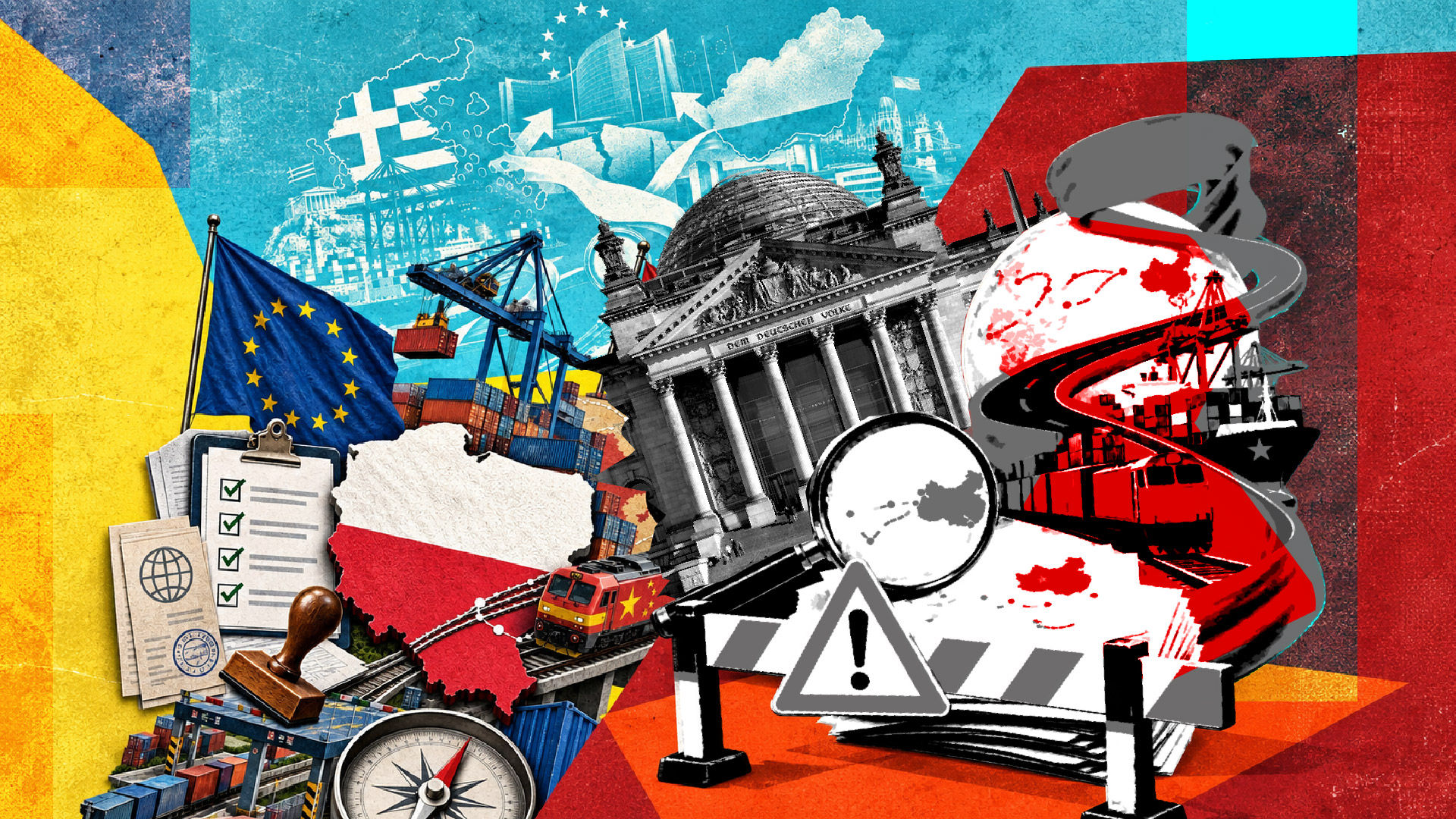
In a Global Studies Quarterly article entitled Comrade, Customer, Client, or Critic? European States’ Engagements with China’s Belt and Road Initiative, Morten Skumsrud Andersen, Wrenn Yennie Lindgren, Margrete Seiersnes-Killingland and Ole Jacob Sending from the Norwegian Institute of International Affairs (NUPI) explain why Greece and Hungary accept Chinese money while Germany keeps at arm’s length. Their finding is uncomfortable for Brussels’ common policy rhetoric. Beijing’s initiative does not itself change European alignments. It adapts to the capitals’ pre-existing relations with the Union and China.
The authors identify four typical relationships, each associated with distinct policy behaviors and underlying drivers. A Comrade is politically close to Beijing and uses China as leverage against Brussels. A Client does not share Chinese ideology but makes concessions out of economic necessity. A Customer buys the projects’ benefits but not China’s political agenda. A Critic sees the Initiative as a threat and counters it. Hungary is closer to the first type: Orbán has spoken of the ‘degradation of the West’, signed an ‘all-weather partnership’, and toned down European institutions’ criticism of China even though most of its money still came from the EU. Greece became a Client during its debt crisis, with the port of Piraeus passing to China’s COSCO company and Athens blocking EU statements on human rights and the South China Sea. As its economy stabilized, Greece distanced itself from the 17+1 format. Its dependence was contingent but split the EU’s common foreign policy line temporarily.
Poland is the largest European signatory to the Initiative and a Customer. Its trade deficit with China is huge; Huawei was described as an almost existential threat, and the sale of land for the flagship Łódź–Chengdu railway was blocked by the minister of defense. Yet Warsaw engages where it may be beneficial – while remaining the largest net recipient of EU funding. Germany is a Critic: it does not subscribe to the Belt and Road Initiative and has strengthened investment screening, rejected a Chinese stake in the Hamburg port, and framed China as a ‘partner, competitor, and systemic rival’. Berlin continues trading with China but is reluctant to become politically entangled.
This is more important for the Union than an academic scheme. So long as Hungary trades loyalty to Beijing for bargaining space with Brussels, a crisis-ridden Greece swaps its vote for investments, Poland takes a contract and imposes a ban, and Germany writes strategies, there is no common policy towards China. There are four different deals. The Initiative does not break up European unity in a straightforward manner. It feeds the fissures that capitals are already willing to exploit.
The article’s academic tone does not override its political finding. China is not an almighty designer of a new European order. It is a backup supplier of funds and status for those capitals that lack either money or leeway within the Union. So long as Brussels remains the main source of funds and Beijing stays a convenient alternative for emergencies, there will be no single line. There will be a set of deals that each capital will justify by its own needs.
The ‘Four Types’ framework also explains why Brussels strategies are so often at odds with the facts on the ground. A document mentioning a ‘systemic rival’ follows a Critic’s logic. Hungary’s agreement and the Greek port live in another logic. The Polish railway belongs to a third one. The Union is trying to speak in one voice about China with four different risk-and-benefit calculations present within it. Unless and until these calculations are reconciled, any common strategy will only apply to the capital that authored it.
The authors are explicit that it is not so much economic dependencies that are changing, but capitals’ political willingness to argue with Brussels or Beijing. So long as this argument stays on national tracks, the Union will talk about a systemic rival and simultaneously watch one member blocking a resolution, another selling a port, a third one building a railway, and a fourth one writing a containment strategy.
Original publication: https://www.nupi.no/en/publications/cristin-pub/comrade-customer-client-or-critic-european-states-engagements-with-china-s-belt-and-road-initiative