







Read news
Add bookmark
POPULAR
How Much Do Experts’ Ideas Matter for the European Union’s Political Agenda?Reweaving Silk Roads: The Middle Corridor’s Role in EU Economic SecurityOil? Gas? Fertilizer? Just Life.Kalypso Nicolaidis: I Want a Woodstock for European PoliticsTurkey Offering Europe Its Mediation Again, Europe Again Ready to Accept ItHow the “virtues” of neoliberal globalization paved the way to its demiseEurope Keeps Making the Same Mistake, This Time with the Power GridsThe Middle Corridor: A Geopolitical Dream with Dubious Prospects
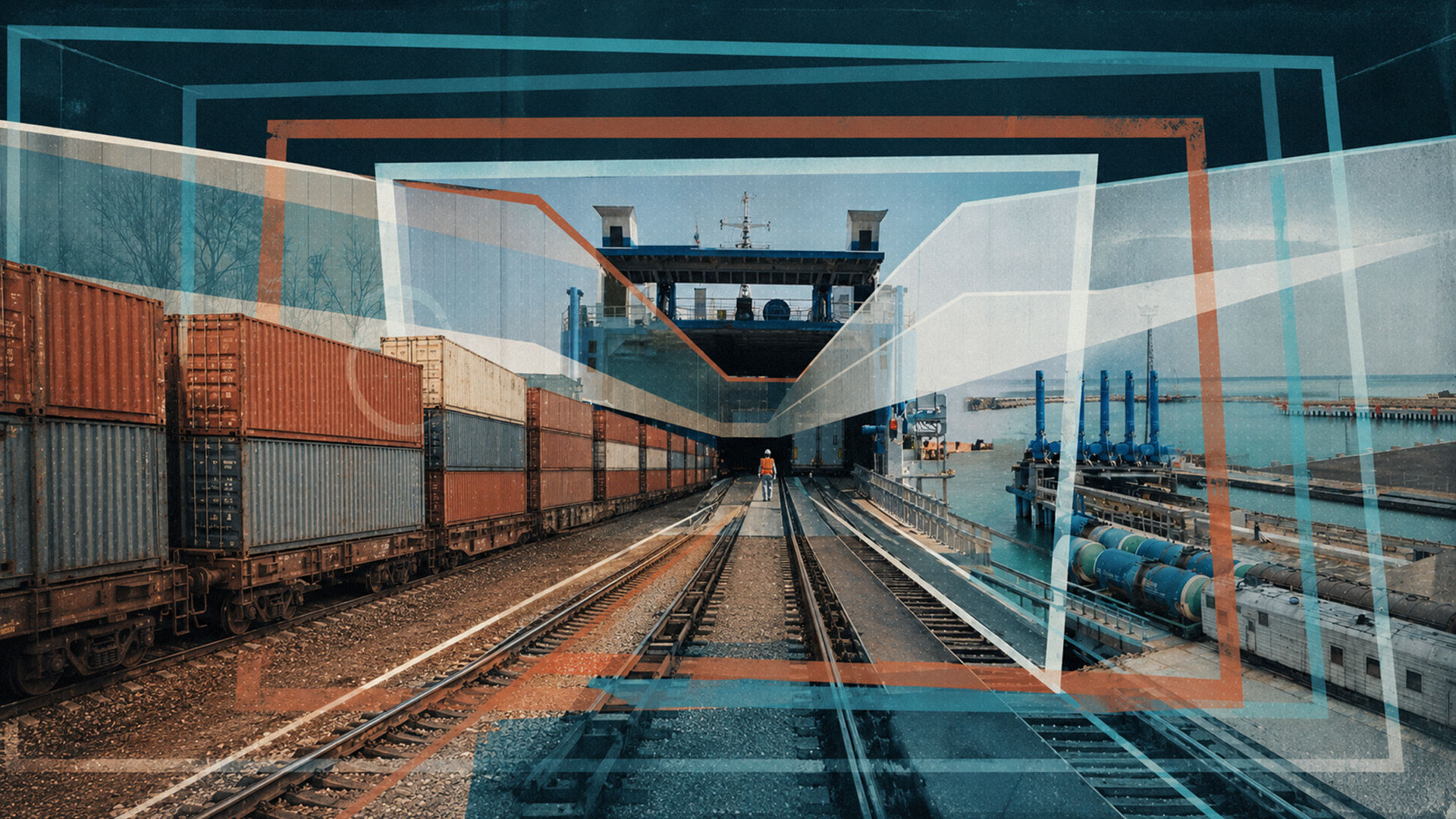
The Middle Corridor is being promoted as a strategic response to the disruption of habitual Eurasian routes. In practice, it remains a chain of bottlenecks, delays and fragmented interests that cannot yet compete with sea freight nor with the northern route.
In a publication of the Italian Institute for International Political Studies (ISPI) entitled Navigating the Middle Corridor: Strategic Promise, Structural Constraints, expert Michael Z. Guterbock examines the true capacity of the Trans-Caspian International Transport Route, known as the Middle Corridor. The author notes that, for all political enthusiasm and promises of investments, the corridor has not yet become a genuine alternative. Ninety-six percent of the freight from China to Europe travels by sea, while just about four percent is transported by rail. The gap between political rhetoric and actual cargo volumes remains a principal sign of the project’s immaturity.
The route’s fragmented nature is its main weakness. Rather than a single system, it is a chain of different States’ railways, ports, ferry crossings, and customs authorities. Each segment introduces delays. The Caspian Sea crossing is the most critical challenge: the cargo must be unloaded from trains, transferred onto ferries in the Caspian Sea, carried across the Sea and then reloaded onto rail networks. The port facilities at Aktau, Kuryk and Alat are being expanded but still lag behind demand. The ferry fleet remains small, and the equipment is often stretched. In peak periods, even minor disruptions at one stage quickly spread along the entire chain to turn its stated speed into a theoretical quantity.
The railway infrastructure is also far from ideal. Connectivity is best between China and Kazakhstan. Then, from Azerbaijan via Georgia to Türkiye, the network requires modernization, electrification, and doubletracking. Projects like the China–Kyrgyzstan–Uzbekistan railway still remain in plans for the years to come. The customs inspections still vary by country, with different documentation requirements, while non-harmonized digital systems and local specifics turn even short administrative delays into serious losses. Political statements about cooperation advance faster than real operational integration. As a result, each new promise of a ‘seamless’ route bumps into practice where country interfaces continue working as chokepoints.
Economics also works against the corridor. Maritime transport remains significantly cheaper for most goods. The Middle Corridor offers a speed advantage primarily for specific categories of cargo, including high-value manufactured goods, automotive components, and electronics. Multiple transshipments make it less than profitable for bulk cargoes. Political ambitions – reducing dependence on Russia, strengthening the position of Türkiye, and diversification of Central Asian exports – run ahead of commercial reality. When the Ukrainian war ends, economic calculation may return some of the flows to the northern route. This makes the corridor’s long-term attractiveness dependent on the political situation as well as logistical improvements.
The Middle Corridor is really of strategic importance and is gradually being improved. But for now it remains a project with a great potential but modest performance. Political rhetoric is running far ahead of its logistical and economic readiness. So long as this gap persists, the corridor will be a subject for geopolitical statements rather than a real alternative to the established routes. Europe and regional countries risk investing considerable resources in a route that will play a niche, rather than systemic, role for a long time.
Even if investments continue growing, the structural problems – multiple transshipments, fragmented customs regimes and limited throughput – will hinder the Middle Corridor from turning into a genuine alternative. So long as these constraints exist it will remain an auxiliary route, not a strategically determinant one. With the main cargo flows traveling by sea and infrastructural chokepoints persisting, all talk about the ‘new Silk Road’ across the Caspian will largely remain declaratory.
The participating countries’ political interests do not always match, either. Kazakhstan, Azerbaijan, Georgia, and Türkiye have their own priorities and domestic constraints. Any serious growth of volumes will come down not only to technical preparedness but also to those States’ ability to quickly harmonize rules, rates and procedures. Barring this, the corridor will develop slowly and unevenly. European investments and political support cannot themselves offset the absence of sustained governance coordination among all the links of the route.
As a result, the Middle Corridor risks remaining a symbol of geopolitical hopes that exceed its real capacity. Europe may continue investing money and political capital, but unless its fundamental infrastructural and geopolitical constraints are removed, the route will never become a competitive alternative. And once the political situation changes, interest in it may dwindle as rapidly as it emerged. While the gap between statements and actual readiness persists, the corridor will remain a high-profile project politically – but give little practical return. Precisely this gap is its main practical vulnerability now. Until it is closed, the Middle Corridor will remain more a political slogan and less a working system.
Original publication: https://www.ispionline.it/en/publication/navigating-the-middle-corridor-strategic-promise-structural-constraints-242375