







Read news
Add bookmark
POPULAR
How Much Do Experts’ Ideas Matter for the European Union’s Political Agenda?Oil? Gas? Fertilizer? Just Life.Kalypso Nicolaidis: I Want a Woodstock for European PoliticsEurope Again Risks Inventing a Future and Giving It Away to ChinaThe Big Lie That Is Repeating ItselfThe Gulf War and Europe’s Helpless Energy PolicyThe Vile BanknoteHow the “virtues” of neoliberal globalization paved the way to its demiseEurope is going down like the Titanic because it has learned nothing from its pastChina Is Fending Off European Suppliers But Could Itself Pose a Threat to Europe’s Energy Infrastructure
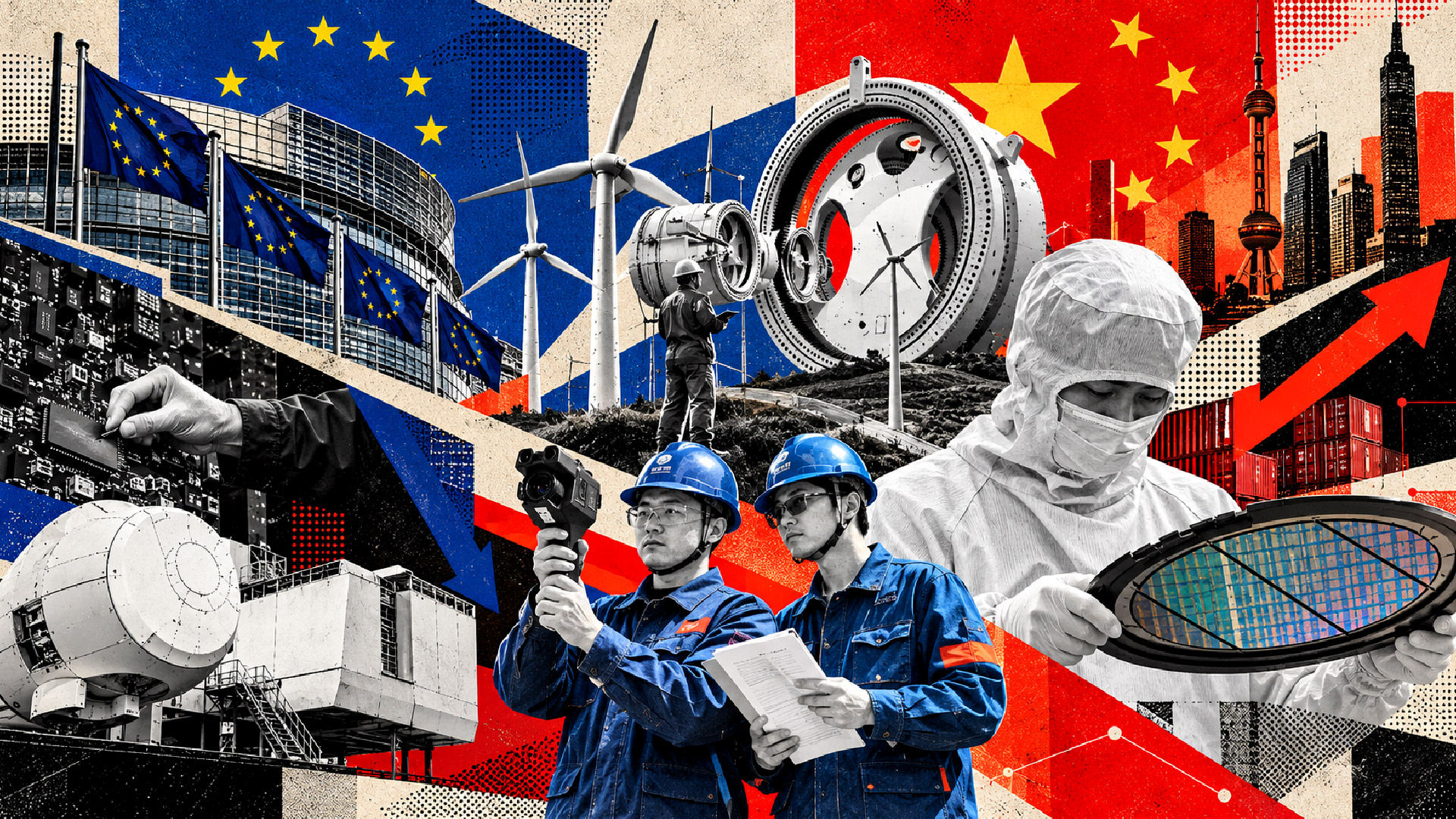
China’s leadership strives for China to be less reliant on technology imports, especially in critical infrastructure. For more than a decade it has shown a coordinated effort to identify foreign technological dependencies, build domestic alternatives and gradually remove the foreign technology itself.
This process was examined by Janka Oertel, distinguished policy fellow at the European Council on Foreign Relations.
In June 2025, a Chinese State-owned utility put out a tender covering the replacement of the control systems for 67 wind turbines at the Kangbao wind farm in Hebei. The turbines were not broken or outdated. The problem was their controllers, which were imported from Europe. The tender warned of a risk of them being ‘controlled by foreign forces’. The prescribed solution was replacement with domestically produced technology.
A study of the Chinese wind sector done by the Centre for Eastern Studies (OSW) analyzed more than 1,600 procurement documents and found nearly 300 calling for foreign equipment to be replaced. European manufacturers and component suppliers are among those named in the notices as risks to be removed.
Back in 2012, Chinese State Council documents warned that core information technologies depended on other countries. The 2015 National Security Law made the development of ‘self-reliant and controllable’ critical technologies a national-security objective. In 2016, Xi Jinping described having core technologies controlled by others as China’s ‘greatest hidden danger’.
What followed was a three-stage process: creating alternatives, ensuring demand and replacing vulnerabilities. The 14th Five-Year Plan called for manufacturing to become ‘self-reliant and controllable, safe and efficient’. The 15th Five-Year Plan extended this into industrial-control software, precision bearings, motors, control systems and energy equipment – all areas where European companies retain important capabilities.
Diversification away from non-Chinese inputs was not just ordered. Regulation securing that demand followed: operators were required to prioritize ‘secure and trustworthy’ products; acceptable technologies for electricity systems were set out in official whitelists; and State-owned enterprises were obliged to support indigenous technological innovation.
Since 2022, major State-owned energy utilities have translated the policy approach into their own procurement requirements. Their objections to imported systems are partly practical and partly political: that they are not ‘secure and controllable’ and vulnerable to control by ‘foreign forces’.
Beijing’s drive to make its energy infrastructure ‘self-reliant, safe and controllable’ is security-focused and discriminates against European suppliers. And while the latter are written out of Chinese critical energy infrastructure, Chinese companies push for expansion in Europe.
The Chinese approach points to a vulnerability that Chinese technologies with remote access create in Europe. In energy, disruption to grid infrastructure or generation assets can have cascading effects, as the 2025 Iberian blackout demonstrated. The European authorities should ask themselves whether Europe faces an equivalent exposure through Chinese suppliers.
Original publication: https://ecfr.eu/article/secure-and-controllable-how-beijing-is-writing-europe-out-of-its-systems/