







Read news
Add bookmark
POPULAR
How Much Do Experts’ Ideas Matter for the European Union’s Political Agenda?Oil? Gas? Fertilizer? Just Life.China Bets on Europe Missing the October Deadline, TooThe Vile BanknoteThe Big Lie That Is Repeating ItselfEurope is going down like the Titanic because it has learned nothing from its pastKalypso Nicolaidis: I Want a Woodstock for European PoliticsHow the “virtues” of neoliberal globalization paved the way to its demise18 Months After Mario Draghi’s Report About European Competitiveness Prospects. Two Perspectives on the State of AffairsThe Steam Roller of Chinese Exports
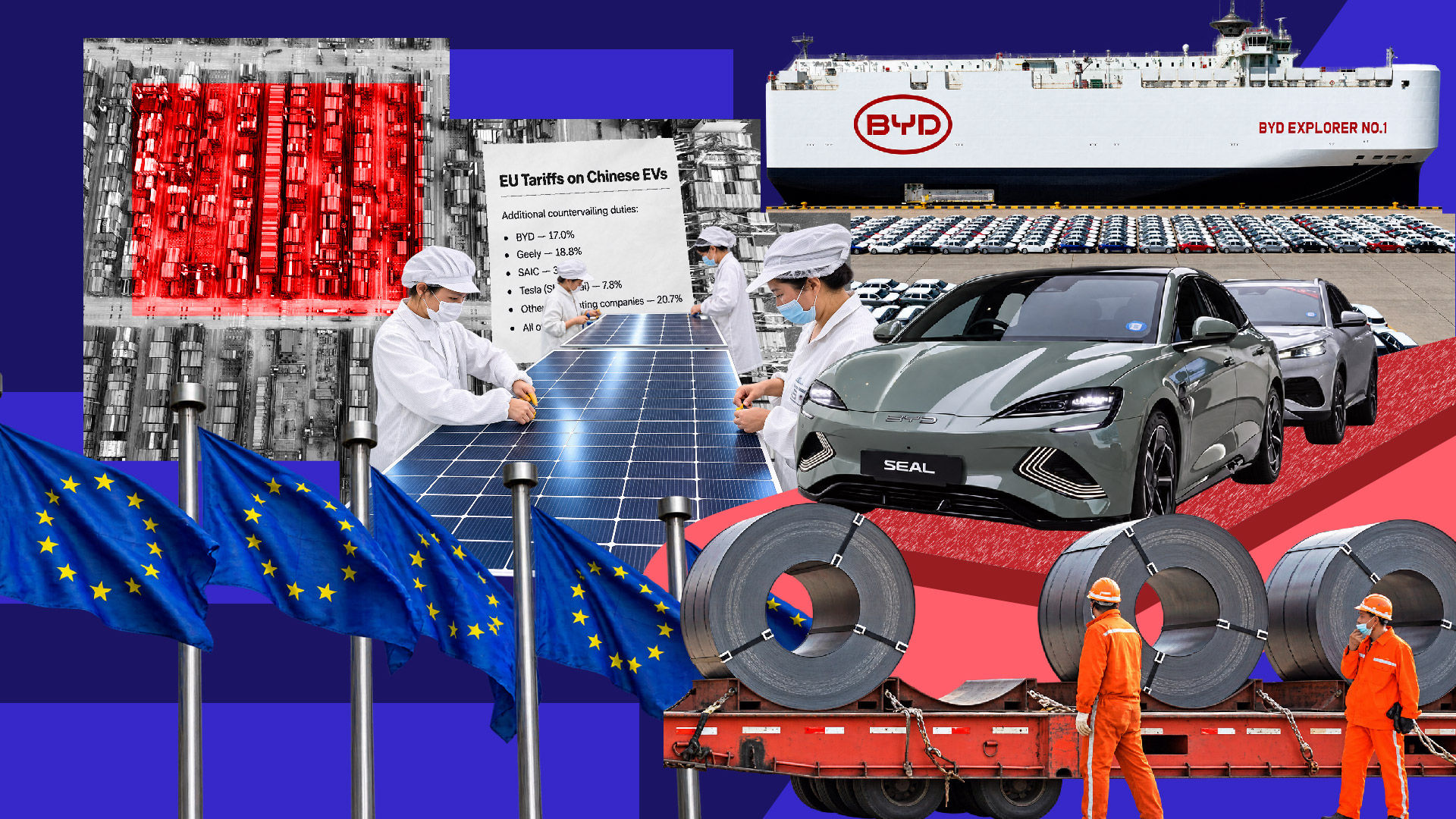
Europe’s trade deficit with China has been steadily growing for years and is projected to exceed EUR 400 billion in 2026, compared with EUR 164 billion in 2019. In response, the Europeans set a deadline to Beijing: a cooperative solution must be reached by the end of October.
Failing this, the EU could impose trade barriers on an unprecedented scale. The measures taken in recent months, combined with the recent shift in Germany’s position, now make such a turn of events possible. What could then follow? This matter was examined by François Chimits, head of the Europe program at the Institut Montaigne.
By the end of the year 2026, the full package of EU measures could affect nearly 35% of Chinese imports through specific trade barriers, compared to 5% in 2019 and around 15% in 2024.
Faced with a Chinese leadership well-versed in the art of promises and threats, Europe is now sure that new barriers will be erected, which is inevitable. The main uncertainty lies in the exact scale of the shift and how acute the resulting trade tensions will be.
Never has Europe appeared so close to a large-scale, coordinated strategic response in defense of its economic interests against foreign predation. In the brutal world of tough international competition that has emerged in recent years, this is a condition for preserving European prosperity and freedom. In 2026, the EU resumed the buildup of defensive measures, initiated in 2024 with roughly thirty investigations.
For example, in the steel sector, globally destabilized by Chinese overcapacities, the EU took measures unprecedented in both their form and stringency, cutting the Chinese quota by two-thirds over the summer. These measures were accompanied by an anti-circumvention mechanism targeting practices commonly associated with Chinese producers, as well as coverage extending to certain downstream sectors.
European trade measures against Chinese competition are this time going beyond traditional trade defense tools. Competition law targeting foreign subsidies has enabled the European Commission to trigger investigations against several Chinese players – regarding the acquisition of a German electronic retail chain, participation in public procurement tenders by China’s primary rolling stock manufacturer, or the activities of wind turbine and scanner suppliers.
True to its culture of responding to external pressures – as French brandy producers can attest – Beijing has threatened retaliatory action against all the European measures mentioned so far, and has provided a glimpse of what is to come.
For example, Chinese companies have been barred from cooperating with EU investigations into foreign subsidies. Such actions could entail even tougher EU responses.
Which Brussels' grievances will China be ready to accommodate with concessions? What level of retaliation will follow the new European barriers? The answer is a disappointing one: a trade war is coming. The Christian precept, ‘If anyone slaps you on your left cheek, turn to them your right cheek’, is alien to Chinese mentality. There will be a response, and quite a painful one.
Original publication: https://www.institutmontaigne.org/expressions/afflux-commercial-chinois-leurope-sessaie-la-conflictualite