




Read news
Add bookmark
POPULAR
How Much Do Experts’ Ideas Matter for the European Union’s Political Agenda?Oil? Gas? Fertilizer? Just Life.Kalypso Nicolaidis: I Want a Woodstock for European PoliticsThe Big Lie That Is Repeating ItselfHow the “virtues” of neoliberal globalization paved the way to its demiseThe Vile BanknoteEurope is going down like the Titanic because it has learned nothing from its pastZionists, lawfare and the malady called revengeLet Them Hate Me, As Long As They Fear Me / Oderint Dum MetuantUkraine: The Real Story That Has To Be Told To The Public
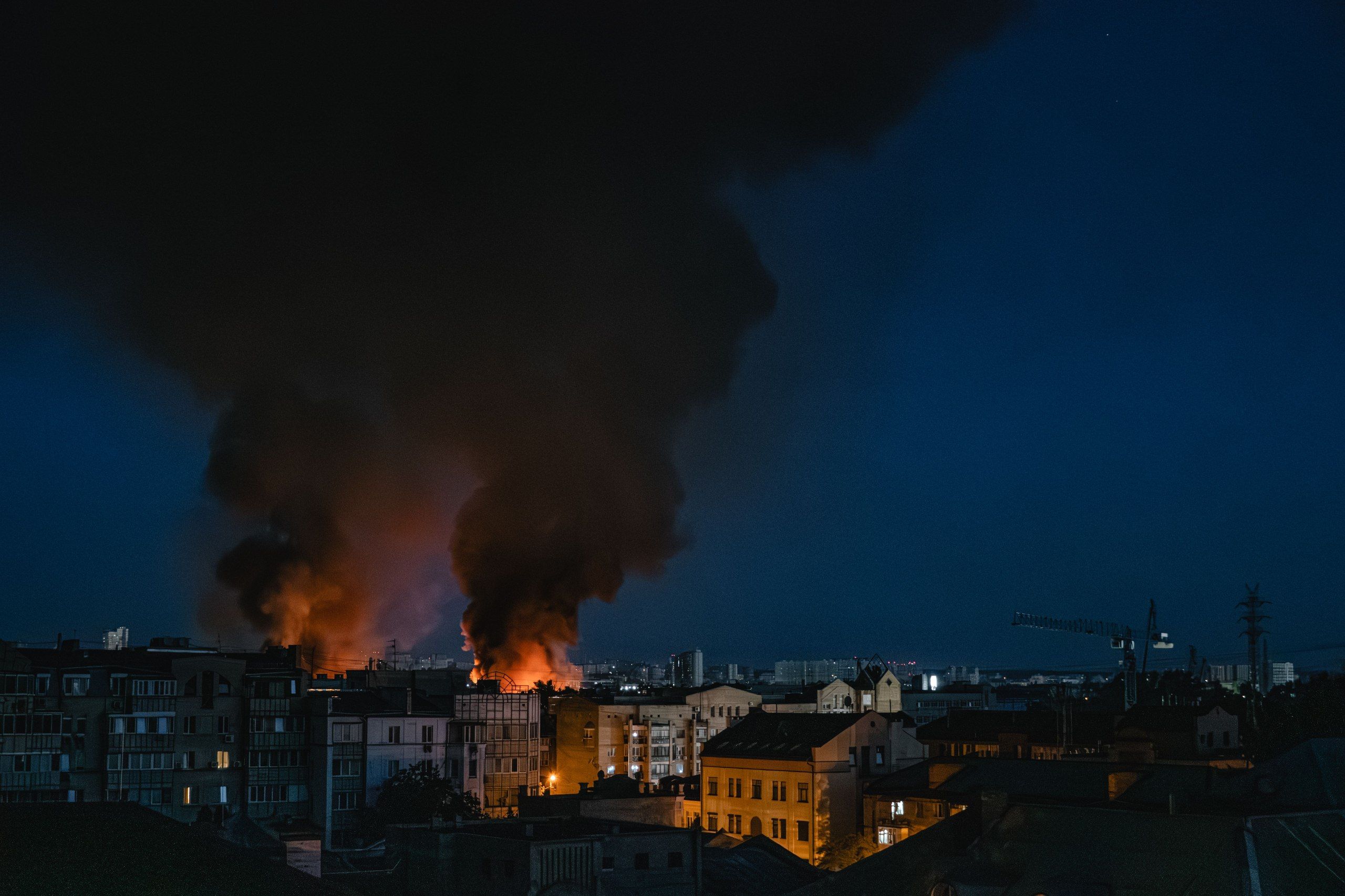
I would like to give a historical insight into the Ukrainian issue, from 2014 until today. There has been such immense Western political and media manipulation on this matter that it can be said that everything fed to the Western public was, and is, a lie. Of course, this is a very quick and simplified account, because otherwise it would take a book.
Let us go back to 2014, and even before.
When the Soviet Union fell in 1991, Yeltsin opened the doors to Western companies and to neoliberalism. At the same time, what had been large state companies (especially the state oil and gas companies) came into the hands of those who, some time later, were called the oligarchs. They got their hands on those state companies without paying a penny for them. With this happening, together with the general economic collapse of the country, the US came in with all its multinationals, followed closely by European companies. In fact, Russia was taken over by the West and by neoliberalism. This went on until Yeltsin put Vladimir Putin at the helm, asking him to save the country. Of course, these were not his exact words, but that is the gist of it.
And Putin did exactly that. He put the country back on its feet. The US, the UK and the EU did not like what Putin was doing at all, because their goal was to take over Russia with puppet governments in power to do their bidding. That is exactly where the hatred towards Putin started. He had stopped the pillaging. Washington’s dream after the fall of the Soviet Union was to be the unchallenged world power of a unipolar world. It did not work.
In 2005 there was an Orange Revolution in Kyiv, which led to the first pro-Western and pro-neoliberal president. But in the next presidential election he was defeated by a pro-Russian candidate who did not want to break with Russia as an economic partner, but who was also interested in Ukraine joining the EU. The EU gave him an ultimatum: either with us or with Russia. But by then the Maidan revolution had already begun, which originally consisted of many people dissatisfied with their government for different reasons. Now we are in 2014.
Let us go back to 2005. That year the USA was already involved in Ukraine and was already investing money to prepare the country for a Western-oriented ideology, aiming to take the country away from Russia and Russia’s sphere of influence. Those preparations had everything to do with NATO and its expansion to Russia’s border, with Ukraine as a NATO member. From 2005 onwards, the US (and, I suppose, the CIA) invested in rebuilding the Ukrainian army on a Western NATO model, because the ultimate goal was to have Western NATO military bases in the country with missiles pointed at Russia.
In 2014, with the direct help and interference of the US, the CIA and the EU, a coup was staged in Kyiv, and a president and government handpicked by the neocons in Washington came to power. The Russian-speaking population of the Donbas region, in the east and south of Ukraine, contested the coup with large protests, and not only in the Donbas but also in Crimea and Odesa. Oleksandr Turchynov, the interim president after the coup, sent the army to the Donbas to quell the uprising and dispatched a group of neo-Nazi thugs to Odesa for the same reason. In Odesa it ended with 80 protesters burned alive in the Trade Unions building. The thugs who did it were never brought to trial.
In the Donbas, the army drove tanks into the streets of Donetsk but did not manage to quell the uprising. In fact, many soldiers and commanders defected to the protesters with all their military equipment, because they were from that region and did not want to fight against their brothers and sisters. When Petro Poroshenko was elected president on 7 June 2014 without the participation of the Donbas regions, he declared war on the Donbas, and in reaction two Donbas regions, Luhansk and Donetsk, declared independence after holding a referendum, proclaiming the People’s Republics of Luhansk and Donetsk.
Poroshenko sent the neo-Nazi Azov Battalion to the Donbas, and from that moment a civil war began that went on until 2022, with 15,000 people killed, mostly civilians.
Two efforts were made to stop this internal war: the Minsk I and Minsk II agreements, in which Russia, Germany, France and Ukraine agreed that the Donbas region would become autonomous within the Ukrainian state, with its own government and decision-making apparatus. It turned out that those agreements were a sham, never meant to be implemented by Ukraine, Germany or France, but used to gain time to fill Ukraine with weaponry in order to end the rebellion. In February 2022, an army of 150,000 soldiers was massed at the borders of the Luhansk and Donetsk republics.
Both republics had asked Russia many times to recognise them and help them survive. But Putin held back, not wanting to get involved in a conflict with Ukraine. However, after many attempts on Russia’s part to create, together with NATO and the West, a new security zone in Europe, Putin decided in that same February 2022 to recognise the two People’s Republics. And the Russian military operation began, to liberate the Donbas region from eight years of Kyiv’s military aggression against part of its own population.
Let us go back a little. In 1991, when the Soviet Union fell, Ukraine, together with other former Soviet republics, declared its independence from Russia. But Crimea also wanted its own autonomy within the Ukrainian state, which Kyiv rejected. Crimea, Odesa and the Donbas regions were historically part of Russia for 300 years, and Odesa was built by Tsarina Catherine the Great. The people living in these regions are mostly Russians, who speak Russian and have a Russian culture and religion.
The story goes back even further. Lenin wanted an industrially strong Soviet Republic of Ukraine, which is why he incorporated the Russian Donbas region into Ukraine. Many years later, Khrushchev gave Crimea to Ukraine as a gift, because he himself was from Ukraine. So, because of the whim of two Soviet leaders who never asked the population of those regions for their opinion, a smouldering situation lay beneath the surface until it exploded in 2014.
The rest of the story is a tragic one. In 2019 a comedian was elected president on his promise to bring a peaceful solution to the Donbas issue, a promise he broke under pressure from the neo-Nazis in his government. Those neo-Nazis, by now fully embedded in the army as well, are the ones really in power, celebrated by the neocons in the US (they received full delegations in Washington and elsewhere in the States, in the UK and in several EU countries). They are the ones NATO was, and is, counting on, with Mr Zelensky as a figurehead. They did terrible things in Ukraine and produced many fabricated videos, which the Western media picked up without any fact-checking. The West seized all their fabricated material with greedy hands to reinforce a devilish image of Putin. NATO was thrilled by the ‘good work’ of these thugs. Everything that could discredit Putin and Russia was welcome. And all that time, nobody asked (again) what the people of the Donbas wanted, or asked them to tell their story of eight years of attacks by Azov and other neo-Nazi battalions, of their pensions being stopped, of being used as human shields, and so on. Nobody was, or is, interested. It does not serve their narrative.
Maybe Putin’s military operation was not the right thing to do. We will never know. But what we do know is that the US and NATO wanted to break Russia’s back, and that by putting people affiliated with neo-Nazism (who hate Russians) in power in Ukraine, they could achieve their goal through a proxy war fought on Ukrainian soil. As it turned out, they lost miserably. The terrible thing is that they sacrificed the Ukrainian population on the altar of their unholy and violent plans.