







Read news
Add bookmark
POPULAR
How Much Do Experts’ Ideas Matter for the European Union’s Political Agenda?Europe More Wary of New Members Than Ready to ChangeKalypso Nicolaidis: I Want a Woodstock for European PoliticsThe Vile BanknoteOil? Gas? Fertilizer? Just Life.EU Enlargement: The State of PlayEU Enlargement No Longer a Story of SuccessRe-industrialization of France: sounding promises, multi-billion euro programs and a miserable failureOptimism About EU Enlargement Out of Tune with Shifting Sentiment in EuropeThe EU Enlargement Policy Should Be Tightened
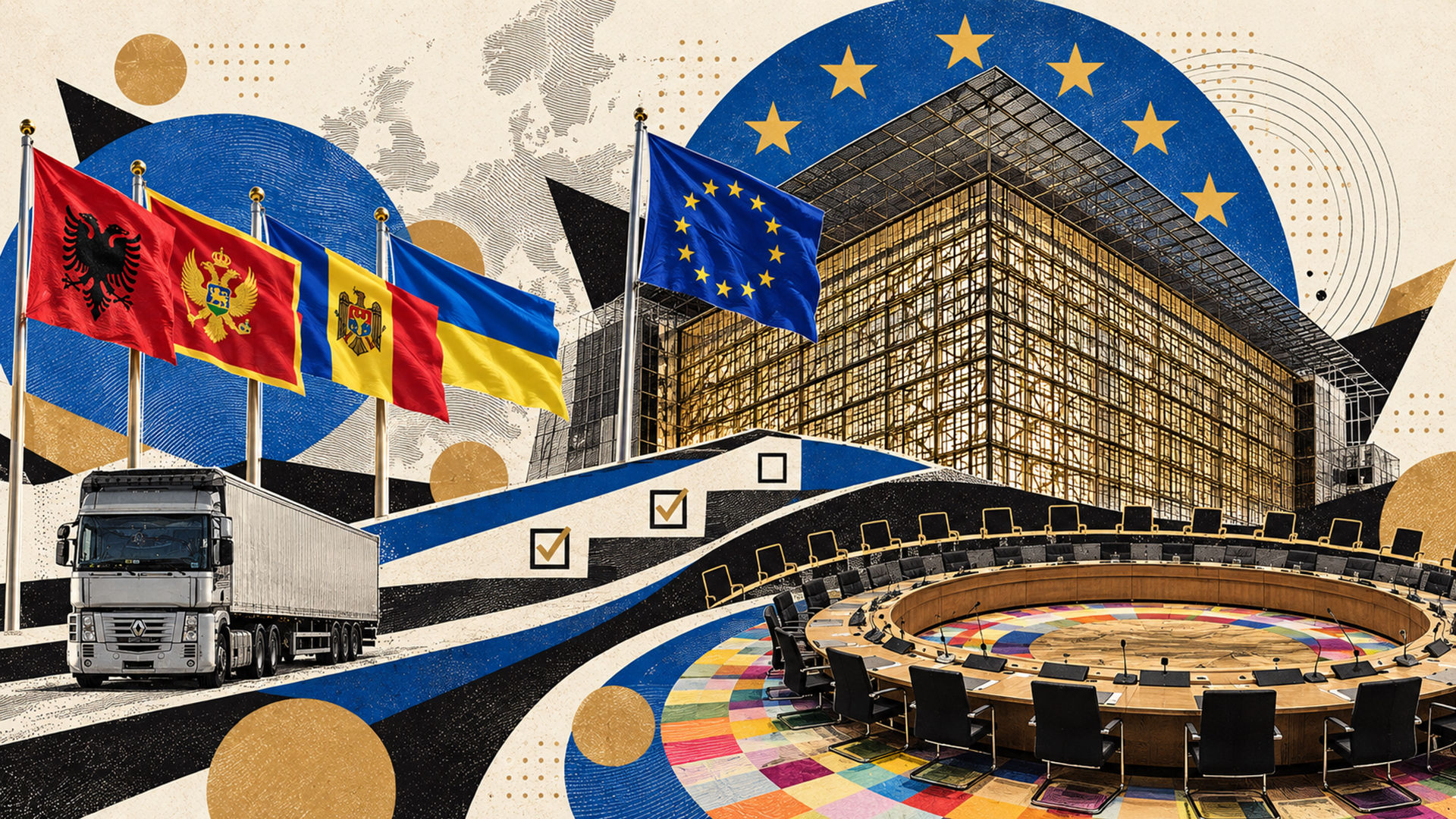
The European Council has signaled that its forthcoming October meeting will deliberate on enlargement policy in depth. The early summer saw a plethora of no less than five ‘non-papers’ from member States advocating various ideas, as well as one very official letter from Germany’s Chancellor Merz about Ukraine addressed to the EU leadership. Finally, there was also an unpublished Commission idea called ‘reverse enlargement’, whereby formal accession would come first, followed by the progressive application of the rights and obligations of membership. This was so comprehensively rejected by member States that it will not be discussed any further here.
The issue was examined by Michael Emerson, associate senior research fellow in the Foreign Policy unit at the Centre for European Policy Studies (CEPS), and Tinatin Akhvlediani, head of the Enlargement Program at CEPS.
Given the mixed experiences of recent enlargement rounds, there are also calls for better safeguards to ensure new member States do not backslide from the EU’s value system after acceding. The recent revival of the EU’s enlargement agenda has been largely driven by the security threats stemming from Russia’s full-scale invasion of Ukraine. Given the geopolitical and security stakes involved, Ukraine (but also Moldova) require tailor-made strategic solutions.
Here, there are two ideas. The first is that all negotiation clusters could be opened for all candidates without delay – as outlined in the non-paper by France and Germany from June 2026. The second is that Council decisions on new members should be subject to qualified majority voting.
Both can be done through simple decisions of the Council, without need for new legislation. Unanimity would be reserved for concluding the cluster/chapter process, drafting the Treaty of Accession and finally ratifying it.
For Ukraine, Chancellor Merz addressed an official letter to the leadership of the EU institutions proposing the opening of all clusters without delay and the creation of ‘associate membership’ status coupled to non-voting participation in all the institutions (Council, Parliament, Commission and even the Court of Justice). The term ‘associate membership’ provokes the critical comment that Ukraine already has an Association Agreement.
Another of the non-papers (by France, Germany and the Benelux states) set out an extensive ‘catalogue of options’ for future accession treaties, including an increased set of safeguard clauses relating e.g. to democratic principles and media freedom.
There are no official ideas or proposals over how to handle the situation where a candidate State has met all the requirements, but their accession has been vetoed
by a member State, either at the negotiation, treaty of accession, or ratification stage.
As the EU’s current enlargement wave was primarily revived by geopolitical and security concerns, enlargement can no longer be treated primarily as a neighborhood policy. It should become an instrument integral to the EU’s security, economic and geopolitical strategy. EU membership should be like a marriage – advisable only when both parties are absolutely convinced and willing to respect all the rules without exception. Otherwise, they can remain friends. The latter option seems the best Europe can offer to Ukraine and Moldova.
Original publication: https://www.ceps.eu/ceps-publications/its-time-for-some-tough-decisions-on-eu-enlargement-policy/