







Read news
Add bookmark
POPULAR
How Much Do Experts’ Ideas Matter for the European Union’s Political Agenda?Oil? Gas? Fertilizer? Just Life.Kalypso Nicolaidis: I Want a Woodstock for European PoliticsThe Vile BanknoteRadicalisation in Onlife Spaces: Europe’s home-grown terroristsThe European Union Intends to Fight Space Wars. Does the European Military Space Project Have Room for Development?Let Them Hate Me, As Long As They Fear Me / Oderint Dum MetuantHow the “virtues” of neoliberal globalization paved the way to its demiseThe Arctic as a Digital Sovereignty Test for EuropeEU Unable to Form a Real Arctic Strategy
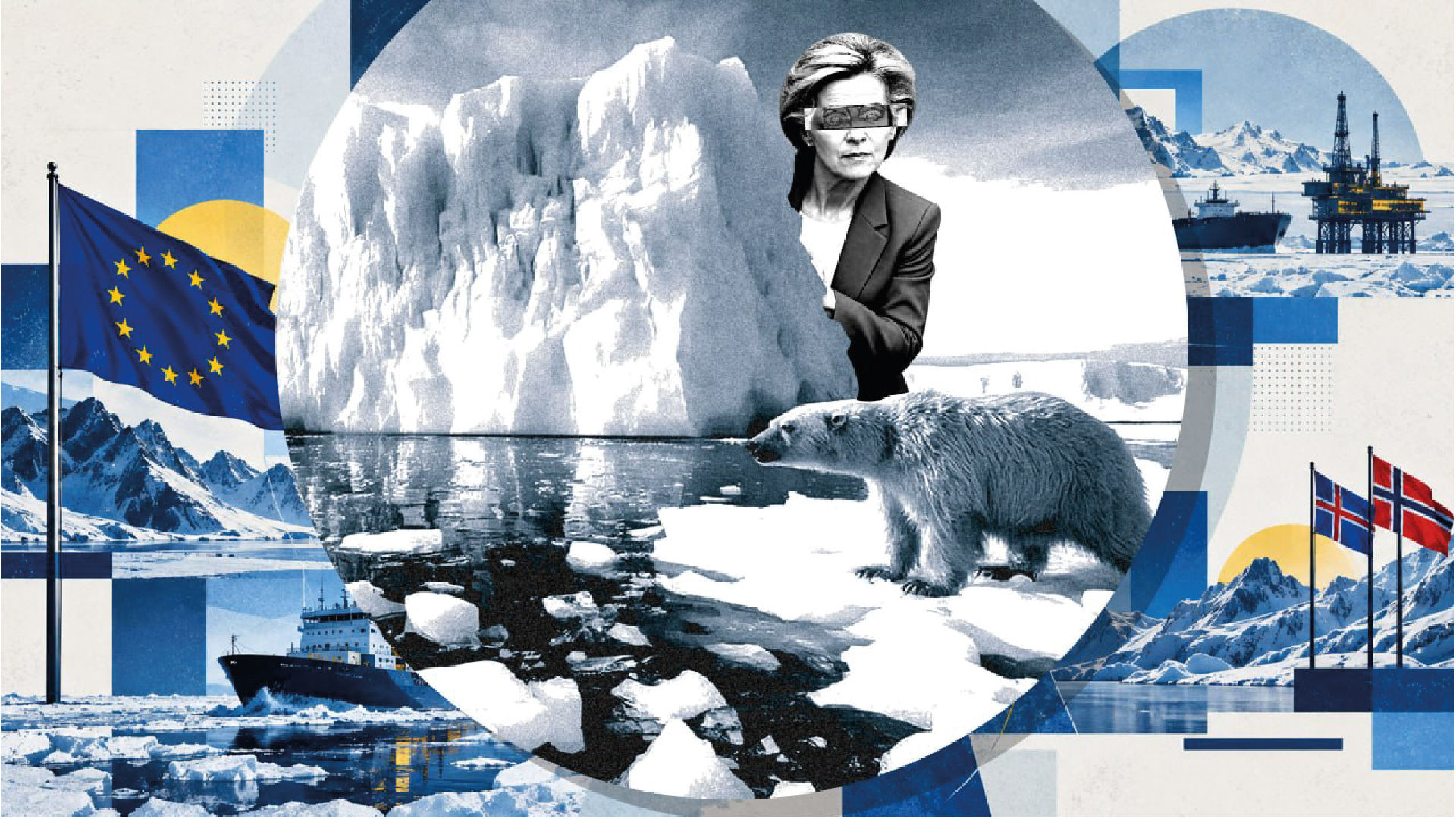
This is how experts of the Norwegian Fridtjof Nansen Institute (FNI) diagnose the European Union’s Arctic policy. In their article entitled The EU First Needs an Arctic Map, Then a Real Arctic Strategy that appeared in the German Internationale Politik Quarterly publication they examine why the EU has been unsuccessful in the Arctic region.
European Commissioner Jozef Síkela, who is responsible for international partnerships, toured Greenland and Norway’s capitals, Nuuk and Oslo, as well as Sweden’s northernmost town of Kiruna, promising more money for Greenland, closer security ties with Norway, and strengthening the European Union’s Arctic engagement more generally.
The choreography is familiar: a tour, consultations, a communication, and the catchphrase officials have repeated since 2019 – ‘more EU in the Arctic, more Arctic in the EU’. But it is unclear whether another Arctic policy statement actually commits EU member states and EU institutions to anything at all. The European Commission and the European External Action Service (EEAS) have produced Arctic policy documents that read like compilations of everything the EU already happens to be doing in the North, rather than statements of strategic intent.
The undefined Arctic policy issue may have a concrete fix: by defining which Arctic the EU actually means and being honest that it is a primary actor in one version of that space (the European Arctic) and a bystander in the other (the circumpolar Arctic).
The EU is not one kind of actor across the entire Arctic. In its European part – Fennoscandia, the North Atlantic, the Barents Sea, where its law applies directly, – it is a primary actor. In the wider circumpolar Arctic – the Arctic Ocean – it is a secondary participant at best.
A policy that keeps conflating these two spaces will lead the EU to continue chasing a circumpolar status it will not get, while underinvesting in the region where it already has real leverage.
European countries are chronically short of the raw materials they need for their own green and digital transitions. The European Arctic is the one region where that scarcity does not apply. The region sits on exactly the deposits the EU is scouring the globe to secure elsewhere. Yet the presence of resources in the European Arctic does not automatically translate into value. Greenland’s critical minerals are a persistent headache precisely because the problem is market-driven: Brussels cannot force companies to buy Greenlandic materials, and mining projects face a chronic shortage of equity.
The problem is that investors do not trust the numbers and local communities do not trust project developers. These projects take decades to pay off, cost enormous sums upfront, and offer no guarantee of a return, which makes banks and investors wary regardless of how valuable the minerals are. Rare-earth projects face an extra problem: Existing suppliers, chiefly China, can undercut new entrants on price before they even get started.
If Europe wants to be taken seriously as a geopolitical actor, it should start with the most basic geopolitical act there is: drawing a map and admitting what is and is not on it. The European Arctic is rather modest in scale but close enough to matter. It is a region where the EU has the resources it lacks, not only in the circumpolar North but also globally.
Original publication: https://ip-quarterly.com/en/eu-first-needs-arctic-map-then-real-arctic-strategy