







Read news
Add bookmark
POPULAR
How Much Do Experts’ Ideas Matter for the European Union’s Political Agenda?Oil? Gas? Fertilizer? Just Life.Kalypso Nicolaidis: I Want a Woodstock for European PoliticsFinland Switches from Engagement to Deterrence, But Stability Is Still FragileThe Vile BanknoteHow the “virtues” of neoliberal globalization paved the way to its demiseEuropean Unity in the Interests of Security. Split along the North-South LineEurope Still Needs China: Washington is the Main ThreatThe Gulf War and Europe’s Helpless Energy PolicyThe Nordics Are Building Their Own Security Shield
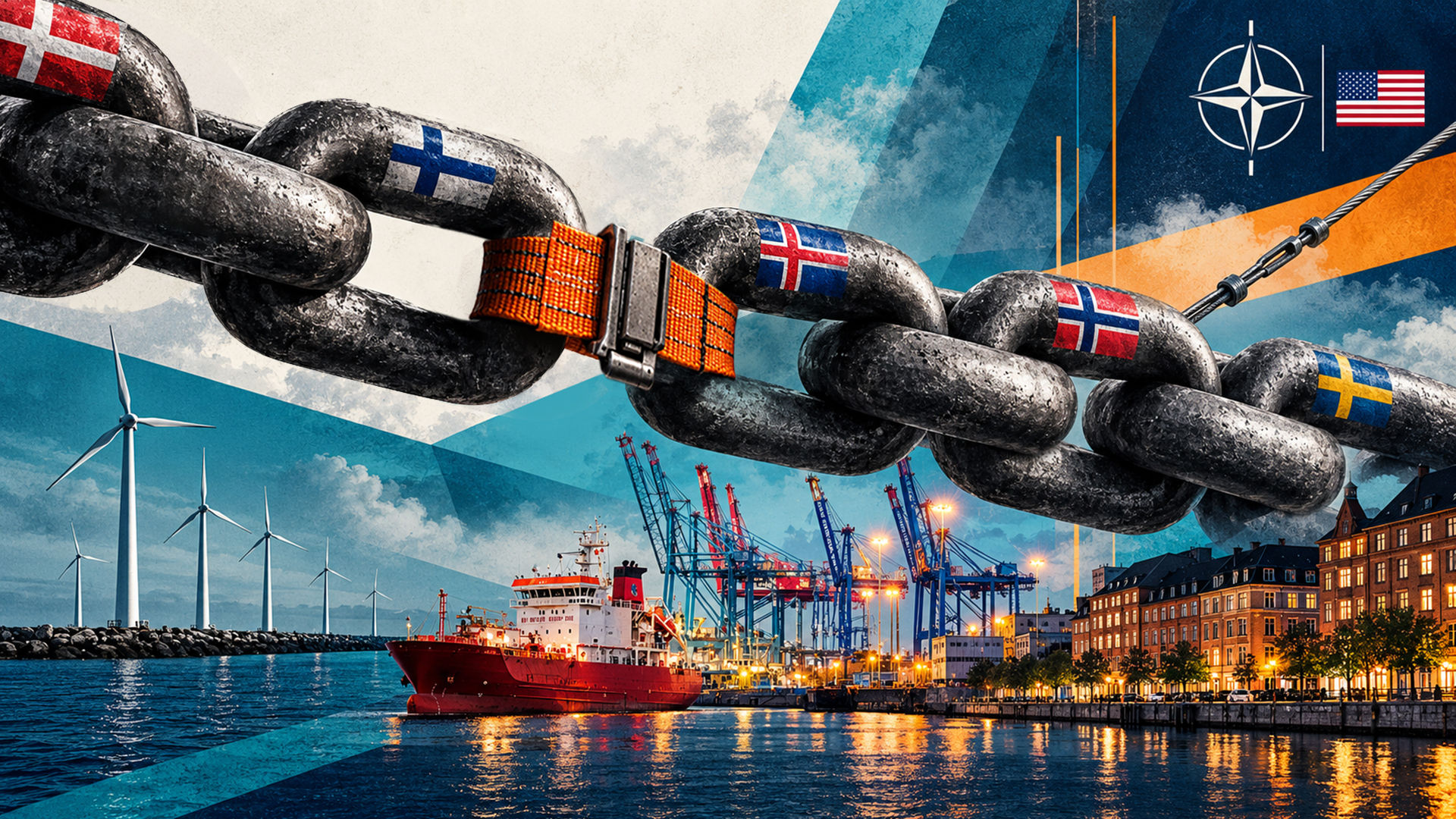
European governments are increasingly facing a dramatic question: if Europe were confronted with a serious and prolonged security crisis tomorrow, would it be able not only to defend itself, but to keep itself functioning?
On 2 September 2026 Denmark, Finland, Iceland, Norway and Sweden, together with Greenland, the Faroe Islands and Åland, signed the Joint Nordic Declaration on Security of Supply. It proposes greater cooperation on stockpiles, critical raw materials, production, logistics and the relationship between governments and business.
How will the declaration work, given that it does not establish a new alliance but operates within the existing European and NATO frameworks? This matter was examined by Ravi Balgobin Maharaj, a policy analyst specializing in transatlantic relations. His article was published by the Italian Institute of International Affairs (Istituto Affari Internazionali).
For much of the post-Cold War period, security was largely discussed in military terms. Defense policy centered on armed forces, deterrence and the preservation of territorial integrity, while economic policy was often treated as a separate field, and supply chains were expected to function through increasingly globalized markets.
The experience of recent years has made that separation increasingly difficult to sustain however, and the war in Ukraine has demonstrated the importance of industrial capacity and logistics to a prolonged conflict.
That is where the Nordic approach becomes particularly interesting as the countries of northern Europe have spent decades developing habits of cooperation that were not originally designed as a single defense system. The Nordic Council, economic cooperation and arrangements facilitating movement between the countries created a high level of regional interdependence that survived considerable differences in their relationships with NATO and the wider European order.
Similarly, Europe does not need another institution for every new security problem. More importantly, the existing institutions and national governments should become better at working together. NATO provides the military framework, while the European Union provides economic, regulatory and industrial capabilities, and individual governments retain responsibility for their own societies
Regional arrangements can then connect these different levels where geography and common interests make closer cooperation sensible. The Nordic countries are well positioned within this system because they already operate across several of these boundaries.
Their experience may provide a useful model for other parts of the continent. The real significance of the Nordic declaration may only become apparent over time and depends on whether Europe can build the resilience required to remain secure in a world where crises travel quickly across borders.
And this is quite problematic. United Europe has long since gathered a critical mass of internal crises and tensions. Its ability to minimize crises, even quite peaceful ones, that come from outside is now gone. Numerous incidents with migrants and an explosive surge of diesel prices confirm this. The system that has emerged is clearly unable to take a punch.
Original publication: https://www.iai.it/en/publications/c05/nordics-are-building-europes-northern-security-shield