







Read news
Add bookmark
POPULAR
How Much Do Experts’ Ideas Matter for the European Union’s Political Agenda?Oil? Gas? Fertilizer? Just Life.The Vile BanknoteKalypso Nicolaidis: I Want a Woodstock for European PoliticsHow the “virtues” of neoliberal globalization paved the way to its demiseEuropean Unity in the Interests of Security. Split along the North-South LineThe InvalidsRegular Ones Made IrregularLet Them Hate Me, As Long As They Fear Me / Oderint Dum MetuantWhy Are They Building Fortifications on NATO’s Eastern Flank?
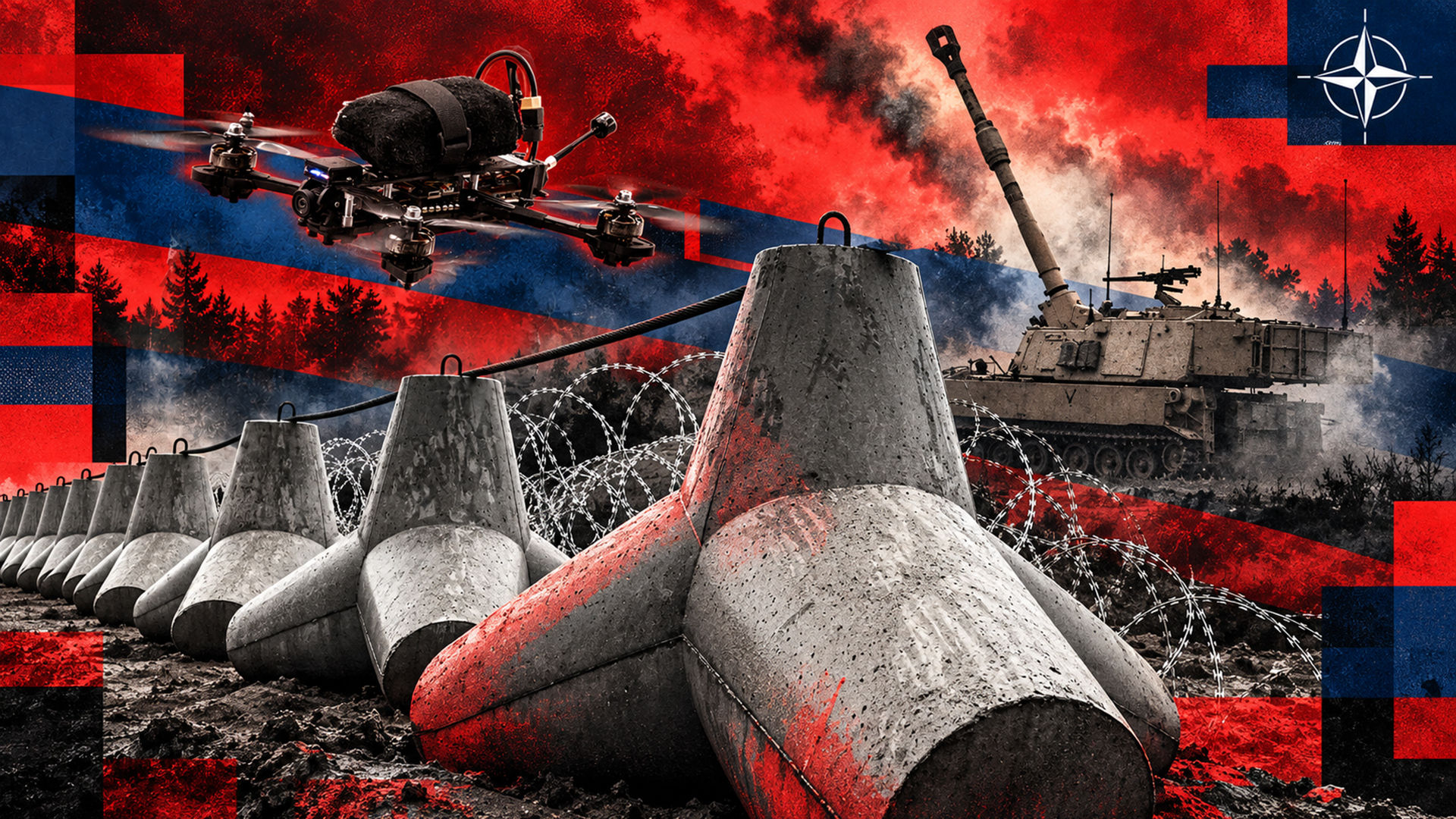
NATO’s eastern members are rebuilding fortifications and counter-mobility systems on a scale not seen since the end of the Cold War. However, their military value will depend less on the concrete structures and obstacles proper and more on how fully they are integrated with surveillance, fires, maneuver forces, and reinforcement plans. The details are discussed in an analytical brief of the International Institute for Strategic Studies.
Antitank ditches are being dug, and concrete ‘dragon’s teeth’ and prefabricated bunkers are being lowered into prepared positions as part of the Baltic Defense Line and the East Shield program. The Baltic States and Poland announced their launch in January and May 2024, respectively.
Both programs combine fortification works with surveillance, uninhabited and counter-uninhabited systems, logistics, protected mobility and civil-resilience measures. Antitank ditches and concrete obstacles form only part of the program. It also includes engineering depots, reinforced roads and crossings, reconnaissance systems and the use of forests and wetlands to channel movement.
The operational logic behind these fortifications draws heavily from the Russia–Ukraine war, although the lessons are more qualified.
Russia’s Surovikin Line – a layered network of minefields, antitank ditches, obstacles and trenches was built across southern Ukraine in late 2022. It played a major role in holding back Ukraine’s counteroffensive.
The combination mattered: obstacles slowed and concentrated the assault force, while surveillance and fire attacked it during the breach. Prepared defenses can therefore impose substantial costs on a mechanized attacker and buy time for a defender, particularly when obstacles are covered by troops, surveillance and fire.
The Baltic States do not at all expect the fortifications to stop a Russian advance by themselves; their role is to impose costs and create time for mobilization and Allied reinforcement under NATO’s Article 5.
The fortifications can buy time for such forces’ arrival but cannot hold ground on their own without a broader support system.
The physical fortification works are thus advancing faster than publicly demonstrated operational integration. While the concept is militarily sound, the national obstacle systems clearly do not amount to a rehearsed regional defense system. So the whole thing may turn out a sham once again. For generals always prepare to fight the last war, unable to objectively assess today’s realities.
Original publication: https://www.iiss.org/publications/strategic-comments/2026/09/the-return-of-fortification-to-natos-eastern-flank/