







Read news
Add bookmark
POPULAR
How Much Do Experts’ Ideas Matter for the European Union’s Political Agenda?The Vile BanknoteOil? Gas? Fertilizer? Just Life.Kalypso Nicolaidis: I Want a Woodstock for European PoliticsHow the “virtues” of neoliberal globalization paved the way to its demiseZionists, lawfare and the malady called revengeIn Digital Markets, Europe Will Be a Developer of Bureaucratic Rules, Not Technologies.Regular Ones Made IrregularFrom “Green” Well-Being to “Pure” Competitiveness: How the EU Gradually Abandons the Social Component of TransitionEurope Wondering What AI to Fear
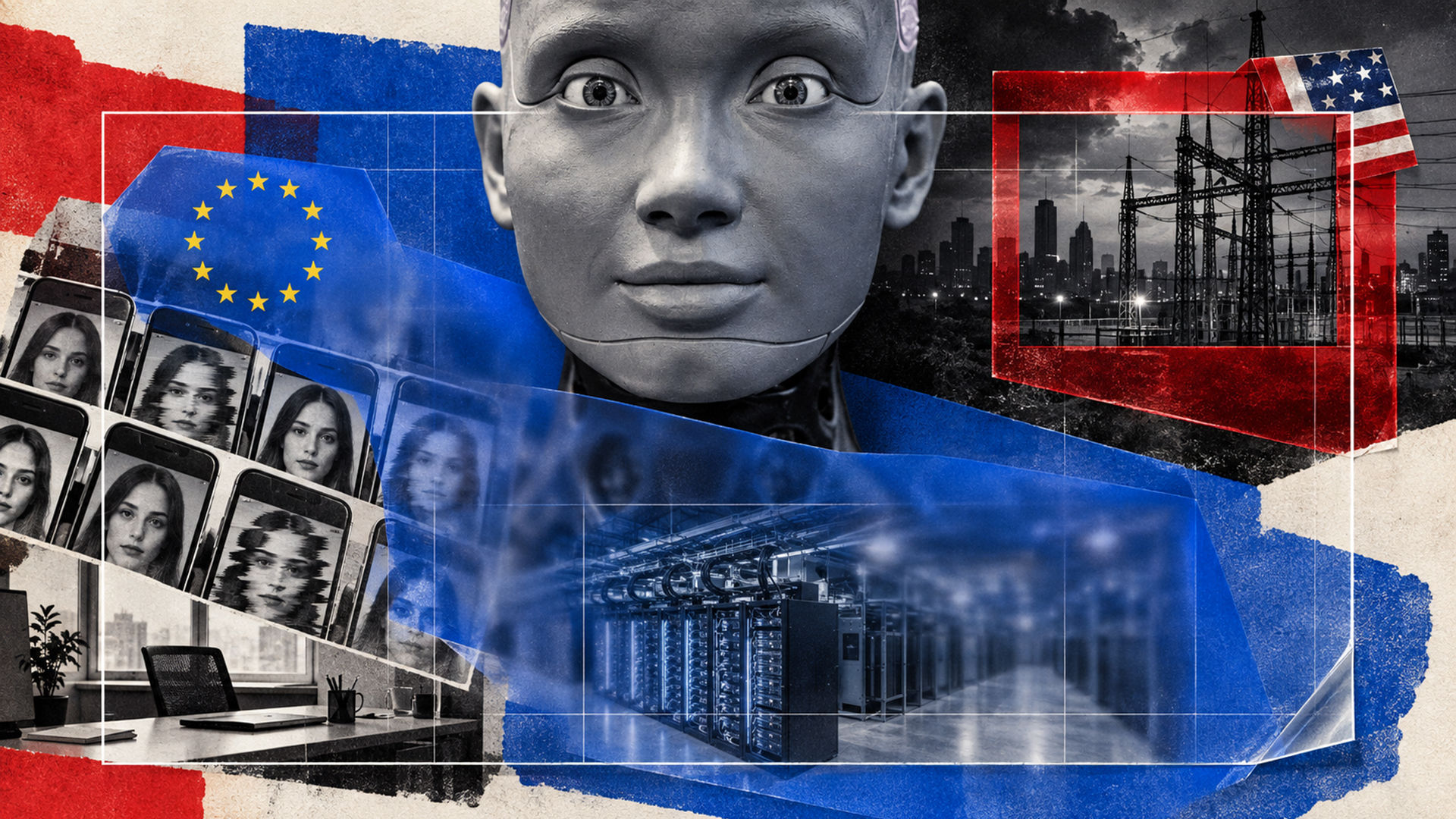
In a paper of the Centre for European Policy Studies (CEPS) entitled Europe needs a more strategic approach for tackling AI risks, researchers Susana Aires and Robert Praas examine a division that already splits regulation on both sides of the Atlantic. Some see a catastrophe – with systems creating weapons, staging cyber attacks and going out of control. Others argue that this fear is no more than a Big Tech pitch to retain power and shift attention away from immediate harms, like disinformation, manipulation, and algorithmic discrimination.
Both camps are already writing their laws. The European AI Act focuses on a ‘systemic risk’ to thoroughly assess general-purpose AI models that could propagate negative effects across public health, safety, security and fundamental rights. The American states of California, New York and Illinois proceed from a ‘catastrophic risk’ and set thresholds of it: over 50 deaths or serious injuries, or over USD 1 billion in property damage. As summed up by philosopher Atoosa Kasirzadeh, catastrophic risk concerns magnitude, while systemic risk concerns structure. The definition shapes the requirements on the developer.
The European approach is broader and less foggy. But an open-ended regulatory wording, the focus on ex-ante requirements and the lack of a liability framework to address any harm weaken the regulation precisely where models change faster than the text. Centralized oversight by the AI Office provides uniformity – theoretically. In practice, ambiguity hinders market deployment of products and leaves gaps. And while the U.S. states’ approach offers more certainty and leaves fewer blind spots, their strict focus on extreme scenarios fails to cover cumulative societal harms that are already visible in the Dutch childcare benefits scandal (Toeslagenaffaire) and ongoing lawsuits suggesting that AI ‘digital companions’ have incentivized self-harm.
The authors do not call for choosing either pole. What is needed is a framework based on evidence, probability and impact, that covers both casual harms and an extreme scenario. Since 1 August 2026, the EU’s AI Office is entitled to request documentation, model evaluations and access to frontier AI models – a process that has reportedly started, the authors say. This opens a narrow window for testing whether the union is capable of anticipatory governance.
The MIT initiative referred to by the authors is targeted precisely against this false division: unemployment, fakes in social media feeds and environmental harm can all combine into a catastrophe. Rather than one winning definition, Europe needs an ability to decide in advance what to monitor and what to ban. The Dutch benefits scandal is more important here than an AI agent hypothetically ‘going out of control’. The harm has already occurred within the State machine. A regulation that describes an extreme scenario in more detail than this kind of occurrence protects the future but overlooks the present.
The window may well close. The models’ capabilities grow before the capitals can approve this. Brussels has already postponed commitments on one occasion – under industry pressure. If the strategic framework is again reduced to a clash of definitions, Europe will get a law that will sound stringent but operate belatedly. Then the regulation will remain a showcase of caution, the advanced models market will stay American and Chinese, and it will be too late to turn to European supervisory authorities.
Original publication: https://www.ceps.eu/europe-needs-a-more-strategic-approach-for-tackling-ai-risks/