






Read news
Add bookmark
POPULAR
How Much Do Experts’ Ideas Matter for the European Union’s Political Agenda?Oil? Gas? Fertilizer? Just Life.Kalypso Nicolaidis: I Want a Woodstock for European PoliticsThe Changing Patterns Of Migration In EuropeThe Pact Enters into Force: Uncertainties and Risks of New European Migration GovernanceHow the “virtues” of neoliberal globalization paved the way to its demiseEuropean Pact on Migration: Unanswered QuestionsLet Them Hate Me, As Long As They Fear Me / Oderint Dum MetuantThe InvalidsMigration in Europe and Its Myriad Facets: The Price of Solidarity
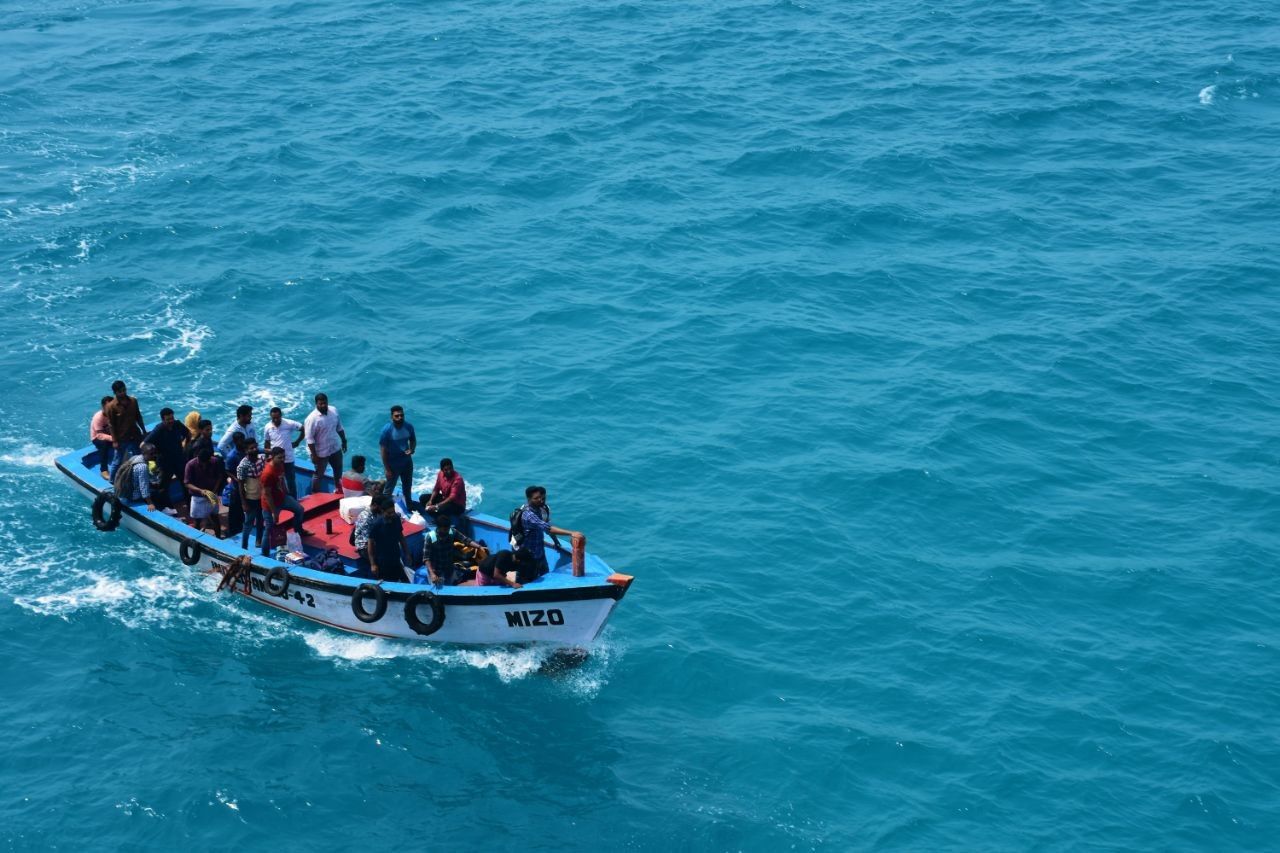
In my first article on the new Migration and Asylum Pact, I wrote that relocating or resettling people involves significant costs, and that I hoped the funds would truly go toward helping reception centres and the people who arrive. I also promised that this would be the subject of another article. So here it is. This time I decided to follow the money.
How does migration really work on paper? … Here, the idea is simple. As is known, assistance is provided each year to countries facing the greatest migratory pressure—such as Greece, Italy, and Spain, which are geographically more vulnerable to arrivals. Other Member States can choose the form of assistance: accepting asylum seekers (relocation), providing a financial contribution, or offering operational support, for instance by making personnel or equipment available.
The "solidarity pool" for this year was fixed at 21,000 relocations or €420 million. If you do the maths, it means that one person not relocated is worth €20,000. I have to say that reading it like this made me uncomfortable. And this is already 30% less than the minimum written in the law: 30,000 relocations and €600 million, because the system only started in June.
But, after searching, I found the number of the real pledges, and here the picture changes completely. According to Euronews, fewer than 9,000 relocations were pledged in total, and the real money from countries that are not under pressure is about €76 million, not €420 million. Hungary and Slovakia offered nothing at all. Poland, Czechia, Austria and Croatia were exempted because they say they are facing a significant migratory situation themselves.
Spain pledged €42 million, but since Spain is one of the countries under pressure, it will not pay; it will receive. Among those who will really pay, the biggest contributor is the Netherlands, with almost €22 million, followed by Belgium and Sweden with around €12 million each.
Then there is the most difficult part to explain. Countries like Germany and France can use a so-called "responsibility offset": instead of taking people from Italy or Greece, they can count the asylum seekers who are already on their territory. In the end, fewer than 1,000 people are expected to actually be transferred this year.
The Spanish MEP Juan Fernando López Aguilar called the contributions "ridiculous." Lukas Gehrke, director of the International Organization for Migration in Brussels, said that the numbers are "deliberately at the lower end."
The issue of immigration has become politicized, and a negative perception of it has emerged; I believe that many governments, to avoid feeling at fault, prefer to withhold any aid from the countries most affected by these arrivals. Furthermore, as I have mentioned in my other articles, there is a genuine mafia-like network managing the migrants arriving in Europe. The costs involved are beyond comprehension, given that only rough estimates are available.
But back to the paper, where is the money really going? If I understand correctly, the money does not go directly from one country to another. It goes into the EU budget and then to the countries under pressure, which can use it to strengthen their asylum, migration, or border management systems. But they can also use it for projects in third countries, outside Europe, for example, to help those countries control their own borders.
In other words, solidarity puts everyone on the same level, and maybe it could make everything not really easy if we had real and big problems after the last waves of migration that Europe is having.
Of course, we have Spain, which, after Ceuta, is facing a real crisis regarding migration, or Italy, which really needs extra compensation for migrants rescued by NGO ships.
Now, the European Commission is clear that they have to address many of these difficulties.
In the coming weeks, the Commission should present its new report, the starting point for next year's pool. We will see if 2027 will be different.
Let’s return to the obvious: it all comes down to money, the aid, the integration machinery, and the reception centers. And wherever there is money, there is always someone looking to get more of it, often not by the best means; the result is corruption and a lack of genuine hospitality.