







Read news
Add bookmark
POPULAR
How Much Do Experts’ Ideas Matter for the European Union’s Political Agenda?Kalypso Nicolaidis: I Want a Woodstock for European PoliticsOil? Gas? Fertilizer? Just Life.How the “virtues” of neoliberal globalization paved the way to its demiseEuropean Unity in the Interests of Security. Split along the North-South LineWhy capitalism is fundamentally undemocraticRadicalisation in Onlife Spaces: Europe’s home-grown terroristsEurope Heading for a Strange DefeatThe InvalidsThe Brink Between War and Peace Will Blur
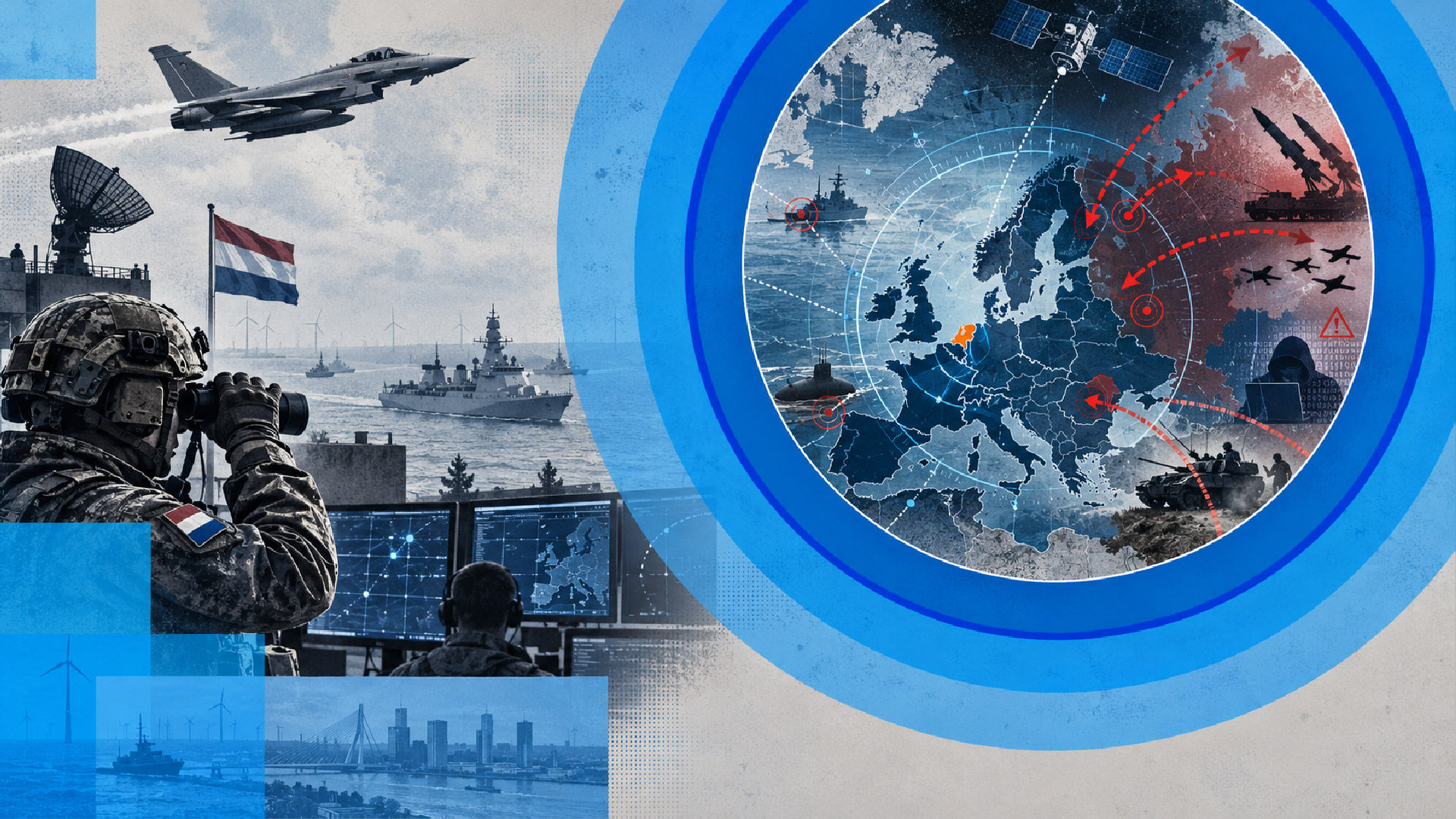
The Netherlands Institute of International Relations ‘Clingendael’ has published an extensive report entitled To choose without losing? (Kiezen zonder verliezen?) that analyzes war threat scenarios expected till 2031.
The report attempts to answer the question of ‘Which developments in the security environment will determine Dutch military capability towards 2031, and what strategic choices will they lead to for Defense?’
This question has little to do with ordinary Europeans’ lives, but the analysis of military trends from the Institute’s experts helps identify the risks and threats that European populations may face in the coming years if military tensions continue escalating in the continent.
The international conventions on the use of military means are crumbling – respected in fewer and fewer theaters, with the parties involved increasingly ignoring the bans on cluster munitions and chemical weapons, and proportionality lacking in an increasing number of conflicts.
One scenario described in the report assumes that a terrorist movement could unleash a powerful bioweapon, using AI and CRISPR genome editing technology, on the civilian population.
The accessibility of (para)military means of using force continues increasing. As a result, even relatively low-tech players with developing economies can inflict significant damage on stronger players.
The dividing line between war and peace will blur further in the coming years. Strategic competition increasingly unfolds outside open military confrontations. Economic pressure, information operations, cyber activities, sabotage, and military threats are deployed in varying combinations.
Hostilities are becoming less location-bound: deployment areas, support
chains, and any European country’s territory may get intertwined. Ports, logistical corridors, digital networks, and civilian infrastructure are increasingly at risk – even if remote from the direct fighting area.
Military success is determined not only by the combat power available at the start of a conflict, but also by the ability to replenish losses, restore systems, maintain stock levels, and scale up production. The likelihood of prolonged and large-scale conflicts is increasing, and in this context the focus is shifting from instant availability to long-term deployability under sustained pressure.
The costs of modern military capabilities are increasing, while demand for defense investments is growing. Armed forces must simultaneously invest in readiness, ammunition stockpiles, personnel reinforcement, technological innovation, and large-scale modernization, thereby increasing pressure on defense budgets.
New forms of interference with natural systems are appearing within reach. Developments in geo-engineering, climate influence, and large-scale ecosystem interventions create new strategic opportunities, but also risks of abuse and escalation.
Involvement in a powerful military alliance should not be relied upon as a guarantee against an attack. 'Ally' and 'adversary' are becoming less fixed categories. Competition, cooperation, and confrontation increasingly coexist, sometimes even in relations with the same countries. As a result, coalitions are becoming more volatile and the conditions under which States jointly project power, less predictable.
For decades, relatively stable alliances have formed the basis for the organization of the armed forces. However, the international security order is becoming less predictable, and allies’ interests diverge more widely. Coalitions remain essential, but their membership and mandates change more rapidly because partners’ willingness and ability to contribute can vary from crisis to crisis. New and often temporary coalitions emerge around specific interests, regions, or capabilities.
These trends suggest that a new war may well have an impact on life in countries whose populations now feel quite safe – and affect parties that seemed distant from the military domain.
Original publication: https://www.clingendael.org/pub/2026/clingendael-strategische-monitor-defensie/