






Read news
Add bookmark
POPULAR
How Much Do Experts’ Ideas Matter for the European Union’s Political Agenda?Oil? Gas? Fertilizer? Just Life.Kalypso Nicolaidis: I Want a Woodstock for European PoliticsThe Middle Corridor: A Geopolitical Dream with Dubious ProspectsHow the “virtues” of neoliberal globalization paved the way to its demiseTurkey Offering Europe Its Mediation Again, Europe Again Ready to Accept ItWhy capitalism is fundamentally undemocraticReweaving Silk Roads: The Middle Corridor’s Role in EU Economic SecurityEurope's Hydrogen Gamble In North Africa
For months now, Brussels has been talking about hydrogen the way it used to talk about gas: as the fix that will finally sort out Europe's energy problem. The number everyone repeats comes from the REPowerEU strategy, 10 million tonnes of renewable hydrogen produced at home and another 10 million imported, both by 2030.
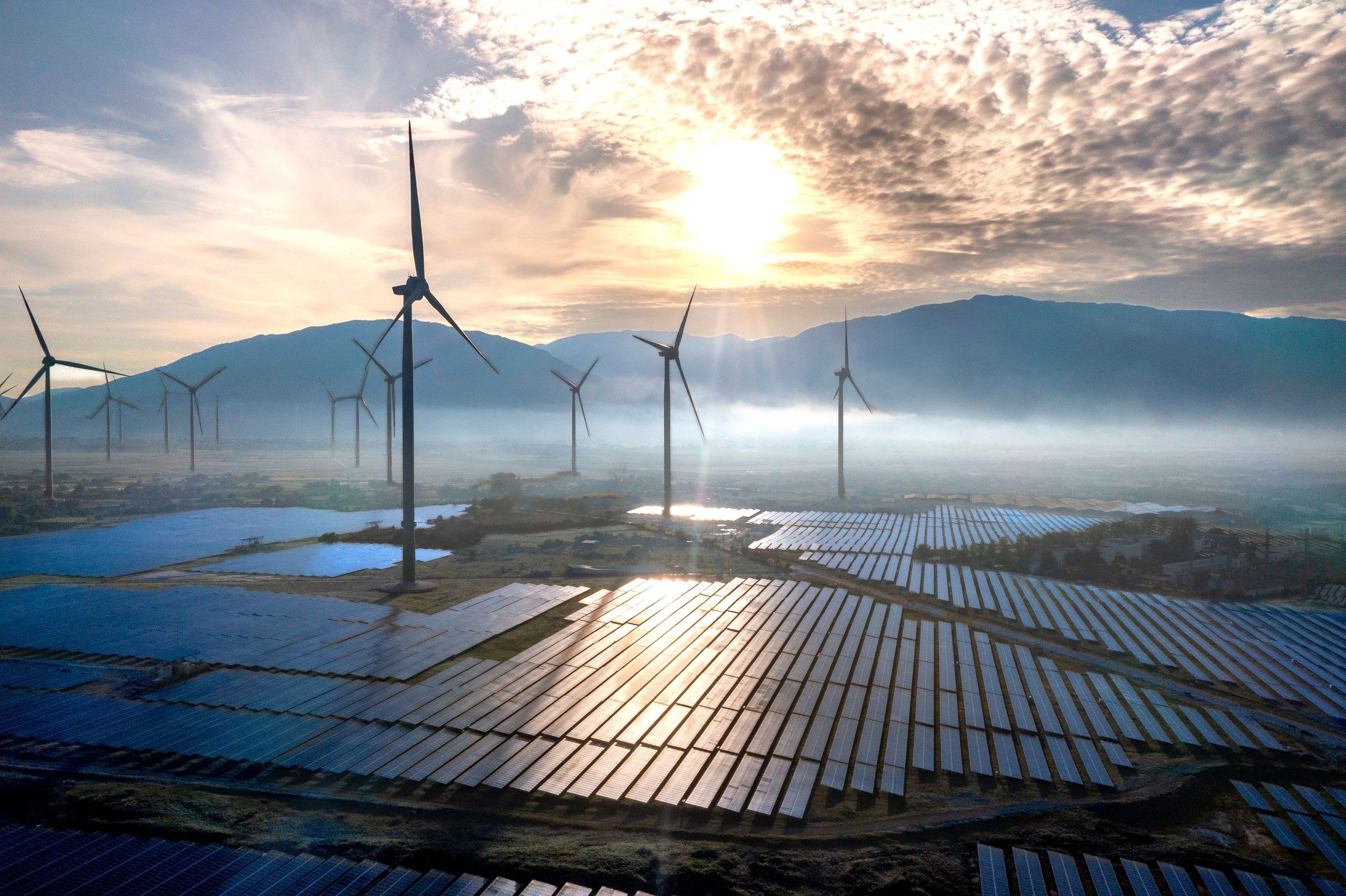
North Africa, with its sun, its wind and its old gas pipelines just waiting to be repurposed, has become the obvious place to look for that second number. So I wanted to find out how much of this is actually being built, and how much is still a slide in a presentation.
The project everyone points to is called the SoutH2 Corridor. Four pipeline operators are behind it: Snam in Italy, TAG and Gas Connect Austria, and Germany's bayernets. Together they are planning a route of roughly 3,300 to 4,000 kilometres, running from North Africa through Italy and Austria into Germany, feeding industrial towns like Augusta, Taranto, Ingolstadt and the Austrian region of Styria. More than 65% of it would reuse pipelines that already carry natural gas, which is the main reason the project looks affordable on paper. The operators talk about eventually moving 4 million tonnes of hydrogen a year, over 40% of the EU's entire import target, and Italy's stretch has already picked up €24 million in EU money just for feasibility studies. Producers have signed letters of intent for about 2.5 million tonnes. The date usually given for completion is “the early 2030s,” which in infrastructure language tends to mean nobody wants to commit to an actual year.
And that vagueness is where the doubts start. Adrian Odenweller, who studies this at the Potsdam Institute for Climate Impact Research, does not expect any real volume moving through the corridor by 2030 at all. He is not alone. One estimate reported by Climate Home News puts Algeria and Tunisia's combined realistic export capacity, by that same year, at around 330,000 tonnes. That is about 8% of what the corridor is supposed to eventually carry. Not everyone is that pessimistic: Abdurahman Alsulaiman, at the Oxford Institute for Energy Studies, calls the EU's target “highly ambitious,” but still thinks it makes political sense given how badly Europe wanted out of its dependence on Russian gas after 2022.
Why the gap between the pipeline plans and the actual hydrogen? Because building a pipe is the easy part. Making the hydrogen cheaply enough to fill it is a chemistry problem, and chemistry does not move at the speed of a press release.
Most of the electrolyzers suited to solar and wind power, the PEM type, need iridium oxide as a catalyst. Iridium happens to be one of the rarest metals on the planet, and there is no shortcut around that. It is a big part of why electrolyzer manufacturing cannot simply be scaled up the way a factory line can. Platinum, used on the other electrode, adds more cost on top.
Some of that is starting to loosen up. Researchers have found ways to build so-called core-shell catalysts, essentially coating a cheap core in a thin layer of the expensive metal, that cut iridium use by up to 80% without losing performance. Computer modelling is also speeding up the search for new catalyst materials, shrinking a process that used to take years down to weeks, according to industry reporting from Hydrogen Insights. But the numbers in the IEA's Global Hydrogen Review 2025 show how early-stage all of this still is: global electrolyzer capacity was only around 2 gigawatts by 2024, less than 1% of the hydrogen made worldwide counts as low-emissions, and just 9% of the capacity announced globally has actually reached a final investment decision. The IEA blames that mostly on unproven technology and the difficulty of getting projects financed, which is exactly the kind of thing more research funding is supposed to fix.
The EU has put some money toward it. Its Clean Hydrogen Partnership opened a €105 million funding call for 2026, and its executive director, Valérie Bouillon-Delporte, described the goal as building “a competitive clean hydrogen value chain in Europe,” including better electrolysis efficiency. It is real money. It is also small next to the multi-billion-euro pipelines being planned around it, and that mismatch is exactly what critics keep pointing to: the infrastructure is being financed well ahead of the chemistry that would actually make it worth using.
Then there is the question nobody in Brussels seems eager to answer: who pays, and in what?
A Transnational Institute analysis found that green hydrogen can cost up to 11 times more per unit of energy than natural gas, before shipping is even factored in, and that liquefying it for transport eats roughly three times more energy than liquefying natural gas while carrying only about a quarter as much energy per tanker. Ana Maria Jaller-Makarewicz, from the Institute for Energy Economics and Financial Analysis, thinks North African countries would simply be better off using their renewable electricity themselves rather than exporting it as hydrogen. Saber Ammar, also at the Transnational Institute, called sending scarce renewables and water abroad for Europe's benefit “a paradoxical and foolish investment.” Nadjib Drouiche, a former Algerian parliamentarian who has worked on water policy, points out that electrolysis is thirsty, and the region genuinely does not have water to spare.
Writing for the Carnegie Endowment this April, Yasmine Zarhloule put it in blunter terms than most. Unless these projects bring real economic benefit at home, she argues, they risk being felt in the Maghreb as a new kind of extraction rather than development, with the financial risk sitting on local governments and households while the energy, and the climate credit for producing it, goes to Europe. She also flags something more technical but just as real: EU mechanisms like the Carbon Border Adjustment Mechanism pile compliance costs onto exactly the smaller producers who can least absorb them.
None of this means the corridor is a bad idea, or that North Africa's sun and wind do not matter to Europe's future. It means the timeline being sold to European voters is running well ahead of what the chemistry and the economics can currently deliver. Pipelines can be repurposed in a few years. Cheap electrolyzers, the ones that would actually make this worth doing, depend on catalyst research that is still mostly in the lab. Closing that gap will decide whether the SoutH2 Corridor ends up as a real part of Europe's energy mix, or as one more infrastructure project that shows up years after its own headline date, remembered mostly for the promises it made on the way in.