







Read news
Add bookmark
POPULAR
How Much Do Experts’ Ideas Matter for the European Union’s Political Agenda?Oil? Gas? Fertilizer? Just Life.Kalypso Nicolaidis: I Want a Woodstock for European PoliticsEurope Still Needs China: Washington is the Main ThreatHow the “virtues” of neoliberal globalization paved the way to its demiseU.S.-Israeli BlackmailFinland Switches from Engagement to Deterrence, But Stability Is Still FragileEuropean Unity in the Interests of Security. Split along the North-South LineGermany at Hybrid WarEurope Playing a Power but Fearing a Punch
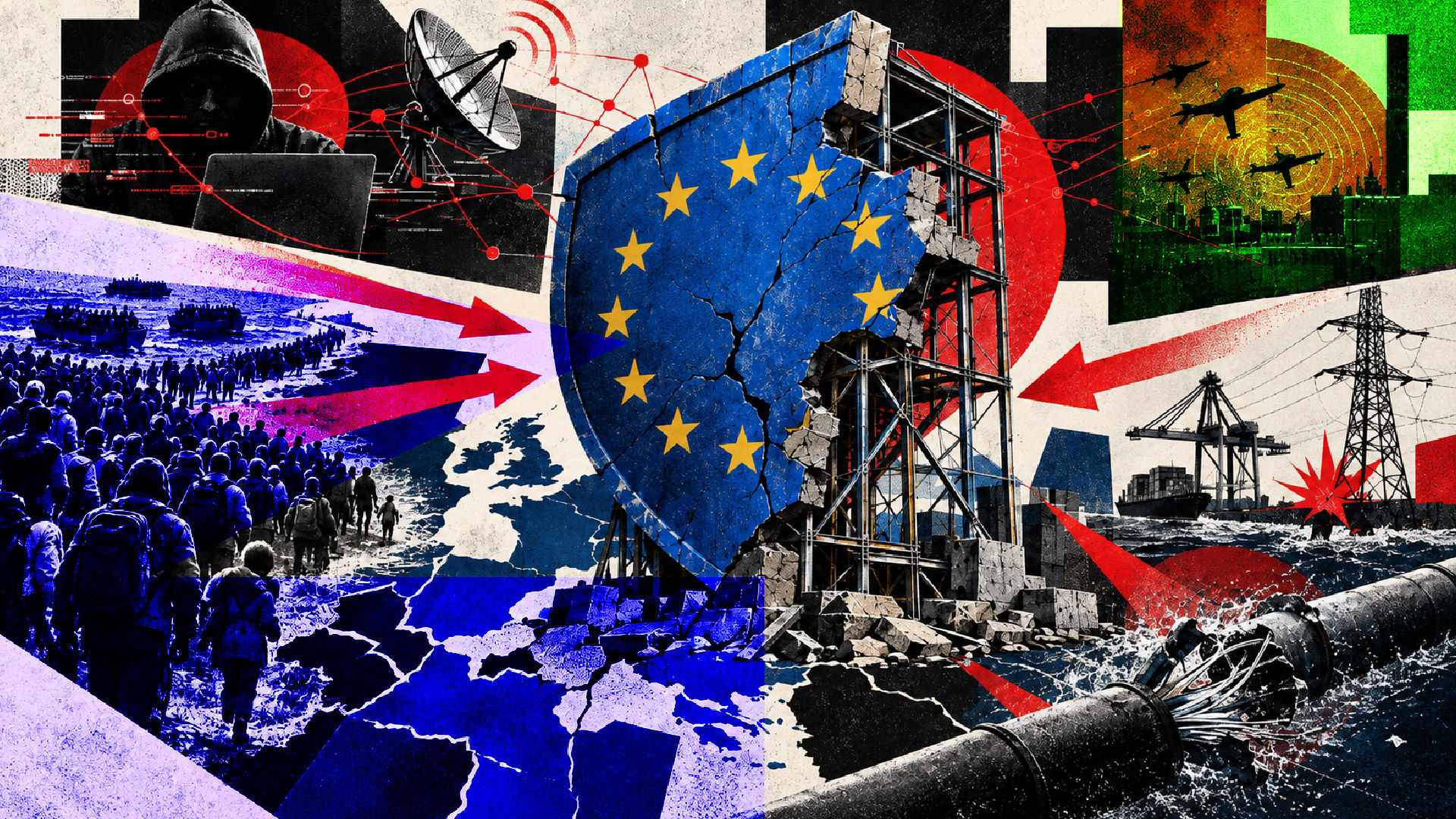
In a brief entitled Europe’s Self-Confidence Problem that appeared in the Strategic Europe blog of Carnegie Europe, its Editor in Chief Rym Momtaz examines two failed tests for Europe: the mass influx of migrants from Morocco to the Spanish exclave of Ceuta in July and an attempted drone attack on the Romanian gas project Neptun Deep in August. Both cases expose a gap between the Union’s perception of itself and how it is seen in Washington and Moscow.
The paradox is simple. Brussels and capitals are targets both because they are defending their interests and because they are seen as vulnerable and eschewing direct confrontation. Two fears paralyze a response: the rise of the right wing and the need to confront a major power. The media are stoking both as they feed the audience with clickbaits instead of equipping them a strategic context. The leaders suffer from cognitive dissonance: they perceive the EU as a superpower on a par with the United States and China but cannot get a seat at the table in negotiations on European security.
Optimists recall the unprecedented military and financial assistance being provided to Ukraine. The author answers that this is not enough now. Europe is no longer graded on a curve, but even on a curve, the Europeans failed this summer’s two stress tests. On Ceuta, the leaders of Denmark, Finland, Germany, and Italy immediately plunged into their domestic political hysteria and blame game. In Romania, Ursula von der Leyen referred to the attempt to blow up a member State’s critical infrastructure, euphemistically, as ‘hybrid warfare’ – which signals just how skittish the union is.
Since 2022, 151 instances of sabotage and shadow warfare against Europe have been publicly attributed to Russia or Russia-adjacent actors. Between 2023 and 2024, the number of such attacks quadrupled. However, they rarely get the prime media billing that stories about migration or the cost of living receive. Without a citizenry that is properly informed about the threat, democracies cannot sustain a long war of attrition. The assistance to Kyiv has already lasted longer than expected. It is constantly being undermined by elections, Trump’s trade war, Chinese dumping, and the repercussions of the war on Iran.
Moscow refuses to engage in serious negotiations with the Europeans over Ukraine and the continent’ s security because they are not seen as formidable enough. In Washington, at the best of times, the Europeans are perceived as nice sidekicks but not as game changers. And these are not the best of times. So long as the union answers a strike on its infrastructure with a euphemism and meets a managed migratory onslaught with a quarrel among its capitals, this confirms the adversary’s calculation that they can press on and get no costly response.
On 29 August, Iceland decided in a referendum not to restart EU accession talks. The union’s trade heft, standard of living, and defense industry were not enough to close the deal. This is an electric shock for the author: Europe’s geopolitical proposition failed to convince even a close northern neighbor.
Help to Kyiv is not proof of strength here but the ceiling. The union has given more and for longer than it was expected to in 2022. But it has failed to make this contribution count in both Moscow and Washington as weight at the negotiating table. With the strike on Romanian gas termed evasively and the incursion into Ceuta handled as a domestic row, the contribution remains just an assistance episode, not a sign of status. Exceptions do not make a power. It is the habit of responding on the day it is punched – in kind – that does.
Original publication: https://carnegieendowment.org/europe/strategic-europe/2026/09/europes-self-confidence-problem