







Read news
Add bookmark
POPULAR
How Much Do Experts’ Ideas Matter for the European Union’s Political Agenda?Oil? Gas? Fertilizer? Just Life.France Offers Europe ‘Forward Deterrence’ but Remains the Sole Decision-MakerKalypso Nicolaidis: I Want a Woodstock for European PoliticsMacron’s Nuclear Ambitions, A Risky Gamble that Could Cost Europe DearMacron Ready to Swap French Nuclear Deterrence for Allies’ Participation in Other Defense SpendingA French Coast for the Baltic SeaNazism Was Not An Exclusively German CancerA Ruthless Diagnosis. Europe More Paralyzed than DividedOnce Europe’s Teacher of Autonomy, France Hinders It Now
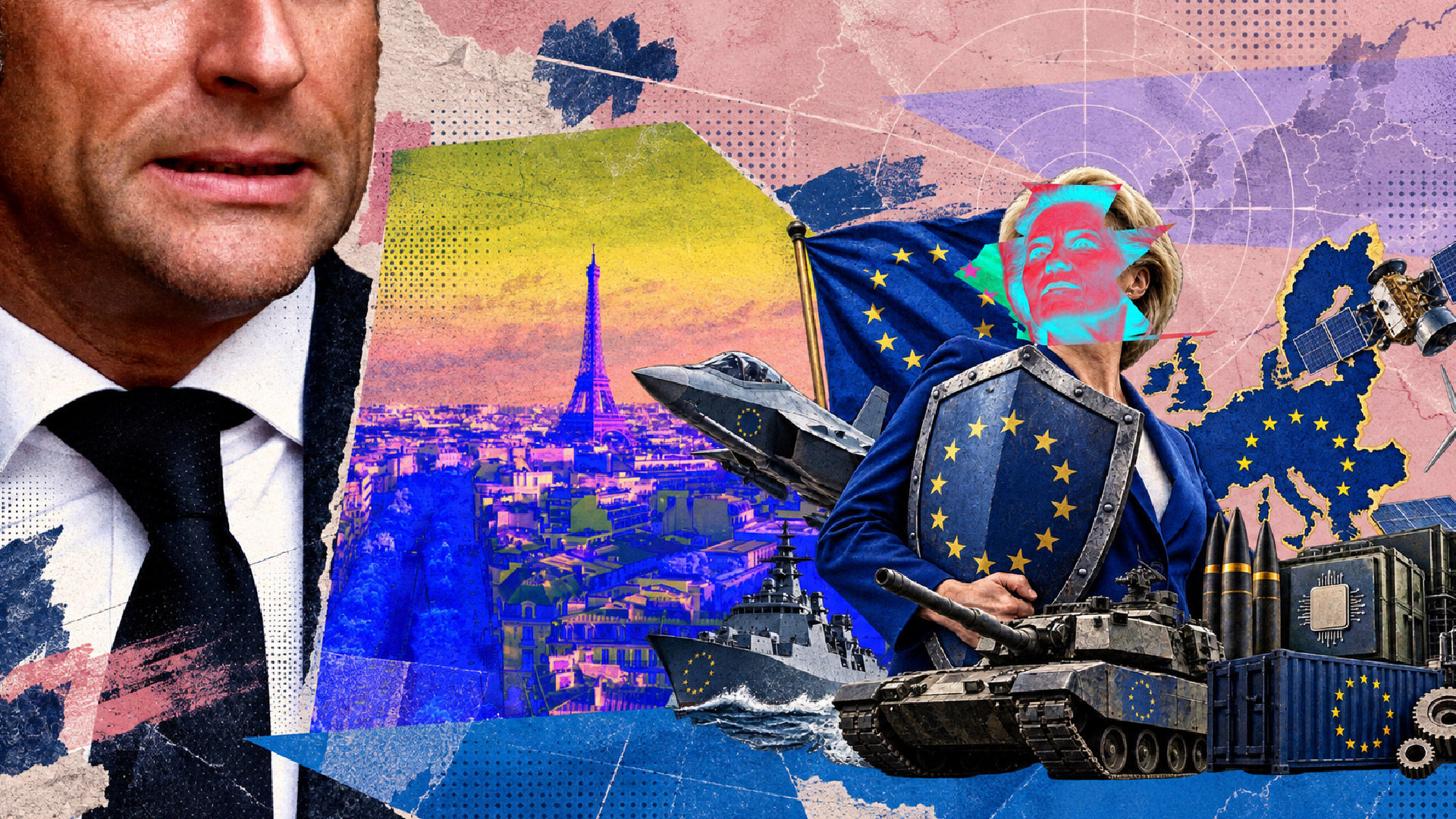
In a paper of the Indian-based Observer Research Foundation entitled The French Paradox of European Strategic Autonomy, researcher Sapna Suresh examines an odd turnaround. For nearly six decades, France has been the leading proponent of European autonomy. Today, even formerly Atlanticist countries such as Germany and Poland, fearful of the precarity of U.S. guarantees, are embracing it. Paris might seem vindicated. But in fact it has become the chief obstacle itself – as it prioritizes its national interests over collective European ones. .
This situation has Gaullist roots. De Gaulle favored a Europe that ‘depended on no one’, not a supranational Europe. He opposed the European Defense Community, developed France’s own nuclear deterrent and took her out of NATO's integrated military command in 1966. In 1994, the term ‘strategic autonomy’ appeared in France's Defense White Paper, stating that France could not be truly autonomous unless Europe as a whole was. This formula was reinforced in the 1998 Saint-Malo Declaration. Macron, in his 2017 speech at Sorbonne University, called for sovereign defense capabilities again – amid uncertainty around Washington.
Berlin was still fighting back. In 2020 Annegret Kramp-Karrenbauer, the then German Defense Minister, insisted that the illusion of European strategic autonomy should end, since the continent could not replace the United States. Macron called this a misrepresentation of history. After the second coming of Trump, threats against Greenland and a transatlantic rift over the Iran War, the Atlanticists sounded nearly Gaullist. Following the 2025 elections, Friedrich Merz made ‘independence’ from the United States a priority. Donald Tusk told the European Parliament that the EU could not rely on the United States and needed to become militarily self-sufficient. Poland even launched a bilateral dialogue on forward deterrence with Paris.
And here the French paradox begins. France has pushed for Europe to de-risk its trade with the United States and even hinted at using the ‘trade bazooka’ against the USA. At the same time, he torpedoes the EU-Mercosur trade agreement, signed in January 2026, to defend his own farmers – against the Commission, Germany, and Spain. On defense policy, France has suggested creating a European army but is fiercely protective of its own national arms industry. Precisely this priority was one of the reasons why the joint Spanish, French, and German project for a next generation fighter jet ultimately collapsed. As Berlin rearms, there is a growing fear in Paris that Germany will supplant France as the engine of European autonomy.
Eastern Europe has its own memories. It was not until Macron's speech in Bratislava in May 2023 that he admitted Central and Eastern Europe’s concerns should have been heeded earlier. The trust lost at that stage does not return now just because Berlin and Warsaw have suddenly begun talking about autonomy.
The common fighter jet’s collapse is not an accidental manufacturing disruption in this context. It is the same conflict, albeit in metal: common autonomy is good until work, standards, and profits have to be shared. A rearmed Germany no longer looks like a junior partner to whom France could dictate its industrial architecture. The more Berlin ramps up its army and budget, the less willing France is to give away control over its leading-edge capabilities. In this situation, Europe’s autonomy remains a French word with German money, but without a common product.
In 2017, Macron promised a single and sovereign Europe. Almost ten years later, more capitals are ready to defend themselves on their own. France, a long-standing proponent of this, is again putting its own interest above the common one. The shift from the U.S. security framework to a European one will keep stalling precisely until Paris agrees to play to the rules it has been offering to others.
Original publication: https://www.orfonline.org/expert-speak/the-french-paradox-of-european-strategic-autonomy