







Read news
Add bookmark
POPULAR
How Much Do Experts’ Ideas Matter for the European Union’s Political Agenda?Oil? Gas? Fertilizer? Just Life.Kalypso Nicolaidis: I Want a Woodstock for European PoliticsHow the “virtues” of neoliberal globalization paved the way to its demiseWhy capitalism is fundamentally undemocraticEuropean Union ChallengesGiorgia Meloni Going for a Record
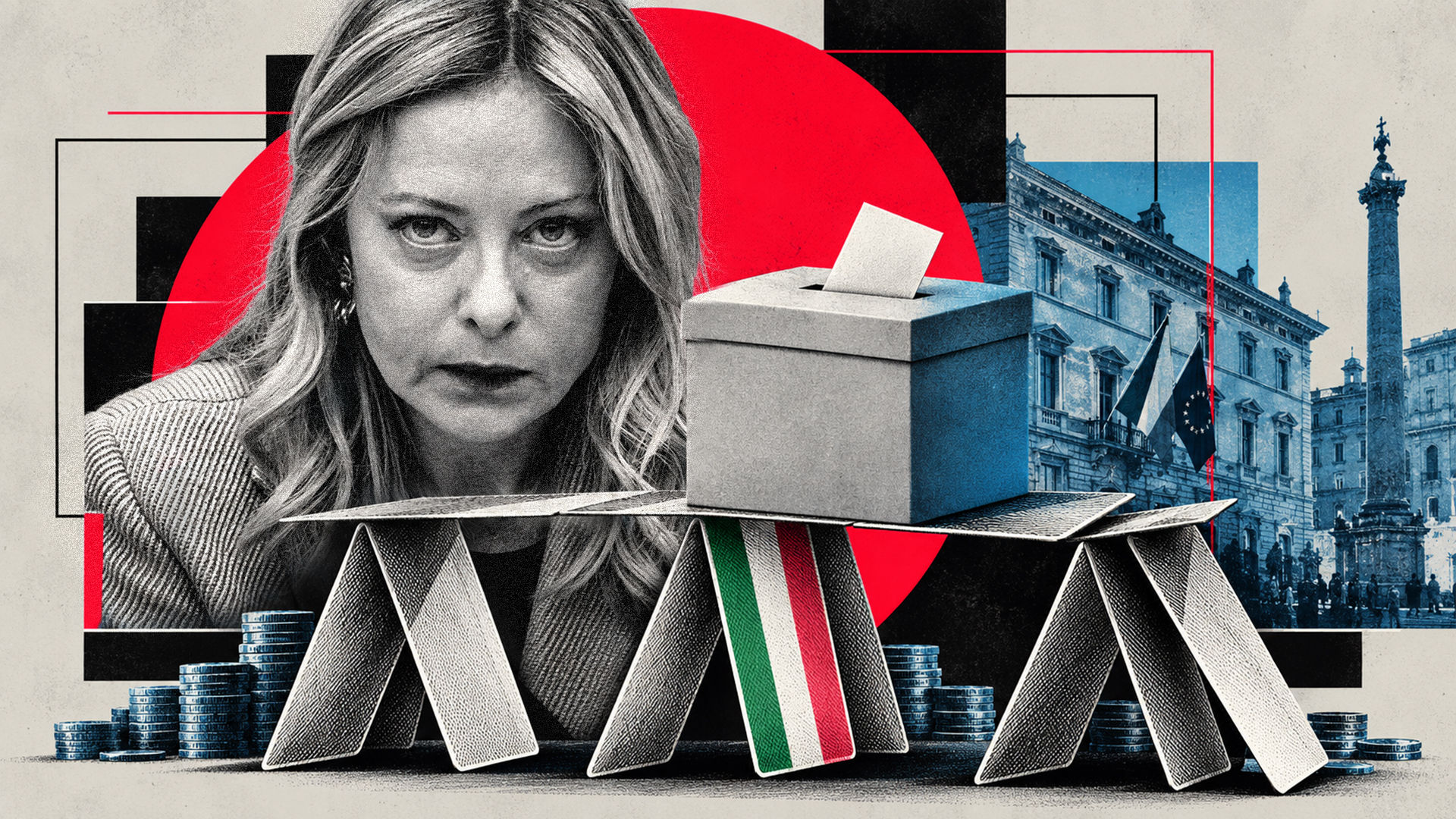
Italian Prime Minister Giorgia Meloni is poised to lead the country’s longest-lasting government since World War Two, surpassing the previous record of 1,412 consecutive days held by Silvio Berlusconi. She came to power in October 2022 and has maintained an unusually durable coalition in a country that has experienced 68 governments since 1946.
Her government plans to celebrate the milestone as evidence that Italy has moved beyond its long-standing reputation for political instability.
But things may change already after the 2027 parliamentary elections. Sana Khan, political analyst and news editor at Modern Diplomacy, writes that afterwards the country risks returning to its accustomed political turbulence and disarrangement once again.
One of Meloni’s strongest achievements has been restoring investor confidence in Italy’s public finances.
Her government has kept greater control over the deficit and debt while scaling back expensive policies inherited from previous administrations.
Analysts broadly acknowledge the improvement in fiscal credibility. However, they argue that stronger budget management has not been matched by equally ambitious economic reforms.
Italy continues facing structural weaknesses in its public administration, healthcare and education systems. Several of Meloni’s major institutional reforms have also stalled, including proposals aimed at strengthening the powers of the prime minister.
Meloni’s political durability may partly reflect her decision to avoid reforms that could seriously disrupt Italian society.
Her government has focused heavily on issues such as law and order, immigration and public security rather than pursuing sweeping institutional or economic transformation.
This strategy has allowed the coalition to maintain cohesion while avoiding major internal conflicts. But it also raises questions about whether political stability has been achieved partly by avoiding difficult reforms.
With the next parliamentary election approaching, Meloni’s government is seeking to change Italy’s electoral system.
The proposed system would provide a majority bonus to a political bloc receiving more than 42% of the vote. The government argues that the reform would create stronger and more stable cabinets.
Meloni’s electoral calculations have been further complicated by the emergence of a new far right political force led by former general Roberto Vannacci.
A BiDiMedia poll placed Meloni’s coalition at 38.5%, below the 42% threshold being considered for the proposed electoral system. Vannacci’s support had risen to around 8%.
An inconclusive election could force Meloni to negotiate with Vannacci after the vote to secure a parliamentary majority.
Either scenario could make the next government more difficult to manage.
The 2027 election will be more than a test of Meloni’s popularity. It will determine whether the political stability established since 2022 represents a lasting transformation in Italian politics or simply an unusually long pause in Italy’s cycle of coalition instability.
The key question is no longer whether Meloni can break Italy’s stability record. She almost certainly will. The real question is whether she can turn that stability into a durable political model after 2027. This will be very difficult to do. Other political players, not always prepared for dialogue, have gathered strength.
Original publication: https://moderndiplomacy.eu/2026/08/31/can-melonis-stability-record-survive-italys-2027-election/