







Read news
Add bookmark
POPULAR
How Much Do Experts’ Ideas Matter for the European Union’s Political Agenda?Oil? Gas? Fertilizer? Just Life.Kalypso Nicolaidis: I Want a Woodstock for European PoliticsHow the “virtues” of neoliberal globalization paved the way to its demiseWhen Loneliness Pays Off: The Economics of Loneliness in the Digital AgeThe European Commission’s Drive to Maximize Revenue by Fining Tech Giants Erodes Europe’s CompetitivenessEurope Still Needs China: Washington is the Main ThreatAn Illusion of Managed Interdependence. A Transatlantic Tech PartnershipProtecting Children on the Net: European Issues and Approaches
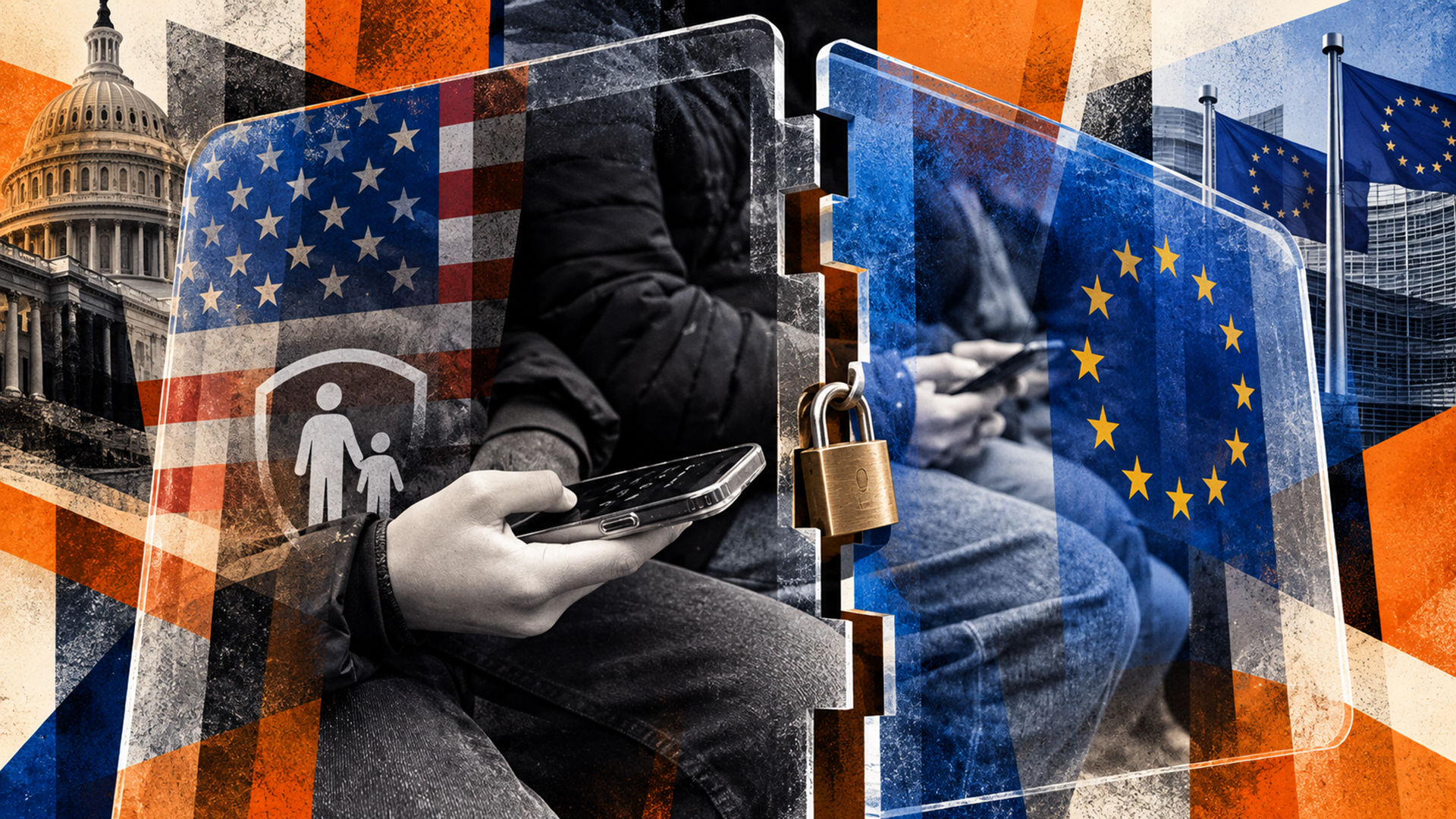
Everyone agrees that children should be protected online. Europe does not know how precisely to do it, and the confusion is already causing problems.
In a paper of the Center for European Policy Analysis (CEPA) entitled Europe’s Next Tech Target: Child Safety, senior fellow William Echikson and Aiko Iguchi examine Ursula von der Leyen’s promise to put children’s safety at the center of her autumn State of the Union address. The topic sounds like a rare political consensus. But in fact it is the season's most contentious tech dossier, overshadowing both the bloc’s antitrust crackdown and artificial intelligence regulation.
The authors do not know what exactly will be announced. Under-13s’ or under-16s’ access to social media could be banned or partially restricted. The framework could be limited to social media or extended to messaging devices, video sharing, and online marketplaces. It is also unclear how age gating will be done: by each website or by app store owners like Apple, Google and Microsoft. France’s top court recently struck down a ban on social media for under-15s, saying it infringed upon freedom of expression. France then banned mobile phones at schools, but that is no substitute for an all-European framework.
The national capitals no longer wait for Brussels to act. France, Spain, Austria, Germany, and Greece are all pursuing their own bans for children in different age groups. Such measures are supported by both the right and left: politically beleaguered governments find them to be a convenient and popular initiative. Ireland, which currently holds the presidency in the EU Council, has prioritized the topic and is pushing for an EU-wide approach to age verification. An expert report, commissioned by von der Leyen, recommends a minimum age of 13 – below the Australian threshold – and placing the onus on platforms to prove their safety. It also creates a vague category of ‘social media+,’ suggesting that almost all online services could be brought under it, including AI chatbots and e-commerce marketplaces. But the report does not explain how age will be verified ‘proportionately’ without biometric IDs.
Practice already shows the price of no clarity. After a French law on verifying users’ ages took effect, Pornhub blocked access in France and only returned after a Paris court suspended the law. Three months after under-16s’ access to social media was banned in Australia, 81percent of teens were still using restricted platforms, and more than half of users reported that their age was never checked. For child rights activists, the 2025 Brazilian law represents a model: it not just bans children’s access but puts responsibility on companies to make their services safe. There is no such clarity in Europe.
Washington-based digital rights champions have already warned that the report contains too many ‘blind spots’ between protecting children online and safeguarding fundamental rights. Family organizations in Brussels point to another risk: companies will introduce light restrictions instead of redesigning the product. Both warnings have one thing in common. Europe is good at announcing a priority but has difficulty making the priority work the same way in Paris, Dublin, and an app store.
The transatlantic layer only obscures the picture. The authors write that child safety could offer a rare opportunity for agreement between Washington and Brussels. On the other hand, any stringent age rule imposed on U.S. platforms could make them feel singled out. So even where the goals formally converge, a dispute about methods would easily degrade into a new trade conflict. Europe would then have to choose not between ‘protecting’ and ‘not protecting’ but between a ban to be turned down by court and a check to be rejected by the platforms.
The United States is also tightening its rules. Meta has agreed to pay up to USD 17.1 billion on a suit regarding its products deliberately made addictive to children. This fails to close the principal European gap. Political demand for ‘protecting children’ is huge. A workable mechanism is missing. Companies threaten leaving the market. Courts scrap bans. Teenagers bypass the age firewall. While Brussels argues who exactly will check birth dates, the children stay where the algorithms keep them.
Original publication: https://cepa.org/article/europes-next-tech-target-child-safety/