







Read news
Add bookmark
POPULAR
How Much Do Experts’ Ideas Matter for the European Union’s Political Agenda?Oil? Gas? Fertilizer? Just Life.Kalypso Nicolaidis: I Want a Woodstock for European PoliticsEnergy Protectionism Without EnergyMaking the European Carbon Market an Industrial Policy Magic Wand Attempted AgainA Regulatory Dead End: Industry Versus FarmersHow the “virtues” of neoliberal globalization paved the way to its demiseThe Gulf War and Europe’s Helpless Energy PolicyCarbon Tax on Exports to EU Is Developed Countries’ Hypocrisy Towards the Global South
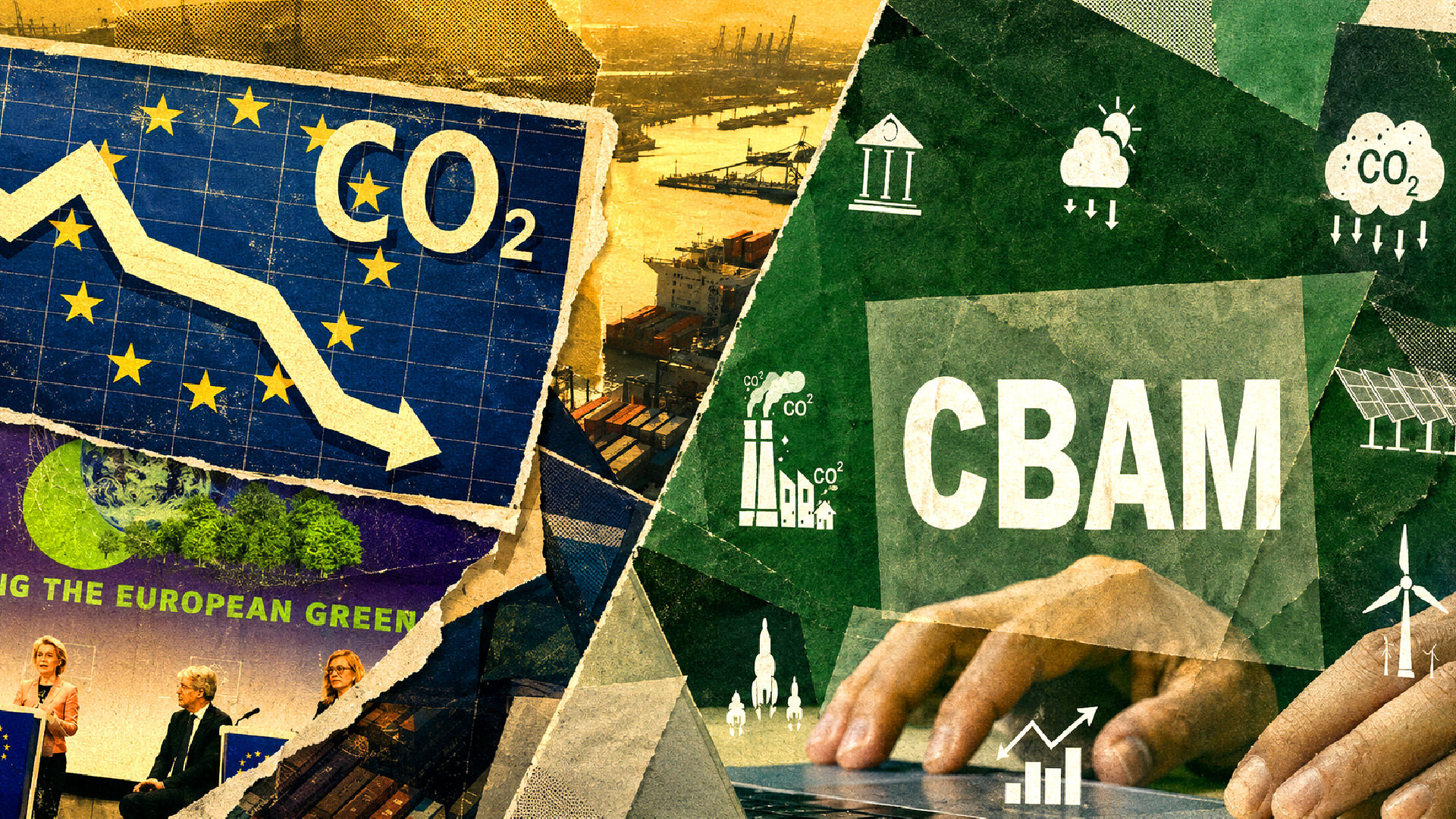
The emission tariffs have become a tool for discriminating against developing countries – an imperial policy aiming to maintain the North-South divide.
Gina Huang, Henry A. Wallace Fellow at the Institute for Policy Studies, criticizes the EU’s carbon emissions tax on imports into the European Union in an article posted on the Foreign Policy in Focus (FPIF) website.
This year, the EU began imposing the world’s first carbon border adjustment mechanism (CBAM) – essentially a tariff on imported products that result from carbon-intensive production.
CBAM targets specific high-emitting sectors: cement, aluminum, fertilizers, iron and steel, and electricity. It puts a cap on carbon emissions and has emitters purchase allowances to cover emissions. The aim is to make other countries undertake to reduce emissions.
CBAM has also been promoted as a measure to protect EU industry’s competitiveness. In this sense, CBAM is as much a matter of trade policy as it is environmental, with the former becoming the main target of international condemnation. CBAM as a protectionist policy produces a zero-sum relationship between the economic competitiveness of the EU and exporting countries, disproportionately harming those in the Global South.
The problem is that the application of CBAM does not acknowledge varying capacities to accomplish this. Penalizing countries that lack the financial means to rapidly switch to a lower-emission infrastructure only perpetuates the economic inequality.
The transition to low-emission technology entails massive infrastructure costs that developing countries can hardly afford. Nor does the Global North facilitate access to this technology. Environmentally sustainable technologies get locked behind patents with costly licensing and limited resources to implement.
This compounds the financial strain felt by poorer countries even further. Exporters could respond with tough retaliatory policies, but poorer countries have less leverage to do this effectively.
Imposing a tariff in the name of ‘climate justice’ is not only discriminatory, but deeply hypocritical on the part of the Global North.
The EU and its member States have failed to deliver on their commitments to climate finance under the Copenhagen Accord, which could have alleviated the financial burden of switching to green technologies. Developed nations pledged to provide USD 100 billion annually to support developing countries in combating climate change. This promise has gone unfulfilled year by year.
Besides, donor countries have evoked backlash for providing loans and not grants. This risks debt-trapping developing countries and jeopardizes the long-term maintenance of the green transition.
Opponents have accused CBAM of violating Article 3.5 of the United Nations Framework Convention on Climate Change, which discourages climate initiatives that serve as a ‘disguised restriction on international trade,’ especially unilateral measures. Both informal challenges and formal disputes have been brought against the EU at the WTO, alleging that CBAM violates WTO rules against discriminatory practices.
A truly progressive climate policy involves dismantling the historic tools of an imperial policy that maintains the North-South divide, rather than exploiting them to enact discriminatory unilateral measures. Unless an equal playing field is created in the global economy, policies like CBAM will only deepen the existing economic dependencies.
Original publication: https://fpif.org/europe-is-embracing-green-protectionism-at-the-cost-of-a-global-green-transition/