







Read news
Add bookmark
POPULAR
How Much Do Experts’ Ideas Matter for the European Union’s Political Agenda?Oil? Gas? Fertilizer? Just Life.Kalypso Nicolaidis: I Want a Woodstock for European PoliticsBetter Regulation in the European Union Needs a Fresh StartHow the “virtues” of neoliberal globalization paved the way to its demiseRegular Ones Made IrregularEurope Still Needs China: Washington is the Main ThreatSynthetic Opioids Might Flood EuropeAI Regulatory Double Bind. Europe Has Incurred It On Its Own
On 2 August 2026, the European Union's Artificial Intelligence Act was supposed to fully enter into force. It had been positioned from the outset as the most ambitious regulatory framework for artificial intelligence anywhere in the world.
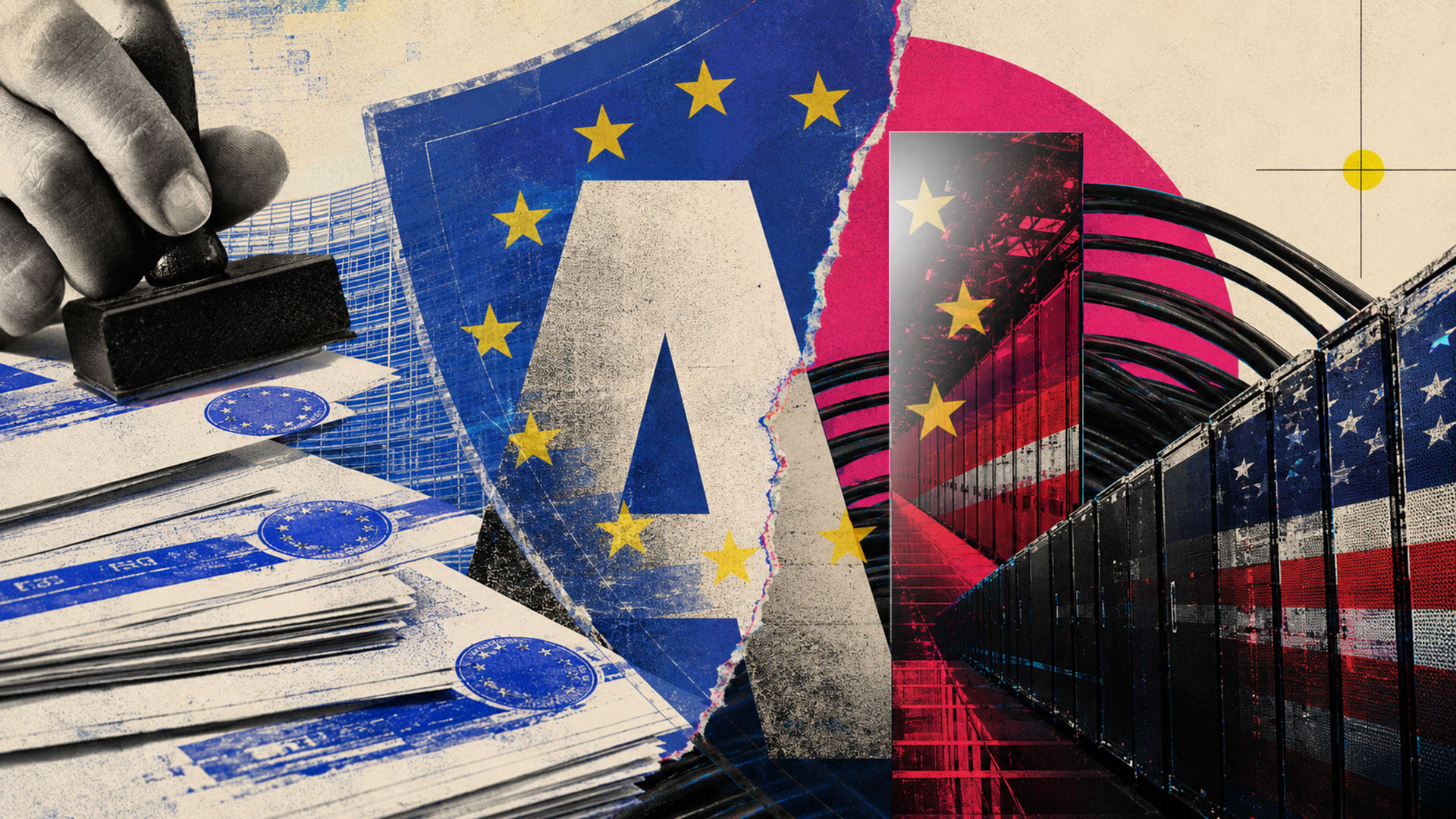
Instead, it crystallized something different: a structural double bind in which Europe loses regulatory sovereignty whether it enforces its own rules or retreats from them. For this very reason the Act was put on hold. This matter was examined by Marco Perugini, an independent researcher and founder of Centrifuga Lab. His article was posted on the website of the Centre for Economic Policy Research (CEPR).
The AI Act was initially expected to introduce regulation of high-risk systems – covering biometric identification, recruitment systems, credit scoring, law enforcement, and border control. Instead, at the last moment the European Parliament deferred standalone high-risk obligations to December 2027, and product-embedded systems, to August 2028.
However, not all the structurally consequential provisions of Europe's AI framework were postponed.
Article 50 – the AI Act's transparency layer – did take effect on 2 August 2026.
Providers must now inform individuals when they interact with an AI system. Synthetic audio, images, video, and text must carry machine-readable markers. Deployers must label deepfakes and disclose emotion recognition and biometric categorization systems.
These are real obligations with real enforcement dates. But the infrastructure required to assess compliance with them is not yet fully operational in Europe.
The EU is thus enforcing transparency requirements on AI systems it does not produce, using assessment capacity it does not yet possess. In the absence of domestic assessment capacity, compliance evaluation will likely default to methodologies developed primarily in the United States. That is, where benchmark standards and testing thresholds are not subject to European oversight.
Another incident, more serious and significant, occurred simultaneously.
On 23 July 2026, the European Commission fined Google EUR 890 million under the Digital Markets Act – for self-preferencing its own services in Search and for anti-steering restrictions on Google Play.
The response was immediate. On 24 July, President Trump declared on Truth Social that the USA would ‘immediately launch an investigation’ into the EU's practice of what he called ‘robbing’ American companies. The application of European law to American technology companies is now treated not as a jurisdictional matter to be contested in courts, but as a trade grievance to be answered with U.S. tariffs.
The retreat from high-risk AI regulation and the punishment for competition enforcement are not separate policy stories. They demonstrate that the same jurisdiction faces sovereignty costs on both sides of the same decision: whether to enforce or to defer.
When the EU retreats from its own regulatory ambitions, it cedes the capacity to shape the terms on which AI systems operate within its borders.
And when the EU enforces its own competition rules, it faces U.S. trade retaliation calibrated to make enforcement economically costly.
Breaking the double bind requires something the current institutional architecture is not designed to deliver: the capacity to enforce without dependence on external assessment infrastructure, and the fiscal willingness to absorb enforcement costs. European bureaucracy can take such steps in a nightmare only. And this must be acknowledged.
Original publication: https://cepr.org/voxeu/columns/europes-regulatory-double-bind