







Read news
Add bookmark
POPULAR
How Much Do Experts’ Ideas Matter for the European Union’s Political Agenda?Oil? Gas? Fertilizer? Just Life.Kalypso Nicolaidis: I Want a Woodstock for European PoliticsHow the “virtues” of neoliberal globalization paved the way to its demiseWhy capitalism is fundamentally undemocraticThe Gulf War and Europe’s Helpless Energy PolicyRegular Ones Made IrregularEuropean Unity in the Interests of Security. Split along the North-South LineThe EU’s Technocratic Trap in Libya: a Disgraceful Surrender of Brussels in the MediterraneanEurope Seeking a Morally Sound Way to Enter a Race It’s Already Losing
In his article entitled Drone warfare with a moral code Sir David Omand, formerly a high-ranking British intelligence officer, reflects on whether autonomous weapon systems can be equipped with a moral judgment capability.
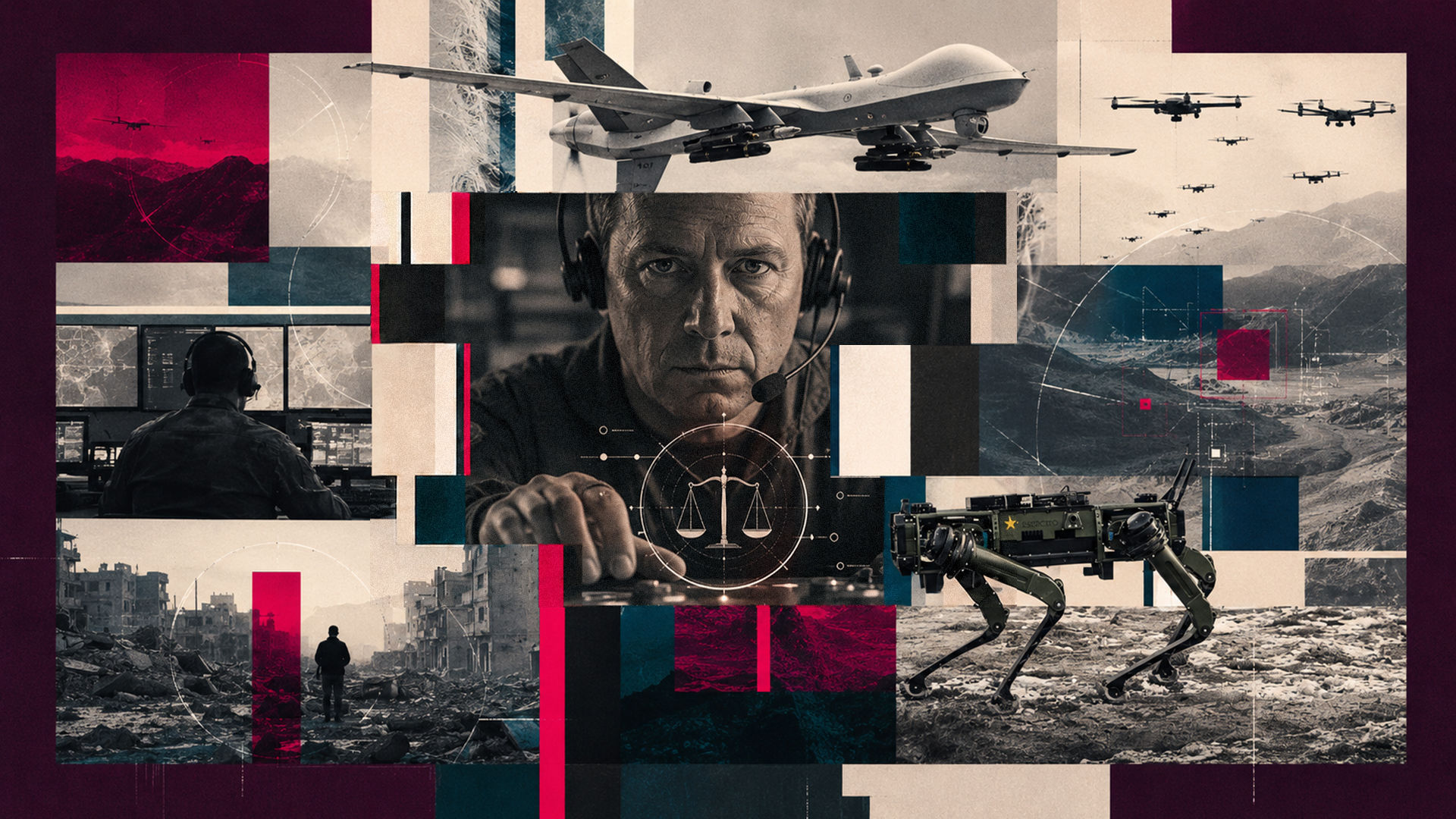
He admits having opposed fully autonomous lethal systems just a few years ago; but now, with the arrival of generative and agentic artificial intelligence, he has changed his mind. In his opinion, modern technology makes it possible to train AI not only in the analytics of deciding to use force but also in heeding the moral constraints enshrined in international humanitarian law. Sir David Omand believes that now that Russia and China actively develop and field such systems, the Western and particularly European countries cannot but move in the same direction – if ‘responsibly’ and with moral boundaries in mind.
The article’s seemingly calm and academic tone masks a stark and troubling conclusion suggested: the Western countries have actually lost the autonomous weapons race and are now seeking to take part while keeping up moral appearances.
Sir David Omand actually finds that the times where the spread of this technology could be limited via international agreements and ethical debates are already gone. If the adversary is going this way and already creating real systems, then Europe and its allies have to develop their own solutions, he argues. And he suggests doing this ‘responsibly’ – by training AI to factor in the proportionality principle and distinguish between combatants and civilians, and by retaining a degree of human control.
It is especially clear how unconvincing this stance looks on closer examination. Even if the principles of international humanitarian law can technically be embedded into the algorithm, many fundamental questions remain. Who will determine the specific weights of moral considerations in the algorithm? What will the system do in situations where all choices are bad? And who will be responsible when the system does make a mistake leading to civilian casualties? These questions are only superficially touched upon by the author.
In reality, the whole construct of a ‘moral artificial intelligence’ looks rather like an attempt to give an ethically acceptable appearance to a process that has long gone out of control. Once again, Europe is catching up – and trying to find a moral justification for taking part in a weapons race in which it has fallen considerably behind. While the European countries argue about the acceptable limits for autonomous systems and ‘human control’, Russia and China will improve and deploy such systems in real settings.
A typical European problem transpires: an understanding that the old approaches no longer work is combined with reluctance or inability to draw quick and harsh conclusions. Sir David Omand is right that the development of autonomous lethal systems can hardly be stopped now. Yet his proposal – to move ahead ‘responsibly’ – looks like a way to postpone difficult decisions rather than a real strategy.
The article is a good illustration of the state of European thought in the security field, that recognizes technological and military backwardness but adheres to moral rhetoric. While European élites continue looking for ‘morally acceptable’ ways to take part in processes long defined by other players, the capability gap will only widen. And all talk about a moral compass for machines may mostly remain an excuse for their technological and political lag.
Original publication: https://engelsbergideas.com/notebook/drone-warfare-with-a-moral-code/