







Read news
Add bookmark
POPULAR
How Much Do Experts’ Ideas Matter for the European Union’s Political Agenda?Oil? Gas? Fertilizer? Just Life.Kalypso Nicolaidis: I Want a Woodstock for European PoliticsHow the “virtues” of neoliberal globalization paved the way to its demiseBetter Regulation in the European Union Needs a Fresh StartThe Gulf War and Europe’s Helpless Energy PolicyEurope: doctrinal shift towards violence. Transition to a war economy instead of a “liberal democracy”Radicalisation in Onlife Spaces: Europe’s home-grown terroristsEurope’s Rickety Shield: Faith Instead of Real ProtectionEurope Prefers to Create New Frameworks Instead of Really Preparing for Crises
In their policy brief entitled Making resilience a key pillar of Europe’s defence, Nad’a Kovalčíková and Giuseppe Spatafora, analysts at the European Union Institute for Security Studies (EUISS), insist that civil resilience and preparedness should become core elements of the European defense policy. They note the growth of hybrid threats, refer to Swedish and Finnish experience, and suggest creating a special EU resilience planning capability to better coordinate different countries’ and departments’ efforts.
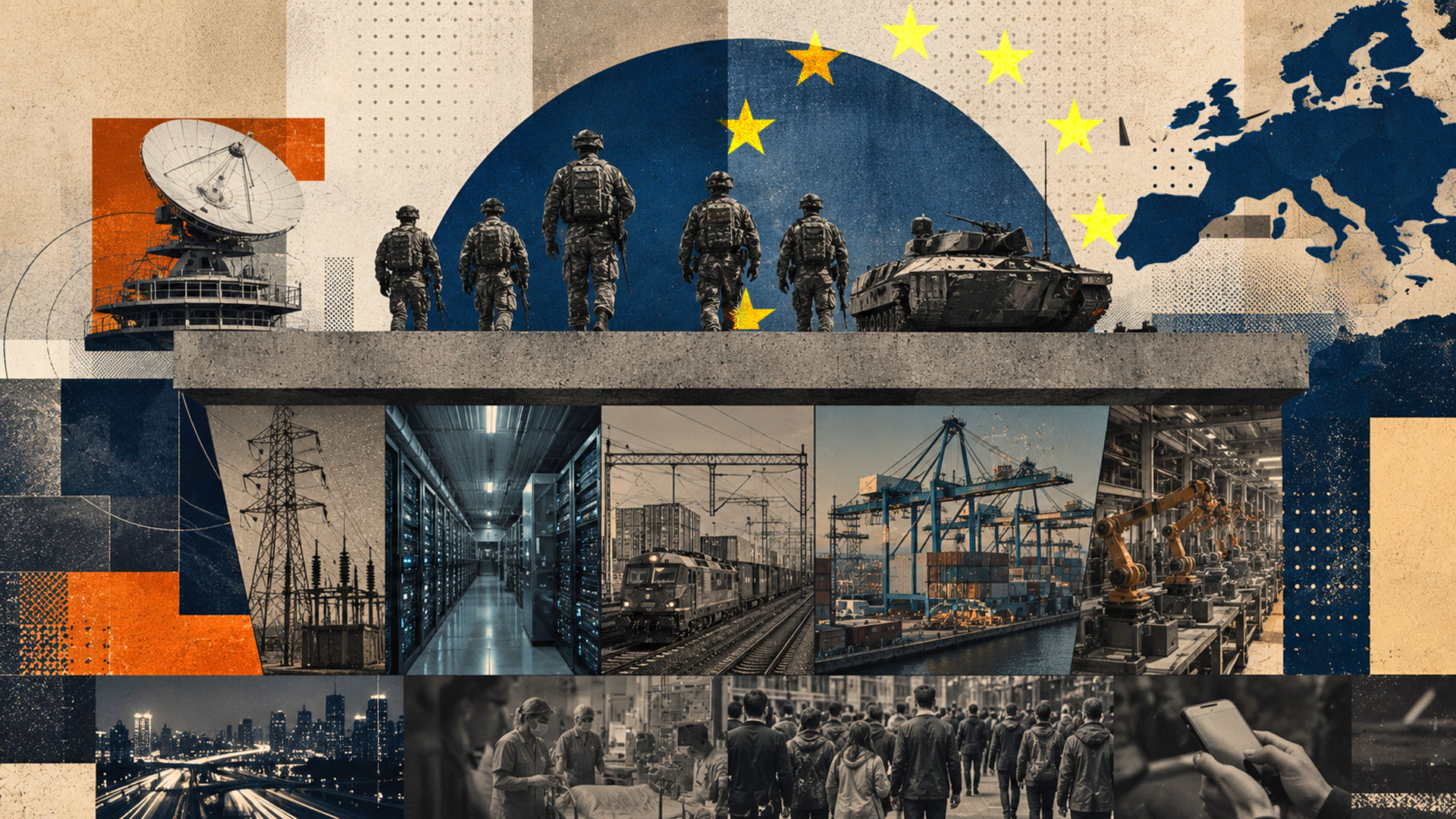
These seemingly sensible proposals conceal an uncomfortable reality: despite a multitude of strategies, summits and initiatives, European countries are still less than prepared for serious crises, and most of their efforts remain declaratory.
The authors try to present the current piecemeal and fragmented nature of European efforts as a problem that can be solved by creating additional coordination mechanisms. However, the main difficulty consists not in a lack of frameworks but in member States’ political unwillingness to delegate authority and transfer resources to a supranational level. Different countries have divergent threat perceptions and risk assessments and are quite reluctant to share sensitive information even with one another. In this situation, any new coordinating bodies risk facing the same threat that prior initiatives have bumped into.
This is especially manifest in how superficial the real preparation of both societies and infrastructures remains. Most European citizens still lack even basic stockpiles in case of a serious crisis, to say nothing of more in-depth preparations. Yet new strategies, panels and coordination centers are readily being created at the EU and individual member States’ levels. These structures make it possible to report on work done but often lead to no substantial increase in real preparedness.
In reality, the authors’ proposed measures – creation of a resilience planning capability and setting out minimum all-European requirements – will hardly be able to drastically change the situation. Europe has already propagated a good number of strategies, directives and coordination mechanisms in the field of civil protection and resilience. The problem lies not in their number but in the fact that good-looking documents are seldom followed by serious financial investments, tough policy decisions and real shifting of resources. Barring these, much of the talk about ‘resilience as a pillar of defense’ remains sheer rhetoric.
The ambitious statements are clearly at variance with the real state of affairs. The European institutions and most national governments continue acting in the logic of gradual improvements and creation of new coordinating frameworks instead of acknowledging how unprepared they are – and embarking on a truly tough and costly policy in this field. As a result, Europe risks getting still another set of documents and mechanisms that will exist in parallel with reality but have little influence on it.
The EUISS analysis spells out the issue once again: instead of recognizing the depth of the existing problems and investing seriously in addressing them, the European élites prefer to create new strategies and coordination structures. As long as this approach persists, all talk about resilience as an important element of defense will mainly help them retain an illusion of control, and European societies’ real preparedness for major crises will improve very slowly.
Original publication: https://www.iss.europa.eu/publications/briefs/not-just-addendum-making-resilience-key-pillar-europes-defence