







Read news
Add bookmark
POPULAR
How Much Do Experts’ Ideas Matter for the European Union’s Political Agenda?Oil? Gas? Fertilizer? Just Life.Kalypso Nicolaidis: I Want a Woodstock for European PoliticsHow the “virtues” of neoliberal globalization paved the way to its demiseEuropean Unity in the Interests of Security. Split along the North-South LineWhy capitalism is fundamentally undemocraticThe Gulf War and Europe’s Helpless Energy PolicyRegular Ones Made IrregularA Ruthless Diagnosis. Europe More Paralyzed than DividedHow Prepared Is the EU for Another Migration Crisis?
The Iran conflict and the civil war in Sudan have fanned concerns that the European Union could face another strong migration crisis similar to that of 2015. How much better prepared would the EU be now if faced with another sudden influx of large numbers of asylum applicants, some of whom might attempt to enter the EU without having the legal right to do so?
This matter is examined in a European Parliament study done by Steven Blaakman.
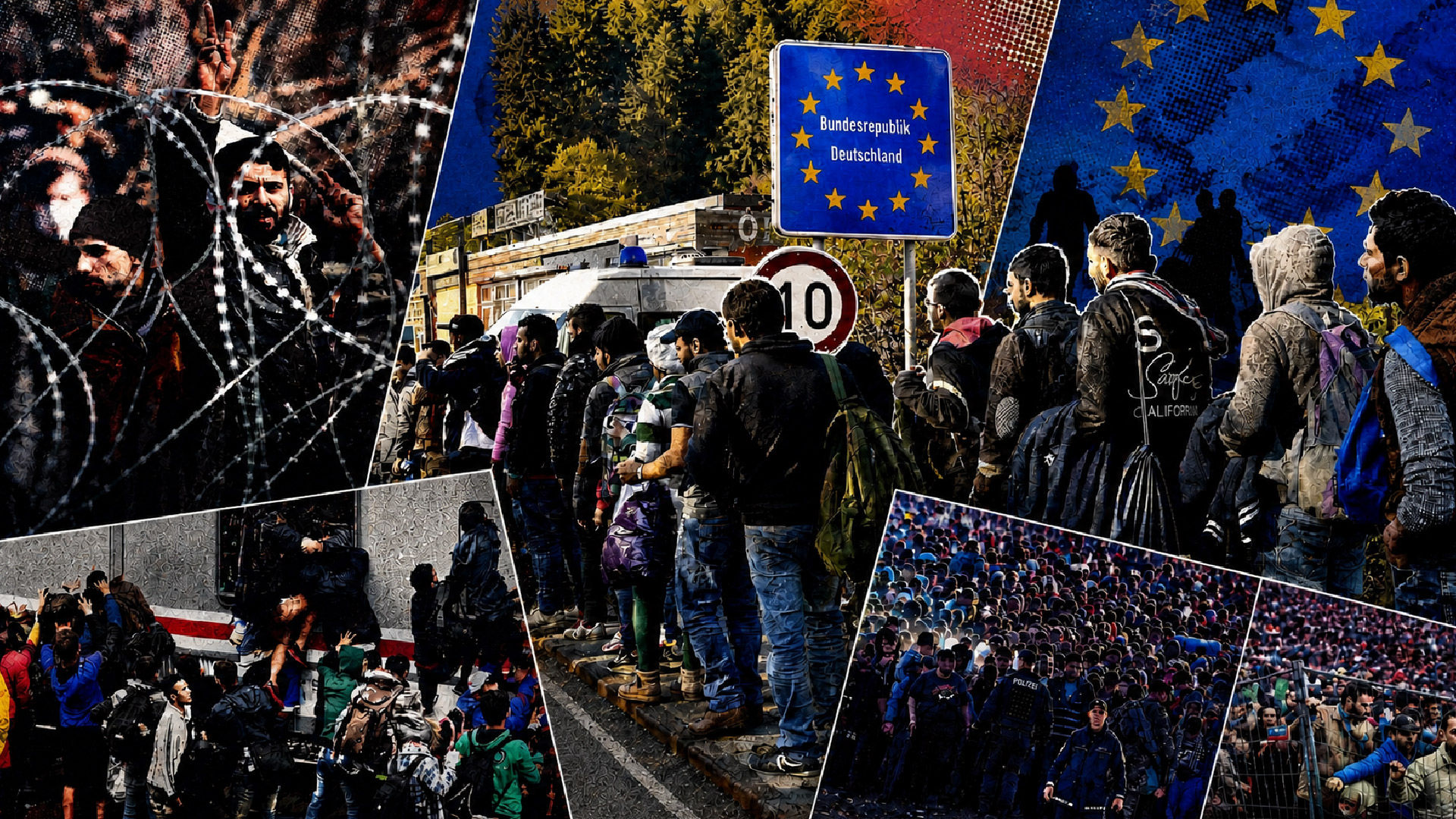
In 2015, more than one million asylum applicants arrived in the EU, mainly due to the conflict in Syria and the situation in Afghanistan and Iraq. The crisis exposed the limitations of the EU's asylum system. Under the Dublin Regulation, the first EU country where asylum applicants arrived was, in the majority of cases, responsible for processing their claims.
However, faced with large flows of irregular migrants, Greece and Italy allowed them to continue to other countries. In 2015, more than twice as many irregular migrants arrived in Greece and Italy than in the previous five years combined.
The 2026 Iran war, which started when the USA and Israel launched airstrikes on various sites across the country on 28 February, has sparked worries that it could set in motion a repeat of the events of 2015.
It is not accidental that already in April 2026 the leaders of Cyprus, Greece, Italy and Malta issued a joint declaration calling for an EU-wide contingency plan to prepare for a possible migration wave.
Even partial destabilization of Iran, with a population of some 90 million, could generate refugee movements of an unprecedented magnitude. Displacement of just 10 percent of Iran's population would rival the largest refugee flows of recent decades. Such a flow could literally flood Europe.
In the meanwhile, the civil war in Sudan has led 4.2 million people to seek safety abroad. And this is not the limit, for the refugee flow may multiply as the civil war continues.
As of early May 2026, the conflict in the Middle East and the civil war in Sudan have not triggered a higher influx of asylum applicants in Europe. Predicting if – or when – this may change is difficult, as it will depend on how the situation develops. For perspective, although the war in Syria started in 2011, large numbers of Syrians only started arriving in Europe in 2015.
According to UNHCR, 66 percent of refugees and other people in need of international protection are hosted by a country neighboring their own. As such, the capacity of countries near Iran and Sudan to take in refugees will affect how many will seek refuge in Europe.
An additional migration instability factor emerged in January 2026 as the Spanish government announced its intention to regularize all undocumented migrants who had lived in the country for at least five months before 31 December 2025. Once issued residence permits, these foreign nationals would be able to travel visa-free to other Schengen countries for short stays of up to 90 days within any 180-day period. The Spanish regularization initiative, launched through a royal decree without parliamentary involvement, could benefit more than half a million undocumented migrants. They will now be free to go to any European country of their choice.
Finally, the author of the study notes that EU countries may not legally send asylum applicants back if the country of origin is involved in a violent conflict. Millions of refugees from Sudan and Iran may use this if the situation there escalates further – and they probably will. The doors are open. Europe can only wait.
Original publication: https://epthinktank.eu/2026/06/08/how-prepared-is-the-eu-for-another-migration-crisis-reassessing-the-situation-in-the-wake-of-the-iran-conflict-and-the-sudanese-civil-war/