







Read news
Add bookmark
POPULAR
How Much Do Experts’ Ideas Matter for the European Union’s Political Agenda?Oil? Gas? Fertilizer? Just Life.Kalypso Nicolaidis: I Want a Woodstock for European PoliticsHow the “virtues” of neoliberal globalization paved the way to its demiseEurope Losing Energy Security Battle to ChinaThe Gulf War and Europe’s Helpless Energy PolicyA Ruthless Diagnosis. Europe More Paralyzed than DividedEurope Still Needs China: Washington is the Main ThreatEurope Keeps Making the Same Mistake, This Time with the Power GridsPolitical Sentiments Changing Fast, Climate Agenda Losing Support
In their article entitled The new climate battle, experts of the European Council on Foreign Relations discuss how the socio-political changes in Europe and its economic problems are debunking the European climate agenda.
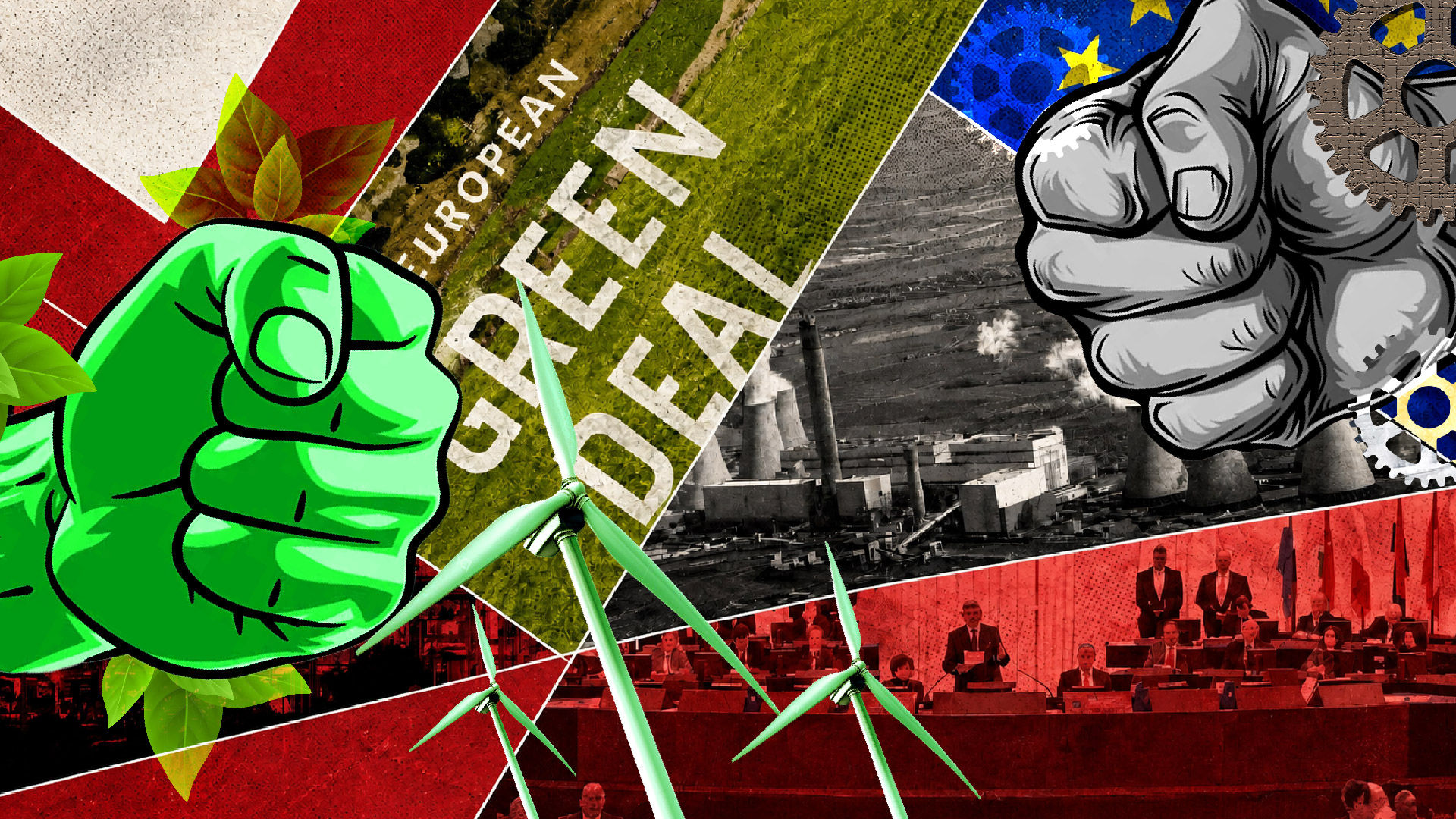
The European policy against climate change has had a history already. But its current stage shows that all the previous efforts have not paid off – but have done harm to the European economy.
The world of 2026 is fundamentally different from that of 2019, when the European Green Deal was forged. In December 2019, EU leaders were effusive and united, endorsing the Paris Agreement’s ambition to limit the global temperature increase to 1.5°C above pre-industrial levels and committing to EU climate neutrality by 2050.
The sentiments were different at the European Council summit of October 2025. Poland’s prime minister Donald Tusk warned that overly ambitious climate policies were fuelling extremism, which led to the election of nationalist, coal-championing president Karol Nawrocki. German chancellor Friedrich Merz, under pressure from the climate-skeptic Alternative for Germany (AfD), declared existing plans unacceptable.
Why did the politicians change their minds so dramatically?
Back in 2018, the EU had increased industrial carbon prices in its Emissions Trading System and channeled some of the carbon allowance revenues into green investments.
In 2021, the European Climate Law entered into force. It raised the 2030 emissions-reduction goal from 40 to 55 percent, expanded carbon pricing into household electricity, and imposed import tariffs on high-emissions goods and tougher emissions standards for transport, including an effective ban on sales of new petrol and diesel cars from 2035.
All that met with resistance from a significant number of voters. In Paris, left-of-center mayor Anne Hidalgo won mandates for ambitious climate action from an entirely metropolitan electorate willing to trade automotive access for cleaner air. However, such voters make up a small share of France’s population. Hidalgo won just 1.75 percent of the vote in the 2022 French presidential elections.
The climate policy used to rely on young, white-collar, urban electorates alone.
Politicians who represent other, far more numerous groups, think differently. For Alice Weidel, co-leader of the AfD, so-called ‘climate protection’ is nothing more than a program of deindustrialization and job destruction. For Italy’s Matteo Salvini, electric vehicle ideology is industrial suicide and a gift to China. The implication is the same: Europe is hurting itself through green policies while its rivals press ahead.
Leaders of the political center have to take those positions into account. Amid concerns over lagging growth, some mainstream politicians have seized on notions of an unfair European contribution to the global green transition. Wopke Hoekstra, the EU’s climate commissioner, has stressed that ‘without others, we are not going to solve this’ – implying that the rest of the world is dragging its feet on the transition.
The climate policy utopia, like others in the past, has crashed against practicalities. However, the EU continues mainstreaming this policy, far from realizing its futility – and only trying to correct the problems it poses through minor adjustments.
Original publication: https://ecfr.eu/publication/the-new-climate-battle-five-deals-to-recharge-the-green-transition/