







Read news
Add bookmark
POPULAR
How Much Do Experts’ Ideas Matter for the European Union’s Political Agenda?European Urban Climate Resilience: Ambitious Plans are Hindered by the Lack of Funds and CoordinationOil? Gas? Fertilizer? Just Life.Kalypso Nicolaidis: I Want a Woodstock for European PoliticsHow the “virtues” of neoliberal globalization paved the way to its demiseEuropean Unity in the Interests of Security. Split along the North-South LineEurope’s Rickety Shield: Faith Instead of Real ProtectionEurope Again Seeking Escape in an Illusion of a Common CauseThe Gulf War and Europe’s Helpless Energy PolicyThe Summer Nobody Tells Us About: High Mortality Rates, Promises, and Reality in Contemporary Italy
Europe is facing an unprecedented crisis in terms of weather conditions, highlighting its structural and social vulnerabilities.
This lack of preparedness was highlighted in June 2026, when temperatures peaked during the week of June 22–28, resulting in 20,390 heat-related deaths across the continent. Only in Italy, 2,709 deaths were recorded—a very high toll when considering just those 7 days.
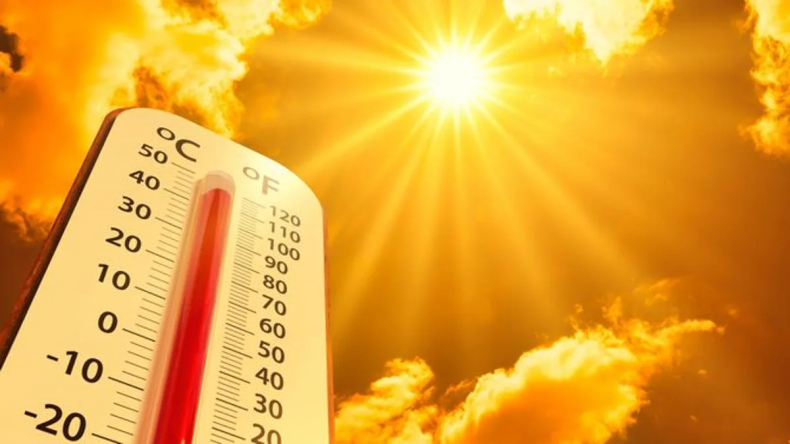
The "Silent Killers" of a Burning Continent
This event was not an isolated incident or a meteorological anomaly, but rather, as specified by World Weather Attribution, it was a clear and evident phenomenon of such magnitude that it had never occurred in the last 50 years.
If we had reached such a temperature in 1976, it would still have felt 3.5°C cooler.
Currently, in Europe, global warming is among the fastest-occurring and is exceeding the global average by nearly double.
But what are the most commonly underestimated factors related to heating?:
- Heat Stress; nearly half of 854 monitored European cities broke their historical indoor temperature records. This condition occurs when high humidity prevents sweat from evaporating, causing the human body to lose its natural cooling mechanism and collapse.
- Tropical nights: In several regions, particularly in France and Northern Europe, nighttime temperatures have not dropped below 20–30 °C for over a week. This prevents the body from recovering the energy needed to withstand the daytime heat.
- Urban heat islands: In densely built-up areas, temperatures can be up to 4 °C higher than in the surrounding countryside, turning populated neighborhoods into veritable heat traps.
Italy: The Gap Between Political Narratives and Everyday Reality.
Scientific data clashes brutally with the social reality experienced by citizens. While political rhetoric often speaks of incentives and aid for families, official reports confirm a situation of profound hardship. As demonstrated by 2024 Istat data, which revealed that a quarter of the Italian population (25%) is at risk of poverty or social exclusion.
This is occurring against a backdrop of growing food poverty, in which access to basic food is no longer guaranteed for everyone. Climate vulnerability does not affect everyone equally; it hits hardest the elderly living alone, the homeless, and economically disadvantaged people living in homes not designed to withstand extreme heat. Against this backdrop, Italy’s lag in achieving the Sustainable Development Goals (SDGs) appears even more critical, as the country is significantly behind in the ecological transition and in safeguarding the future of younger generations (ASviS 2026 Report).
The Cost of Inaction: Infrastructure and Human Lives.
The national system is under pressure on all fronts. During the heat wave of June 2026, the rail network experienced numerous cancellations due to therisk of track buckling. At the same time, high river temperatures forced French nuclear power plants to reduce output, while energy demand for cooling reached record levels, causing widespread blackouts.
Yet solutions do exist. Studies suggest that if Italian cities achieved adequate levels of urban greenery, more than 28,000 deaths per year could be prevented. Trees not only reduce the heat island effect but also improve mental health and social well-being in the community.
Toward an Inhospitable Future?
Global warming has already reached approximately +1.4 °C compared to pre-industrial levels, and three-year averages (2023–2025) have already exceeded +1.5 °C globally. Without a drastic and immediate reduction in emissions from fossil fuels, “days of extreme heat” will become the norm, potentially rendering entire regions uninhabitable. The question that remains open is not only scientific but deeply ethical: How can a country that ignores its most vulnerable populations and accumulates structural delays ensure survival in such a rapidly changing world? Science has provided the data; now it is up to policymakers to demonstrate that memory has not faded and that the future of young people is worth more than any broken promise.