







Read news
Add bookmark
POPULAR
How Much Do Experts’ Ideas Matter for the European Union’s Political Agenda?Oil? Gas? Fertilizer? Just Life.Kalypso Nicolaidis: I Want a Woodstock for European PoliticsHow the “virtues” of neoliberal globalization paved the way to its demiseFrance and matters of defense: big talk instead of real war-readinessFrom “Green” Well-Being to “Pure” Competitiveness: How the EU Gradually Abandons the Social Component of TransitionEurope Still Needs China: Washington is the Main ThreatThe Gulf War and Europe’s Helpless Energy PolicyA Ruthless Diagnosis. Europe More Paralyzed than DividedBritain Wants to Get Back to Europe But Is No Longer Welcome
In an Institut Montaigne article entitled Brexit: l'Europe face à son paradoxe britannique, experts Jeanne Lebaudy and Eve Talkowski examine the situation that has emerged ten years after the referendum that took the UK out of the EU. The authors record a paradox: in Britain herself, the relationship with Europe has once again become a significant political issue – but is treated as a secondary matter on the Continent. And, despite growing demand for rapprochement in British society, real progress towards it remains limited and asymmetrical.
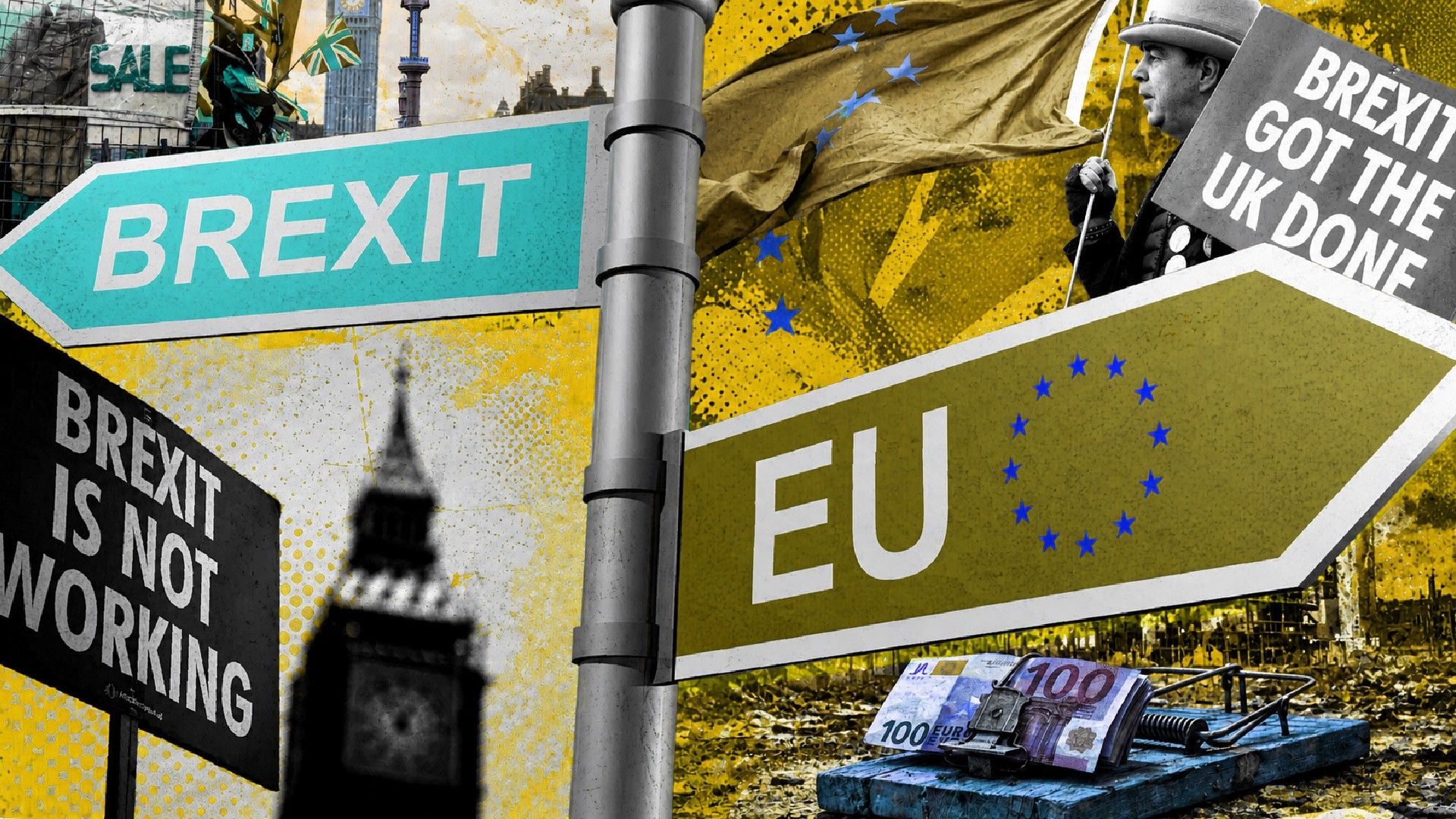
The authors note that in the ten years after Brexit, the British party has accumulated a sufficient body of evidence to show the adverse impact of having left the EU. Its economic losses have been substantial, migration control was not restored, and London’s influence in the global scene weakened considerably. As a result, demand for a changed relationship with the Continent gradually forms in British society. However, this theme no longer attracts as much interest as before on the European side. After 2022, the EU agenda has been dominated by the war in Ukraine and the need to restore competitiveness, and Britain is perceived as a useful partner – but not the priority one.
Most revealingly, even where the parties’ interests objectively converge (mainly in the defense and security fields), rapprochement is slow and reserved. Although a defense cooperation format was created after the 2025 summit, Britain regularly faces restrictions on its access to European funding and industrial value chains. The European countries are unwilling to fully integrate British capabilities into their new defense initiatives – fearing it would create a precedent of ‘selective’ participation without the required commitments being assumed.
In the geopolitical reality, the situation looks even more asymmetrical. Returning to closer relations with the EU gradually ceases to be a taboo in Britain, while on the Continent this is treated pragmatically and without much enthusiasm. European capitals are ready to discuss individual issues (defense, energy, youth mobility, and fishing) but are not interested in reconsidering the basic architecture of the relations that emerged after Brexit. For them, the UK is no longer a ‘special case’ – just another third country with which they can build a working relationship on specific tracks.
The current format of ‘gradual rapprochement’ without setting the final goal may prove insufficient for addressing real problems. Economic studies show that the more distant Britain is from the single market and customs union, the higher are the costs for both sides. However, so far neither London nor Brussels are ready to discuss deeper forms of association that would go beyond a set of individual agreements. As a result, there persists a situation where both parties bear the costs of not cooperating closely enough but are unprepared to take politically painful steps towards change.
Ultimately, ten years after the referendum, the question of Brexit is no longer one of separation; it is about the new form that cooperation between Britain and continental Europe can take in the future. And for now, all advancement remains limited, asymmetrical and devoid of a strategic vision. Britain gradually concludes that it needs to cooperate more closely with the EU, but Europe does not hurry to respond with the same degree of interest. As a result, both parties risk getting stuck in a limbo – which suits no one and precludes the full utilization of the cooperation potential amid growing geopolitical instability.
Source: https://www.institutmontaigne.org/expressions/brexit-leurope-face-son-paradoxe-britannique