







Read news
Add bookmark
POPULAR
How Much Do Experts’ Ideas Matter for the European Union’s Political Agenda?Reweaving Silk Roads: The Middle Corridor’s Role in EU Economic SecurityOil? Gas? Fertilizer? Just Life.Kalypso Nicolaidis: I Want a Woodstock for European PoliticsEuropean Unity in the Interests of Security. Split along the North-South LineNATO’s frontline countries jockey for U.S. troops after Trump’s Germany withdrawalHow the “virtues” of neoliberal globalization paved the way to its demiseA French Coast for the Baltic SeaThe European Union Intends to Fight Space Wars. Does the European Military Space Project Have Room for Development?Two Corps for the Baltics
Will NATO Manage to Equip its Corps Headquarters Deployed With Real Troops?
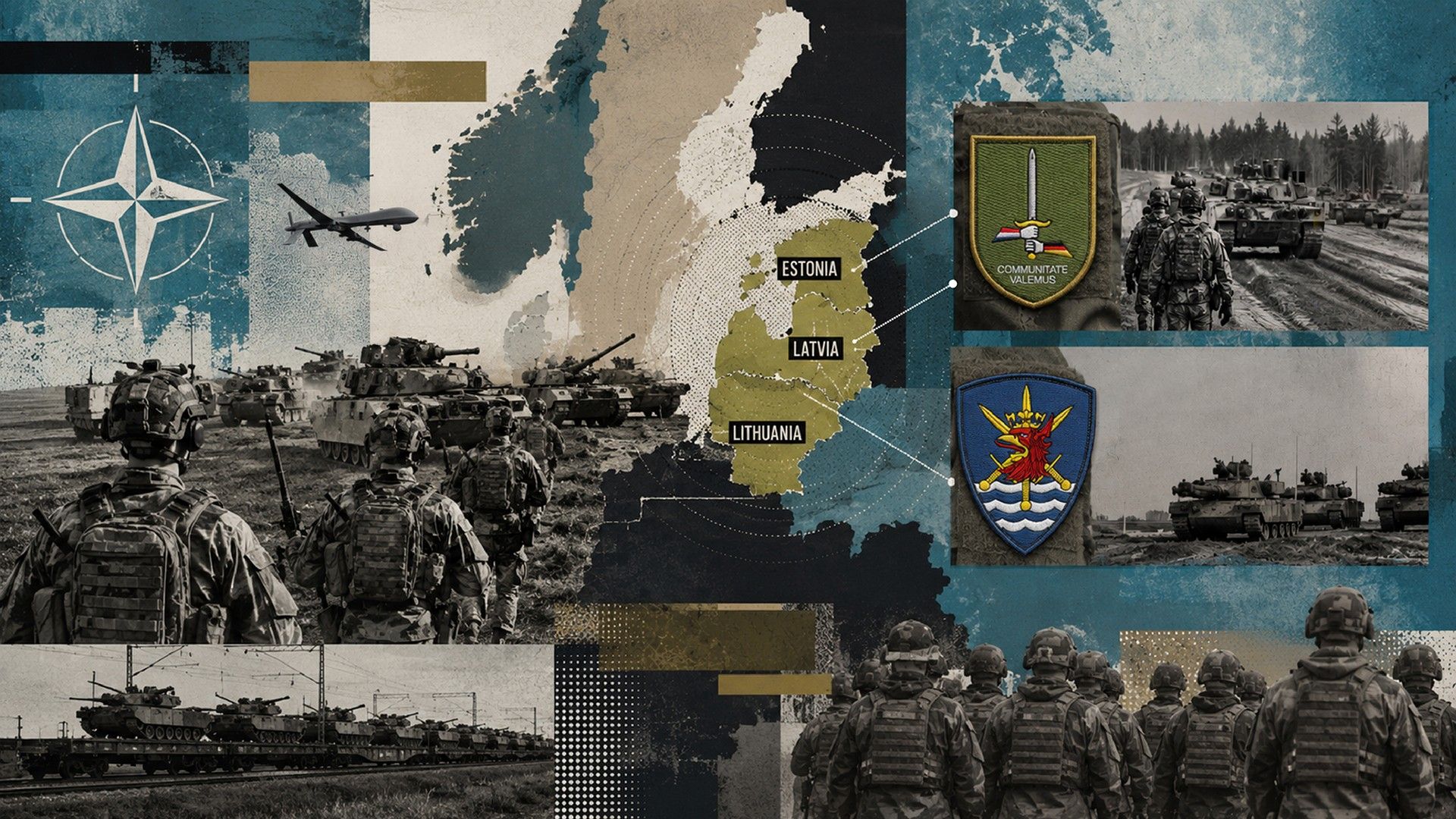
NATO’s reassignment of Baltic command responsibilities marks a shift from a deterrence-focused posture to a structure designed for large-scale combat operations.
Now the headquarters of the 1st German-Netherlands Corps (1GNC) in Münster will assume responsibility for Estonia and Latvia, while the Multinational Corps Northeast (MNC-NE) headquarters in Szczecin will retain responsibility for Lithuania and northern Poland. In effect, NATO is replacing a single corps sector covering the entire northeastern flank with two distinct corps sectors.
What is behind this event? Ruben Stewart, Senior Fellow for Land Warfare at the International Institute for Strategic Studies (IISS), publishes an analysis of this situation on the Military Balance+ website.
For around a decade, MNC-NE has effectively been responsible for an area stretching from Estonia’s border with Russia in the north, through Latvia and Lithuania, to the Polish-Belarusian frontier and the approaches to Kaliningrad in the south. This scale of responsibility, a front encompassing more than 2,200 kilometers of NATO’s border with Russia and Belarus, would make high-intensity operations challenging.
And, as the author of this study notes, Estonia and Latvia face a different operational problem to Lithuania and northeastern Poland, which must contend with Belarus, Kaliningrad and the Suwałki Corridor. And this is not purely a land problem. The defense of the Baltic states depends heavily on maintaining maritime lines of communication with the Nordic countries and the wider Alliance – while Russian capabilities in Kaliningrad and around St. Petersburg create an operational environment in which events at sea, in the air and on land are tightly interconnected.
It is relatively easy to set up a headquarters. A firing capability, air defense, ISR and logistical support, required to make it operational, are far more difficult to organize. 1GNC has a highly efficient headquarters and can rely on sizable national units from Germany and the Netherlands. Yet it is nowhere near a modern U.S. corps in terms of firepower.
While NATO is rebuilding its headquarters that are needed for large-scale collective defense, many corps level enablers required to support these are still at their development stage.
Although the above reorganization is one more sign of NATO returning to a wartime operating level, we should bear in mind that for now the new corps remain ‘paper’ ones. They lack the full-fledged army muscles required, and God knows when these will appear.