







Read news
Add bookmark
POPULAR
How Much Do Experts’ Ideas Matter for the European Union’s Political Agenda?Oil? Gas? Fertilizer? Just Life.Kalypso Nicolaidis: I Want a Woodstock for European PoliticsFinancing the EU budget: an assessment of five proposals for new resourcesEurope: doctrinal shift towards violence. Transition to a war economy instead of a “liberal democracy”From “Green” Well-Being to “Pure” Competitiveness: How the EU Gradually Abandons the Social Component of TransitionEurope Keeps Making the Same Mistake, This Time with the Power GridsThe Gulf War and Europe’s Helpless Energy PolicyEurope Still Needs China: Washington is the Main ThreatEurope Spends More on Defense but Gets No Stronger or More Autonomous
In an article entitled How European NATO allies are stepping up, by the numbers, posted on The Atlantic Council website, the authors Kristen Taylor and Matt Trunkey try to convince the reader that European allies have at last begun stepping up their defense efforts in earnest. They cite data on the growth of defense spending, increases in defense companies’ revenues, and European countries’ contributions to the defense of Ukraine via the PURL mechanism. In their opinion, at the NATO summit in Ankara secretary-general Mark Rutte will come up with figures and try to convince Washington that ‘the defense burden is beginning to shift’– with European allies stepping up.
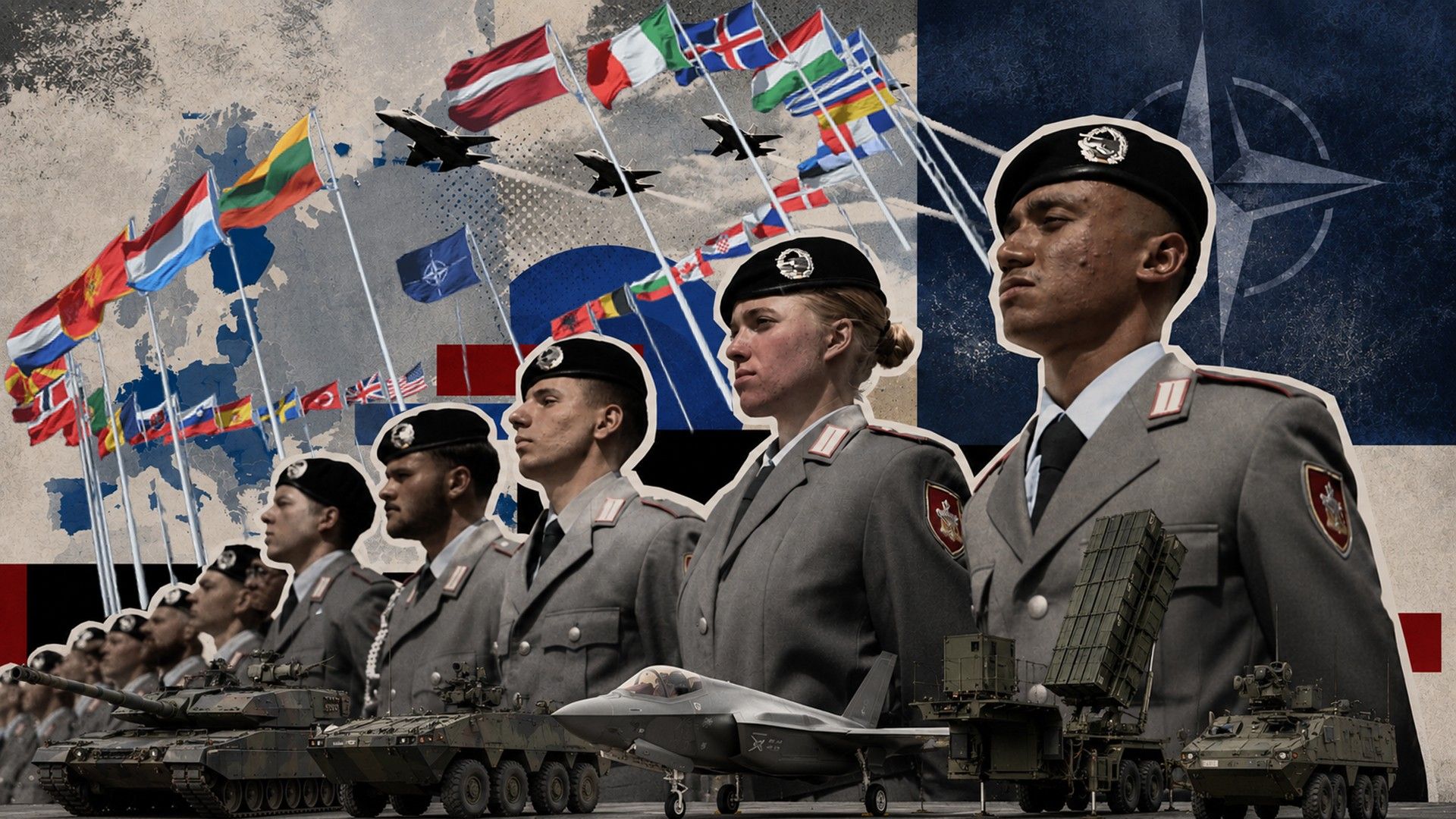
On the face of it, the article looks like an attempt to fend off the Trump administration’s criticism of European allies and to show that the situation is gradually improving. Yet its optimistic figures and cheerful wording hide a reality that is far less encouraging. Europe does increase its military budget, but this does not mean that it becomes significantly stronger, more autonomous, or less dependent on the USA.
Most conspicuously, the authors deliberately focus on the numerical increase in spending but are silent about the quality of that growth and how much the balance of power really changes within the alliance. Many European countries indeed spend more money on defense than they did a few years ago. Yet much of the funds is used to offset inflation, raise the military pay, repair and modernize the existing equipment, and purchase ready-made U.S. armament systems. As a result, the growth of European defense budgets also becomes an additional source of revenue for the U.S. defense industry, not a tool for enhancing Europe’s strategic autonomy.
Europe actually remains in a profound structural dependence on the USA in defense industry as well as security matters. Even when European countries increase spending, they often prefer to buy American platforms instead of developing their own technology and production chains. This creates an ironical situation: Washington gets both a political confirmation that ‘the burden is shifting’ and more orders for its own companies. The technical growth of European military budgets thus fails to weaken and, in some aspects, even strengthens Europe’s dependence on the American defense industry and U.S. security guarantees.
Importantly, these relatively modest spending achievements may fall short of satisfying Washington. The Trump administration has repeatedly suggested being dissatisfied with the current levels and growth rates of European expenses. With the USA increasingly focused on the Indo-Pacific and regarding Europe as a secondary destination, even coming technically closer to the new expenditure target may fail to relieve the tension in the transatlantic relationship. Europe continues acting in a style ‘sufficient to show progress on paper’ – but not doing enough to really change the balance of dependence and improve its own fighting capacity.
The authors deliberately sidetrack the question of the European armed forces’ real quality and ability to carry on large-scale hostilities without U.S. support. The growth of budgets does not in itself guarantee the appearance of modern, well-trained and well-equipped units that can operate on their own. So long as much of the new funding goes to buy U.S. off-the-shelf systems and support the existing infrastructure, not to develop domestic technology, ammunition output and other industrial capacity, it is too early to speak about any serious strengthening of Europe.
To sum up, the Atlantic Council’s article creates an illusion of serious progress where the reality remains far more problematic. Europe really spends more on defense than before but is still unable to cater to its own security without U.S. military presence, U.S. technology, and U.S. political support. The growth of military budgets without a corresponding increase in real fighting capabilities, industrial autonomy and political determination risks degrading into a costly imitation of activity that will neither convince Washington nor protect Europe, should a serious crisis arise. It will help postpone a tough conversation with the USA at best – but will not solve Europe’s fundamental security issues.
Source: https://www.atlanticcouncil.org/dispatches/how-european-nato-allies-are-stepping-up-by-the-numbers/