







Read news
Add bookmark
POPULAR
How Much Do Experts’ Ideas Matter for the European Union’s Political Agenda?Oil? Gas? Fertilizer? Just Life.Kalypso Nicolaidis: I Want a Woodstock for European PoliticsHow the “virtues” of neoliberal globalization paved the way to its demiseEuropean Urban Climate Resilience: Ambitious Plans are Hindered by the Lack of Funds and CoordinationZionists, lawfare and the malady called revengeRegular Ones Made IrregularEurope’s Rickety Shield: Faith Instead of Real ProtectionThe Gulf War and Europe’s Helpless Energy PolicyBritain’s Dark Alley
In a May 2026 article entitled Britain’s Underbelly Is on the Ballot that appeared in The American Conservative, Fred de Fossard, a British publicist and former special adviser to the Conservative Government, describes in detail now the dark – criminal – side of contemporary Britain is now coming out of the shadows and becoming part of the political agenda. He refers to the high streets of many cities, where illegal immigration, organized crime, money laundering and various forms of exploitation of persons have all overlapped in recent years.
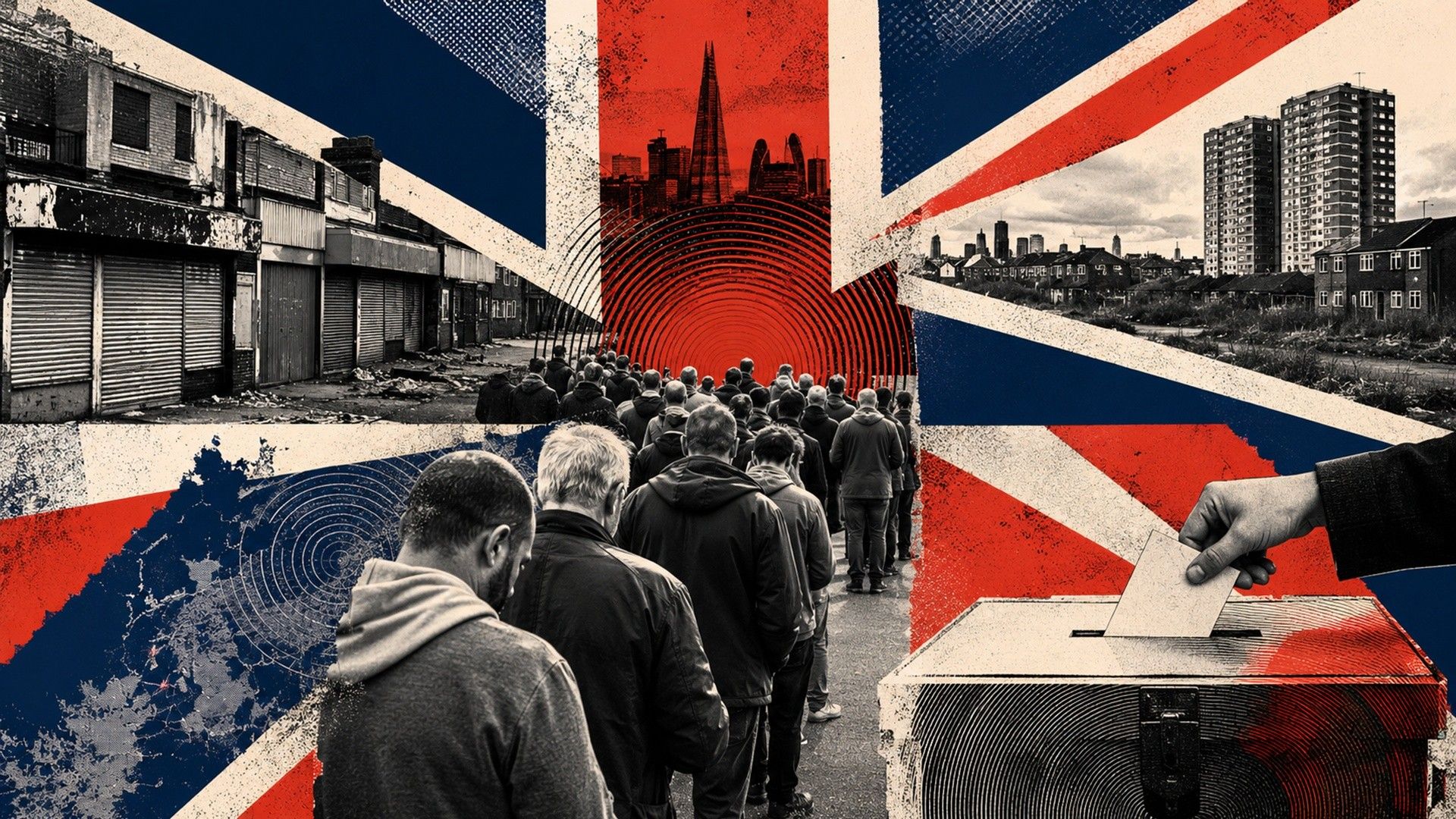
The author notes that the British authorities and mainstream media alike have thoroughly glossed over this topic for a long time. The appearance of lots of suspicious businesses – such as barbershops, vape shops and mini supermarkets that often accept cash payments only and have no visible flow of customers – has long been attributed to market processes or changing consumer habits. Yet a series of recent years’ criminal investigations showed many such outlets to be run by organized crime rings that trade in drugs, organize illegal migration and even fund terrorist activity.
It is especially concerning that the issue has expanded far beyond individual cases. Whole networks were found in London and other big cities, used to cover up serious criminal activities. The author stresses that the situation is especially difficult in poor and depressed areas of the country, whose local authorities – for lack of resources and political resolve – have preferred to turn a blind eye to it so long as such businesses continued paying taxes.
In another characteristic manifestation of State control gradually weakening, parts of urban areas come to be entirely dominated by migration-related crime groups – which results from economic decline as well as a policy whereby, for many years, the authorities have avoided discussing openly the link among mass migration, weak law enforcement, and growth of crime. Instead of responding to evident signals at early stages, the political class would prefer to suppress the problem by imposing new restrictions on public debate.
In practice, this brought about persistent zones where the crime rings’, irregular migrants’ and impoverished locals’ interests overlap. And the State is increasingly an observer and interferes after high-profile criminal incidents only. Most cynically, dwellings in declining towns are used to house illegal migrants while local residents continue bearing all the negative consequences of such neighborhood.
The author rightly points out that the situation has been changing in recent years. What was previously discussed only in private circles and on alternative platforms is gradually entering the official agenda and gives rise to investigations. But this happens tardily, after the problem has become a systemic one. Society is tired of the government ignoring the processes that have been going on for years before everybody’s eyes.
As a result, Britain faces a situation where massive immigration, weak public control and political reluctance to recognize reality, combined and persisting for many years, have brought permanent criminal areas into existence within the country. And even though the issues are now more openly discussed, the price that British society has already paid seems exceedingly high. It will be far more difficult to restore normal State functions in these areas than it would have been to prevent their degradation some years ago.
Source: https://www.theamericanconservative.com/britains-underbelly-is-on-the-ballot/