







Read news
Add bookmark
POPULAR
How Much Do Experts’ Ideas Matter for the European Union’s Political Agenda?Oil? Gas? Fertilizer? Just Life.Kalypso Nicolaidis: I Want a Woodstock for European PoliticsHow the “virtues” of neoliberal globalization paved the way to its demiseEuropean Unity in the Interests of Security. Split along the North-South LineThe Gulf War and Europe’s Helpless Energy PolicyTrump Pulling Troops Out of Germany. Canceled Missile Deployments to Erode the Foundations of NATO DeterrenceEurope: doctrinal shift towards violence. Transition to a war economy instead of a “liberal democracy”Why capitalism is fundamentally undemocraticTrump Shocks the Old World
Europeans See No Logic Behind Washington’s Steps to Change Its Armed Forces Strategy
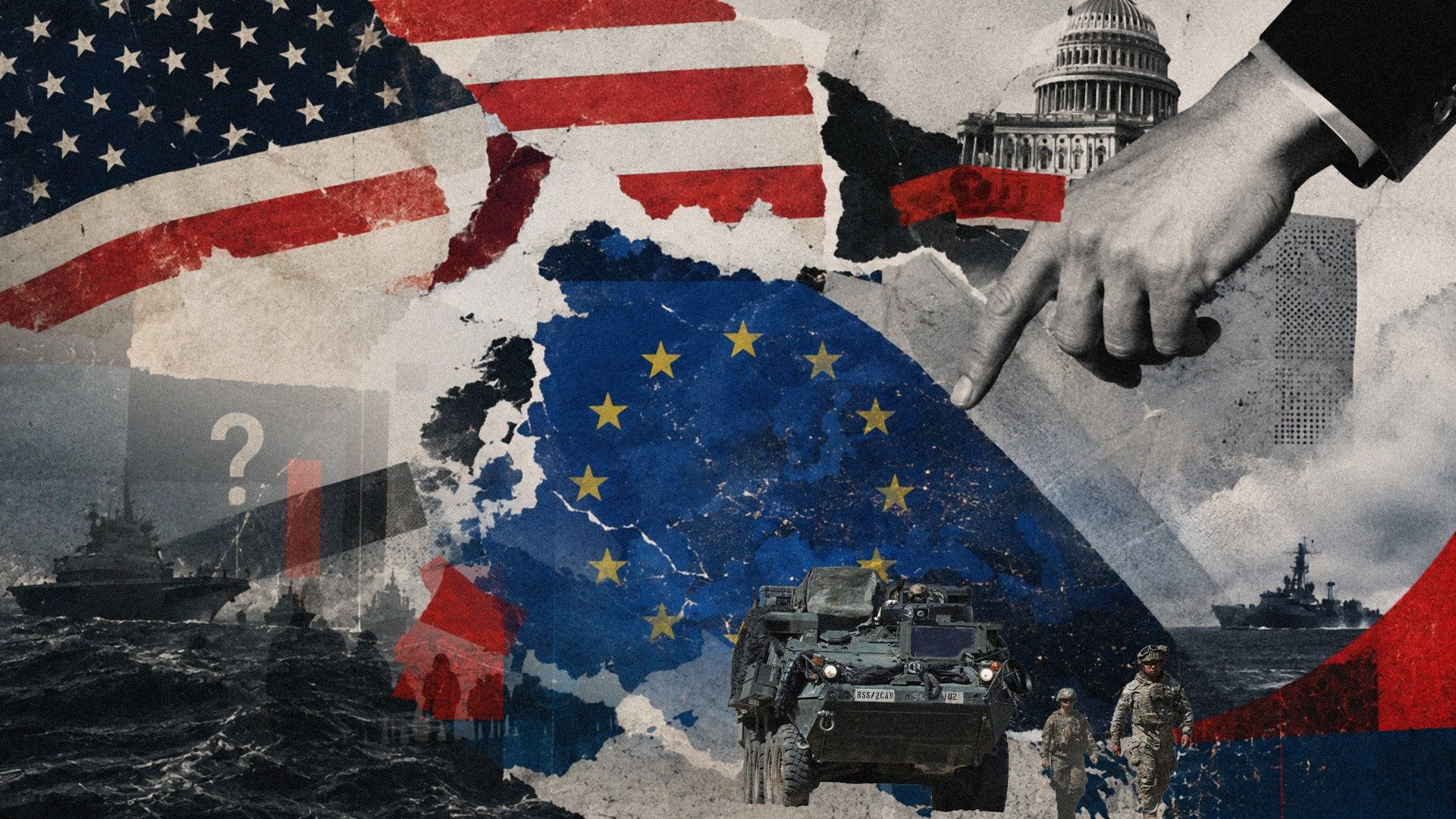
The Trump administration has made a dizzying array of force posture decisions, raising doubts about the United States’ deep commitment to the NATO alliance. While the Trump administration has since assuaged some concerns, particularly with a new troop announcement for Poland, doubt has already seeped in among some of Washington’s best friends.
This was examined by Daniel Fried, former U.S. assistant Secretary of State for European and Eurasian affairs, and Torrey Taussig, director of and a senior fellow at the Transatlantic Security Initiative in the Atlantic Council’s Scowcroft Center for Strategy and Security.
In the last few weeks, without adequate internal or ally consultations, the Trump administration made a number of force posture decisions completely disconnected from a real-world assessment of the situation.
In particular, the Americans have announced a reduction in the brigades earmarked for Europe from four to three, with more reductions to follow. They have canceled the deployment of a long-range fires battalion to Germany and outlined plans to pull out five thousand U.S. troops from the country. The Trump administration has also stopped a planned rotation of a U.S. brigade to Poland.
What gives? Can the transatlantic alliance, which has done so much over decades to advance U.S. and free world security, get back on track? And given uncertainty about U.S. policy toward NATO, what should U.S. allies be doing?
This is what senior officials of Finland, Estonia, and Poland – countries particularly exposed to Russian pressure and serious about their own (and NATO’s) security, and close to the US – discussed.
Finland’s leaders are concerned about what they see as unsteady and unreliable US policy, but they have reacted in a cool, practical fashion. On the one hand, Finnish President Alexander Stubb maintains solid and steady relations with Trump with a drama-free discipline. On the other hand, he has called for the EU to develop its own channels to Russia to discuss issues like Ukraine.
With respect to defense, senior Finns noted that their own military strength (with NATO, including U.S., backup) would be a credible deterrent to Russia. That fits well with the U.S. push for Europe to do more on its own defense, but requires the USA to be systematic, not haphazard, in planning its military presence.
Estonians are much worried about the gap that could potentially develop should the USA pull away from its NATO obligations without adequate planning, before Europe is ready to step up in its own defense.
The Trump administration has termed Poland a ‘model ally’, and with good reason. Poland is NATO’s leader in military spending as a share of gross domestic product. This will hit 4.7 percent this year and continue to rise.
Trump’s social media announcement about sending five thousand troops to Poland triggered Polish relief, though it is not yet clear where the forces would come from.
But Washington’s unsteady behavior, only partly mitigated by Trump’s announcement about more forces to Poland, has spread doubts among some of its best friends – including allies who sent troops to distant wars the USA led in Iraq and Afghanistan because they believed in the Alliance.
To repurpose a well-known Polish poem, a successful alliance is like good health: You value it only when it is gone. Perhaps this is to happen soon.