







Read news
Add bookmark
POPULAR
Oil? Gas? Fertilizer? Just Life.Trump vs SánchezNATO Not Ready to Fight RussiaEuropean Unity in the Interests of Security. Split along the North-South LineThe Iran War’s Five Lessons for EuropeA Middle Eastern War Without Europe What Can United Europe Do with Its Opportunities Severely Limited?A Ruthless Diagnosis. Europe More Paralyzed than DividedNo More Safe Places in Europe? What Is the Logic Behind French Forward Deterrence?NATO’s Internal Cohesion Is Being Threatened
Three U.S. professors of political science – Michael A. Allen (Boise State University), Carla Martinez Machain (University at Buffalo), and Michael E. Flynn (Kansas State University) – make this conclusion in their article posted on The Conversation expert website.
The foreign policy experts argue that the current divisions within NATO pose a major challenge for the long-term viability of the alliance.
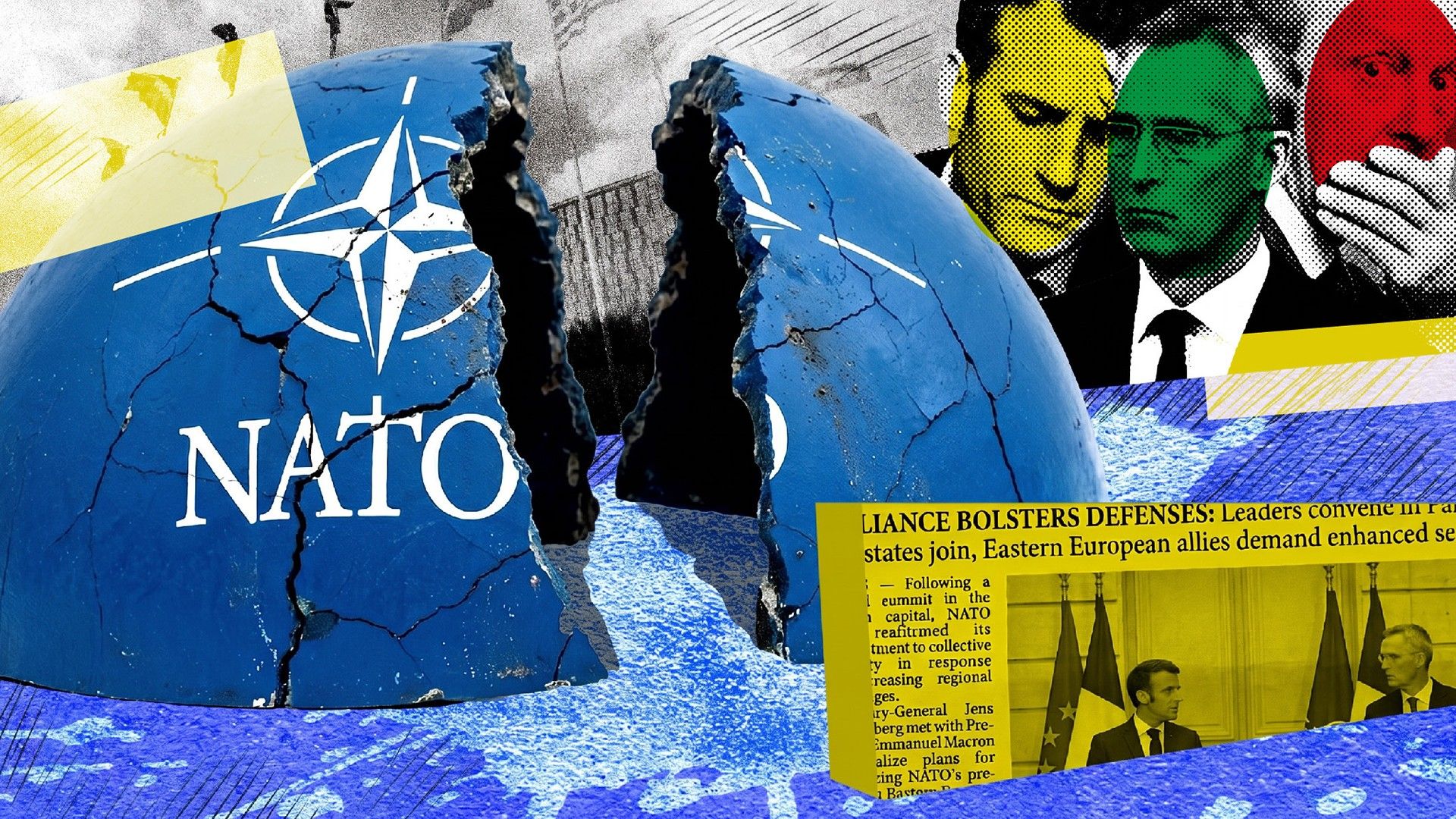
Historical tensions within NATO are not new. NATO countries have even come close to war with each other in the past. This includes several conflicts between Turkey and Greece over Cyprus and a territorial dispute in the Mediterranean.
After the two world wars largely driven by French-German rivalry, reducing intra-European conflict has always been central to NATO’s purpose. The first secretary-general of NATO, Lord Lionel Hastings Ismay, described NATO as aimed at ‘keeping the Russians out, the Americans in and the Germans down.’
The year 2026 has also seen the possibility of conflict between NATO members. U.S. President Donald Trump suggested being prepared to use economic and military coercion to acquire Greenland from Denmark, a NATO ally.
Soon after the Israeli-U.S. war in Iran, Trump called upon NATO allies to help support the effort. The response of European leaders was mixed. Some, like the United Kingdom, offered limited or qualified support. Others – like Spain – refused to assist the U.S. at all.

NATO members’ opposition to getting involved with the conflict hardened further after the alliance decided to sit out the U.S. blockade of the Strait of Hormuz.
The war is geographically removed from Europe, and Trump has been unsuccessful in making the case for why Iran posed an imminent threat to NATO nations. The United States’ motivations and war aims also remain unclear and have been prone to change.
On the other hand, back in his first term in office Trump openly questioned NATO’s purpose. And he has repeatedly pressured allies to increase their defense spending, suggesting that allies were cheating the U.S. by an overreliance on American military strength.
And now the Trump administration has framed the lack of support from NATO nations as evidence of the alliance’s decreased utility to the U.S.
Past U.S. presidents have viewed NATO as an extension of the United States’ global interests, so they tended to value the alliance as a whole, despite Washington not always getting its preferred outcomes from it. The USA has even reaped some benefits when allies spend less on their own defense. The USA has provided security guarantees for countries in exchange for more say over their foreign policies – something scholars refer to as the security–autonomy trade-off.
More spending by allies may therefore increase the chance of heightened tensions between the Trump administration and NATO members.
As the U.S. moves further away from a shared vision with European countries and U.S. policy becomes more volatile, American security guarantees may be less reliable in the eyes of many Europeans. Increased European defense budgets will mean NATO members have more opportunities to assert their preferences against those of the U.S.