







Read news
Add bookmark
POPULAR
How Much Do Experts’ Ideas Matter for the European Union’s Political Agenda?Oil? Gas? Fertilizer? Just Life.Kalypso Nicolaidis: I Want a Woodstock for European PoliticsHow the “virtues” of neoliberal globalization paved the way to its demiseWhy capitalism is fundamentally undemocraticZionists, lawfare and the malady called revengeEuropean Unity in the Interests of Security. Split along the North-South LineEurope Still Needs China: Washington is the Main ThreatEurope: doctrinal shift towards violence. Transition to a war economy instead of a “liberal democracy”Flight or Strategy. Why Does America Remove Troops from Germany, and Can It Be Stopped from Doing So?
A few days after President Donald Trump voiced his intention to withdraw 5,000 U.S. soldiers from Germany, the head of his country’s Department of War supported him. Defense Secretary Pete Hegseth confirmed on 1 May that the USA was really planning to complete the withdrawal in the following six to twelve months.
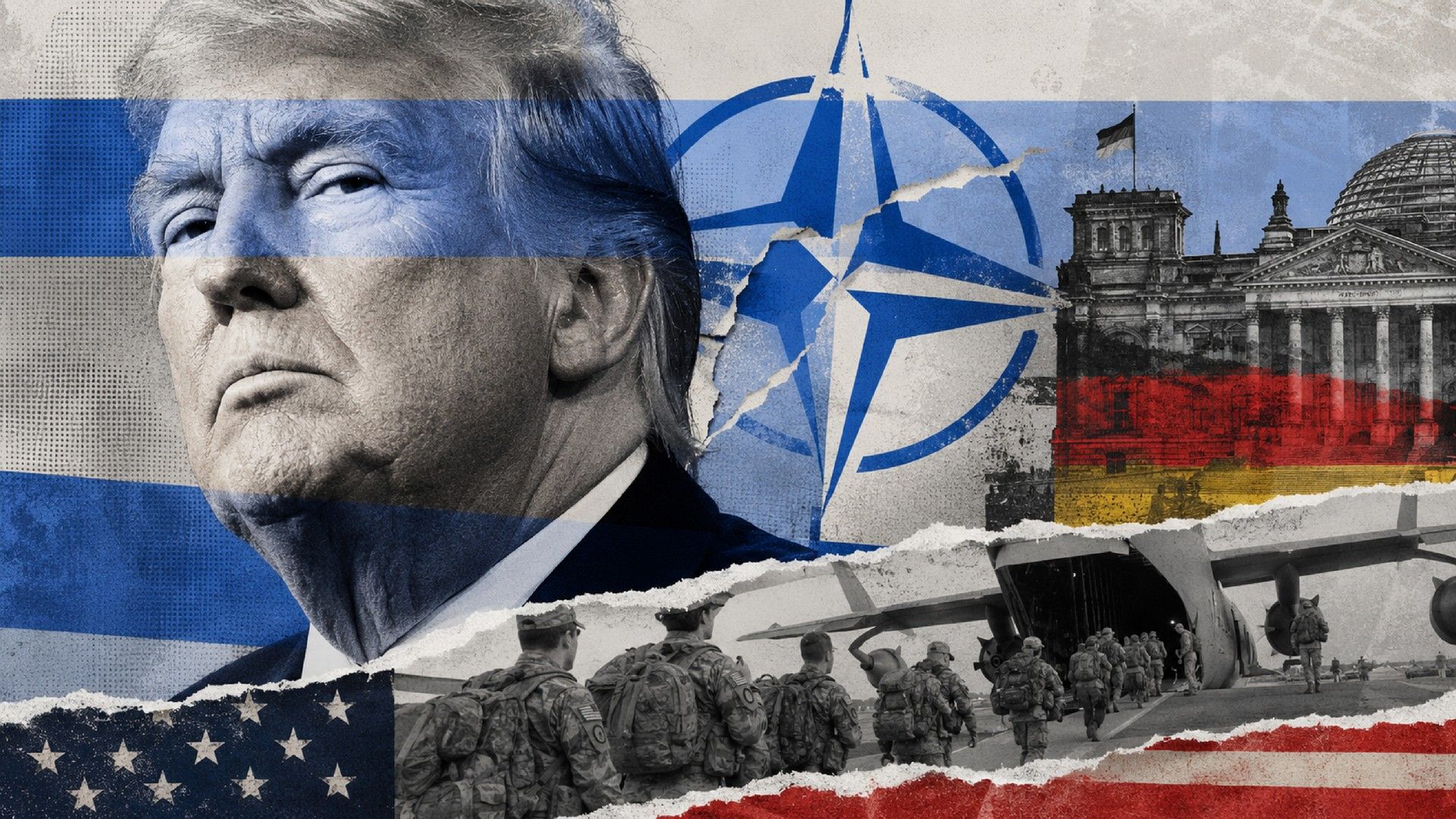
While Berlin accepted the decision and particularly its timing, if with some surprise, many in Washington were baffled and criticized it. A Congress spokesperson said that the Pentagon ‘had not expected the President to take that sort of decision and was not planning troops withdrawal’.
Two senators and chairmen of committees, Roger Wicker (R-MS) and Mike Rogers (R-AL), were even more outspoken in expressing shock over the decision. Prematurely reducing America's forward presence in Europe before the required capabilities are fully realized would ‘send the wrong signal to Vladimir Putin’, they stated.
Members of Democratic Party opposition generally concurred and predictably went even farther in their assessments. The troops withdrawal announced was ‘not grounded in any coherent US national security policy strategy,’ they said.
Apart from its own merits, this troop reduction decision raises important logistical issues for the USA as well. Todd Harrison from the American Enterprise Institute said it would entail considerable costs and that the capability for stationing the 5000 service members and their families within the USA was quite limited.
The U.S. administration’s decisions to build up or cut military presence abroad are generally not taken in a vacuum but based on the National Defense Strategy (NDS).
This strategy, unveiled by Pete Hegseth last January, is largely similar to the National Security Strategy (NSS) that Secretary of State Marco Rubio presented in November 2025. Both mainstream an America First policy that includes strengthening America, containing China by force, increased burden-sharing with allies and partners, and large-scale expansion of U.S. defense industry. However. the Trump administration’s idea of burden-sharing is increasingly evident and implies that Europe should largely cater to its own defense.
Some 170,000 American military are currently stationed outside the USA – primarily in Japan (54,300), Germany (36,500) and South Korea (23,500). Other major U.S. outposts include Italy with 12,700 U.S. troops, the UK with 10,000, and Spain with 3800. Given the Trump administration’s priorities, it is now hard to predict what further changes it may want.
Notably, Congress and the Senate do have a say in the distribution of the defense budget but are unable to prevent redeployment of U.S. troops directly. Trump has the last word – and is often unstoppable in taking such decisions.
Source: https://www.kas.de/en/country-reports/detail/-/content/reactions-and-background-to-the-trump-administration-s-decision-to-reduce-troops-in-germany